
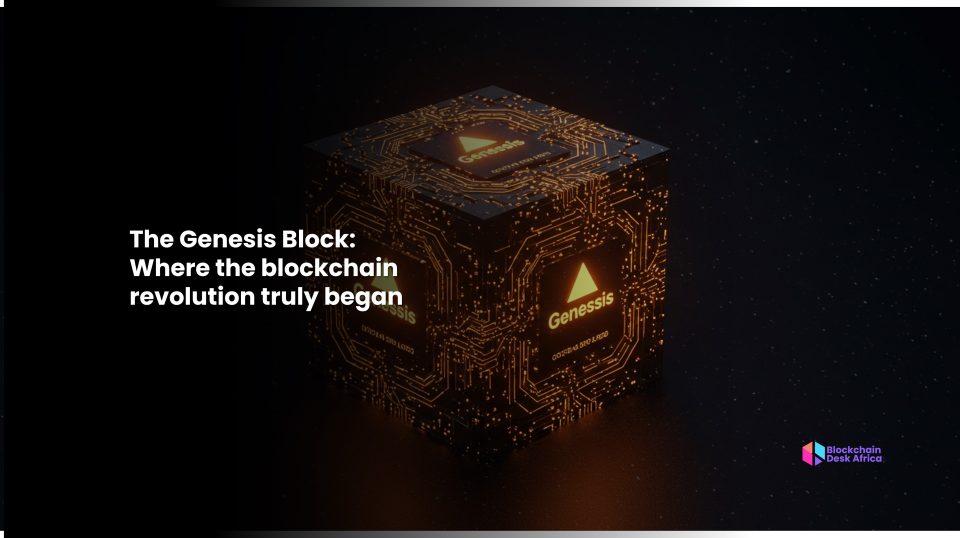
In January 2009, something irreversible happened. A single block, Block 0, was added to a digital ledger. It didn’t come from a government lab or a corporate innovation hub. It wasn’t approved by regulators or backed by any institution. Yet, it started what is now a trillion-dollar global industry , reshaping how value is created, stored, and transferred across borders. That block is known as the Genesis Block.
It wasn’t just the first block of Bitcoin. It was a quiet but deliberate act of resistance, a rejection of centralised control, and the foundation of what we now call blockchain technology. But to understand the Genesis Block, you first need to understand the time that gave birth to it.
By the end of 2008, global trust in financial institutions was at an all-time low. The world was still reeling from the global economic crisis, triggered by years of unchecked speculation, risky lending, and lack of transparency. Big banks had failed. Governments were bailing out institutions deemed “too big to fail.” Every day, people were losing homes, jobs, and savings.
The systems meant to serve people had become fragile, opaque, and, in many cases, corrupt. In that environment of economic disillusionment, an anonymous personality going by the name Satoshi Nakamoto released a whitepaper titled Bitcoin: A Peer-to-Peer Electronic Cash System. It proposed a radical alternative: a decentralised, trustless system where no single institution could dictate the rules or manipulate the ledger.
Just months later, Nakamoto mined the Genesis Block, the first-ever block on the Bitcoin blockchain, and everything changed.
What is the Genesis Block?
The Genesis Block, also known as Block 0, is the first block in a blockchain, the foundational record upon which all subsequent blocks are built. Unlike all other blocks that follow it, the Genesis Block has no predecessor. It is hardcoded into the Bitcoin protocol, and it anchors the entire blockchain.
In Bitcoin’s case, the Genesis Block was mined on January 3, 2009. It awarded a reward of 50 BTC, though those coins can never be spent, a symbolic choice by Nakamoto that adds to the mystery and philosophy behind Bitcoin’s origin.
But what sets the Genesis Block apart from just being “the first block” is what it represents. It wasn’t just a technical milestone; it was a declaration of intent.
A message hidden in plain sight
Embedded in the Genesis Block’s raw data is a now-iconic message:
“The Times 03/Jan/2009 Chancellor on brink of second bailout for banks.”
This wasn’t just a timestamp; it was a political statement. The headline, taken from the UK’s The Times newspaper, was Nakamoto’s way of rooting Bitcoin in a specific historical moment. It revealed the motivation behind the protocol: to build a system immune to the kind of institutional failure and economic manipulation that led to the 2008 crisis.
Technical Anatomy of the Genesis Block
The Genesis Block functions similarly to any other block in a blockchain, but with a few unique properties:
- Block Height: 0
- Timestamp: January 3, 2009
- Reward: 50 BTC (unspendable)
- Previous Block Hash: None (it is the first block)
- Coinbase Parameter: Includes the embedded Times headline
Interestingly, although the block was mined on January 3rd, the next block (Block 1) wasn’t mined until six days later, on January 9th. This delay has sparked debate. Was Satoshi perfecting the software? Was it to give time for others to join the network? Or was it just intentional pacing to make a point? No one knows for sure.
Why the Genesis Block still matters today
The Genesis Block is more than historical trivia. It represents the origin of decentralised trust, the point from which every node, miner, and transaction has drawn its legitimacy. In technical terms, every full Bitcoin node today traces its ledger back to that single immutable block.
And philosophically, it remains a reminder of why blockchain exists in the first place: to create transparent, auditable, decentralised systems that operate beyond the reach of institutional interference.
The Genesis Block is not just a relic; it’s a roadmap. It reminds us that disruptive innovation doesn’t need permission. It only needs purpose.
Legacy and inspiration for a decentralised future
More than 16 years later, the Genesis Block still sits untouched. The 50 BTC reward has never moved. Its message remains intact. And yet, the movement it sparked has grown far beyond Bitcoin itself.
Blockchain technology, born from this block, now underpins thousands of protocols, applications, and assets. From stablecoins to NFTs, DeFi platforms to cross-border payment systems, the principles seeded in that first block continue to ripple across industries and continents.
Final thoughts
The Genesis Block is not just the beginning of Bitcoin. It is the beginning of a new way of thinking about trust, ownership, and financial autonomy. It was built in response to a broken system, and its relevance has only grown more urgent in a world where centralised control still dominates.
To build the future of Web3 in Africa and globally, we must constantly return to the principles that gave birth to that block: transparency, decentralisation, and economic empowerment.