
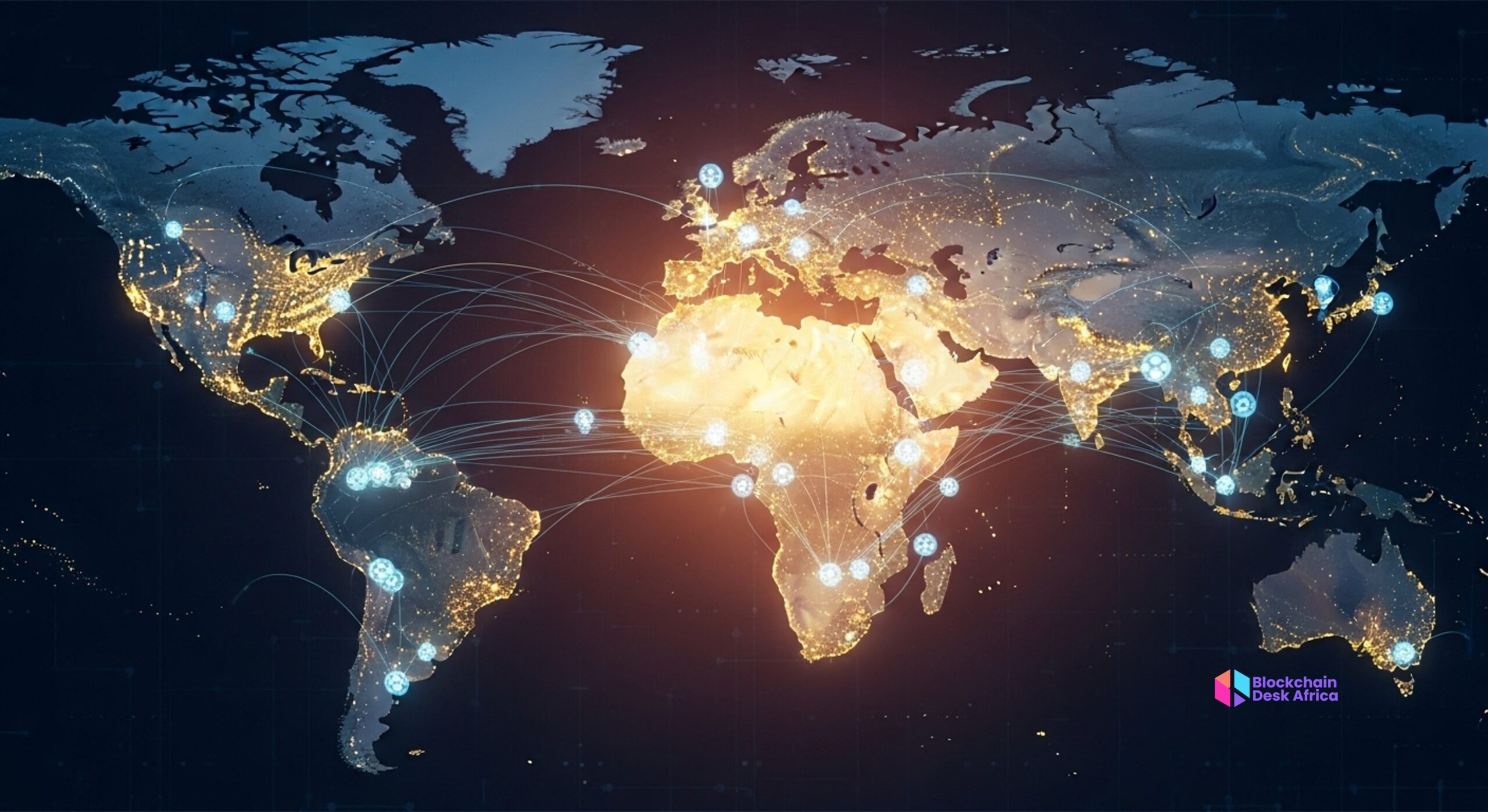
Across developing economies, cryptocurrency has grown into more than an investment. It’s a financial system for those that the traditional one has long ignored.
In markets where inflation erodes savings overnight and access to foreign currency is restricted, people are turning to Bitcoin and stablecoins to protect what they earn and preserve what they own.
The 2025 Geography of Crypto Report by Chainalysis shows that this practical use of crypto, rooted in survival, not speculation, is what’s driving global adoption today.
Crypto as a Tool for Everyday Finance
India, Nigeria, Vietnam, Pakistan, and Brazil all rank among the top 10 countries in the 2025 Global Crypto Adoption Index. But what unites them isn’t their geography, it’s their shared need for financial alternatives.
For many citizens in these nations, crypto isn’t a trading asset or a trend; it’s a working tool. It powers cross-border payments, shields savings from local currency volatility, and opens up income opportunities for freelancers and small business owners.
India, for instance, tops every category in the Chainalysis Index, retail, DeFi, institutional, and overall value received. A large portion of that activity comes from remittances and individual trading.
The country’s existing digital payment culture, supported by systems like UPI, has made transitioning to crypto straightforward. For millions of Indian citizens, especially young professionals, crypto complements rather than replaces traditional finance.
How Nigerians Use Crypto to Protect Their Money
In Sub-Saharan Africa, Nigeria stands out not just for volume but for purpose. Between July 2024 and June 2025, Nigerians received over $92 billion in crypto value, making it one of the most active markets worldwide.
Nigerians have increasingly relied on Bitcoin and stablecoins to hedge against the naira’s continuous devaluation and to bypass restrictions on international transactions.
Here’s how it works in practice:
Stablecoins as savings: Many individuals convert earnings into USDT or USDC immediately after receiving payments to prevent value loss from local inflation.
Cross-border trade: Small importers use crypto to pay Asian and Middle Eastern suppliers faster and more affordably than through bank channels.
Remittances and business payments: Diaspora remittances and freelance earnings frequently come in stablecoins, reducing dependence on expensive remittance services.
Peer-to-peer transactions: With government restrictions on centralised exchanges, P2P platforms have become the backbone of Nigeria’s crypto economy.
Bitcoin remains the most common entry point, around 89% of first-time purchases begin with BTC, but stablecoins dominate long-term use because they hold value more predictably.
This blend of necessity, access, and innovation explains why Nigeria ranks among the world’s top ten markets by on-chain activity. For many Nigerians, crypto isn’t a replacement for the banking system—it’s the only reliable extension of it.
Stablecoins Become Latin America’s Economic Anchor
Latin America tells a similar story through different challenges. The region recorded nearly $1.5 trillion in crypto transaction value between July 2022 and June 2025, with Brazil alone contributing a third of that.
What’s remarkable isn’t the scale, but the composition: over 90% of Latin America’s crypto flows involve stablecoins.
The reason is simple, volatile local currencies. In countries like Argentina, where annual inflation exceeds 100%, or Venezuela, where entire economies operate in digital dollars, stablecoins have become a practical substitute for national money.
Workers use USDT for wages, families send remittances through it, and merchants price goods in it. Platforms like Bitso and Mercado Bitcoin act as regional hubs, connecting millions to dollar-backed assets they can trust.
For many Latin Americans, stablecoins are not an investment, they’re stability itself.
Beyond Speculation: Crypto’s Real Utility
The Chainalysis report’s biggest takeaway is that adoption in the Global South is functional.
People aren’t collecting tokens, they’re using them. Crypto bridges the gap between local and global finance. It enables saving in stable currencies, conducting trade without intermediaries, and receiving payments instantly.
While North America and Europe dominate the institutional side with ETFs and tokenised assets, the Global South shows what real-world adoption looks like. It’s not about innovation in boardrooms, it’s about resilience in households and small businesses.
The Future of Financial Inclusion
Across continents, a common truth is emerging: where traditional systems have failed, crypto has filled the gap.
India’s digital structure, Nigeria’s entrepreneurial use, and Latin America’s stablecoin economies demonstrate one thing, financial empowerment doesn’t always begin in banks. It begins where people find a way to take control of their money.
Crypto has become that way. And in 2025, the Global South stands as proof that financial independence no longer depends on borders or banking access, it depends on access to the blockchain.
Read also: HoneyCoin: A Clearer Exchange for DeFi Yield Rewards.