
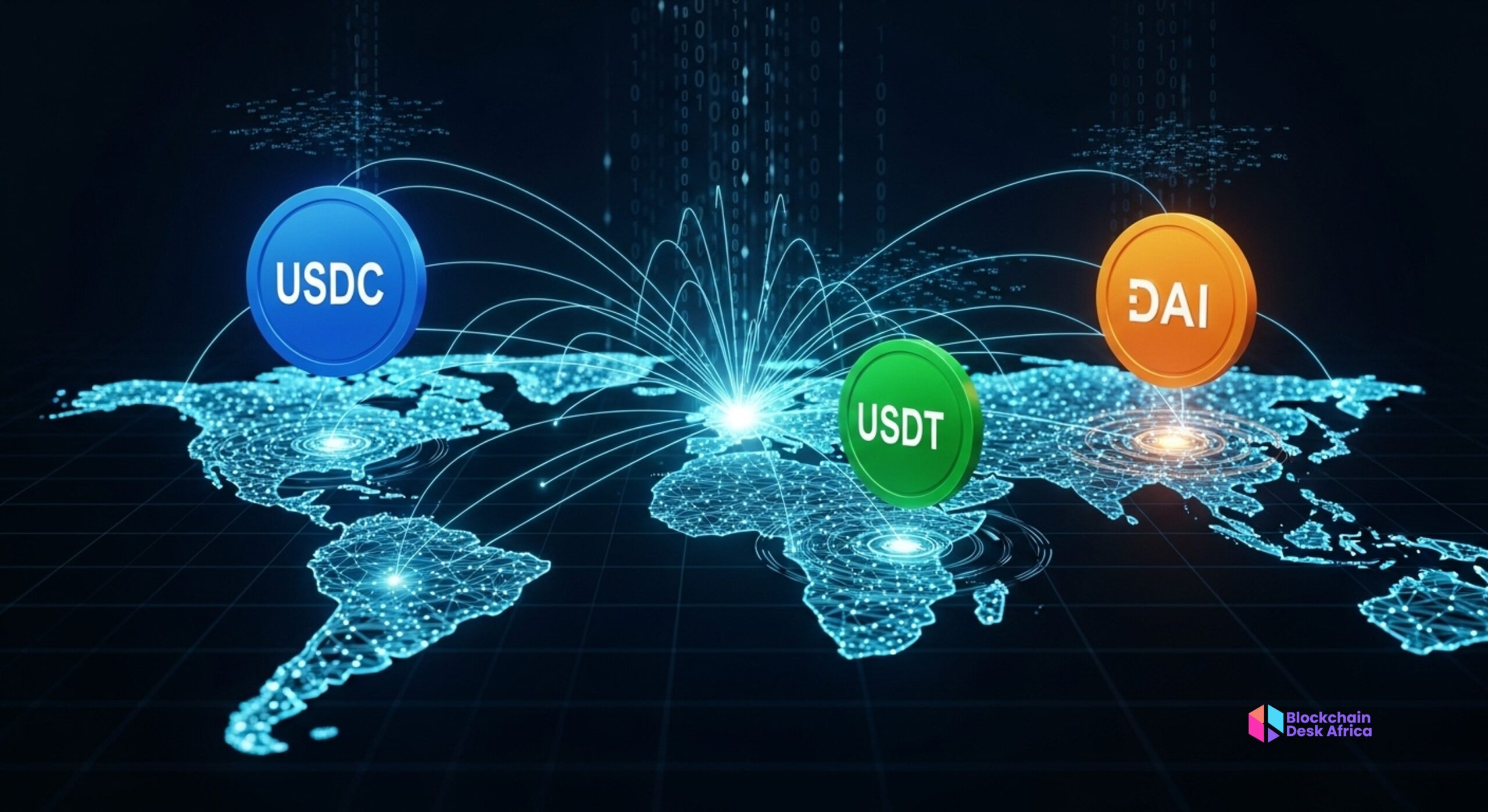
It didn’t begin with noise or speculation. It began with a need, the need for money that holds its value, moves instantly, and belongs to no single bank or government.
That quiet need has grown into a movement worth trillions. According to The 2025 Geography of Crypto Report by Chainalysis, stablecoins now account for the majority of global crypto transaction volume, surpassing every other asset class combined. Between July 2024 and June 2025, stablecoins processed over $12 trillion in on-chain value worldwide, making them the real infrastructure behind today’s digital economy.
From the United States to Nigeria, from Brazil to Vietnam, people and institutions alike are using stablecoins to save, send, and trade money faster than traditional systems ever allowed.
What Makes Stablecoins Different
A stablecoin is a cryptocurrency designed to maintain a steady value, typically pegged to the U.S. dollar. Unlike Bitcoin or Ethereum, its price doesn’t fluctuate wildly. That single feature, price stability, has turned stablecoins into the most practical form of digital money ever created.
They bridge two worlds:
- The trust and familiarity of traditional currencies, and
- The speed and openness of blockchain networks.
Stablecoins are not about speculation. They’re about solving everyday financial problems: inflation, remittance costs, banking limits, and cross-border payments that take days.
America’s Trillion-Dollar Foundation
The United States remains the centre of stablecoin innovation and volume. Vnw1Chainalysis reports that the U.S. now handles over $2 trillion in stablecoin transactions each month, accounting for 70% of North America’s total crypto activity.
This dominance isn’t accidental. It’s built on regulation, scale, and infrastructure. The GENIUS Act, passed in 2025, introduced clear federal standards for stablecoin issuers, requiring full reserve backing and real-time transparency. This gave institutional investors, payment processors, and banks the confidence to use stablecoins for large-scale financial operations.
Today, stablecoins are the invisible pipes moving money between exchanges, funds, and digital banks. They’re how billions of dollars settle daily, quietly, instantly, and securely.
Latin America: Stability in the Face of Inflation
Nowhere is the role of stablecoins more visible than in Latin America.
The region saw $1.5 trillion in crypto transaction value between 2022 and 2025, and over 90% of that involved stablecoins.
In countries like Brazil, Argentina, and Mexico, people are using stablecoins to shield themselves from inflation and currency collapse.
In Argentina, where annual inflation exceeds 100%, stablecoins have become a lifeline. Workers save in USDT, small businesses invoice in it, and families use it for remittances.
Platforms like Bitso and Mercado Bitcoin have turned stablecoin access into an everyday service. For millions across the region, stablecoins are not a crypto product, they’re a replacement for a broken financial system.
Africa: Access, Stability, and Financial Control
In Africa, the story is similar. Stablecoins to overcome currency shortages, high transfer fees, and banking restrictions. Nigeria, in particular, stands out.
With more than $92 billion in crypto value received over the last year, Nigerians rely heavily on stablecoins for savings and business payments.
- Savings: Many convert naira into stablecoins immediately to protect their income from devaluation.
- Payments: Freelancers, remote workers, and small traders accept stablecoins to get paid in digital dollars rather than unreliable local currency.
- Trade: Importers use stablecoins to pay suppliers abroad when access to official FX channels is limited.
What began as a way to bypass restrictions has now become a fully functioning parallel financial system, faster, more stable, and more accessible than many banks.
Asia’s Fast-Growing Adoption
Across Asia-Pacific, stablecoins are driving the region’s 69% year-over-year crypto growth.
India, Vietnam, and Pakistan use them for remittances, digital payments, and freelance income.
Meanwhile, Japan’s market grew 120% in a single year, aided by legal recognition of yen-backed stablecoins and a strong push from local financial institutions.
Asia’s story shows that stablecoins aren’t just a developing-world phenomenon. They’re becoming a regional standard for efficiency, appealing to both retail users and regulated financial firms.
Europe’s New Class of Digital Money
Europe’s entry into the stablecoin market has been defined by regulation and compliance.
With the introduction of the MiCA framework (Markets in Crypto-Assets Regulation), the European Union has created strict but supportive rules for digital asset issuance.
Under MiCA, only regulated, reserve-backed stablecoins can operate freely, prompting the rise of euro-pegged tokens like EURC, which grew over 2,700% in 2025 alone.
This development makes Europe a pioneer in regulated stablecoins, setting an example for how oversight can coexist with innovation.
Why Stablecoins Are Winning
The success of stablecoins comes down to three simple advantages:
1. Speed: Transactions settle in seconds, not days.
2. Value Protection: They maintain purchasing power even when local currencies collapse.
3. Access: Anyone with a smartphone can hold global currency, no bank account required.
Who Should Pay Attention
1. Governments and Regulators
Instead of treating stablecoins as competition, forward-thinking governments can use them to strengthen their economies, improving remittance systems, cross-border payments, and digital tax collection.
2. Banks and Payment Providers
Banks that integrate stablecoin rails will move faster than those that don’t. Institutions can use stablecoins for instant international settlements and liquidity management.
3. Entrepreneurs and Developers
There’s growing demand for local stablecoin wallets, payment gateways, and micro-finance solutions. Builders who localise these products for African, Asian, and Latin American users will shape the next decade of finance.
4. Everyday Users
For millions of people, stablecoins mean control — the ability to save, send, and receive money without fear of inflation, delays, or restrictions.
Final Thoughts
Stablecoins didn’t rise through hype. They rose through usefulness.
They’ve become the digital money of choice for people who simply want their earnings to hold value and their payments to go through. They don’t need headlines or price charts, they need trust. And they’ve earned it.
Your article helped me a lot, is there any more related content? Thanks!