
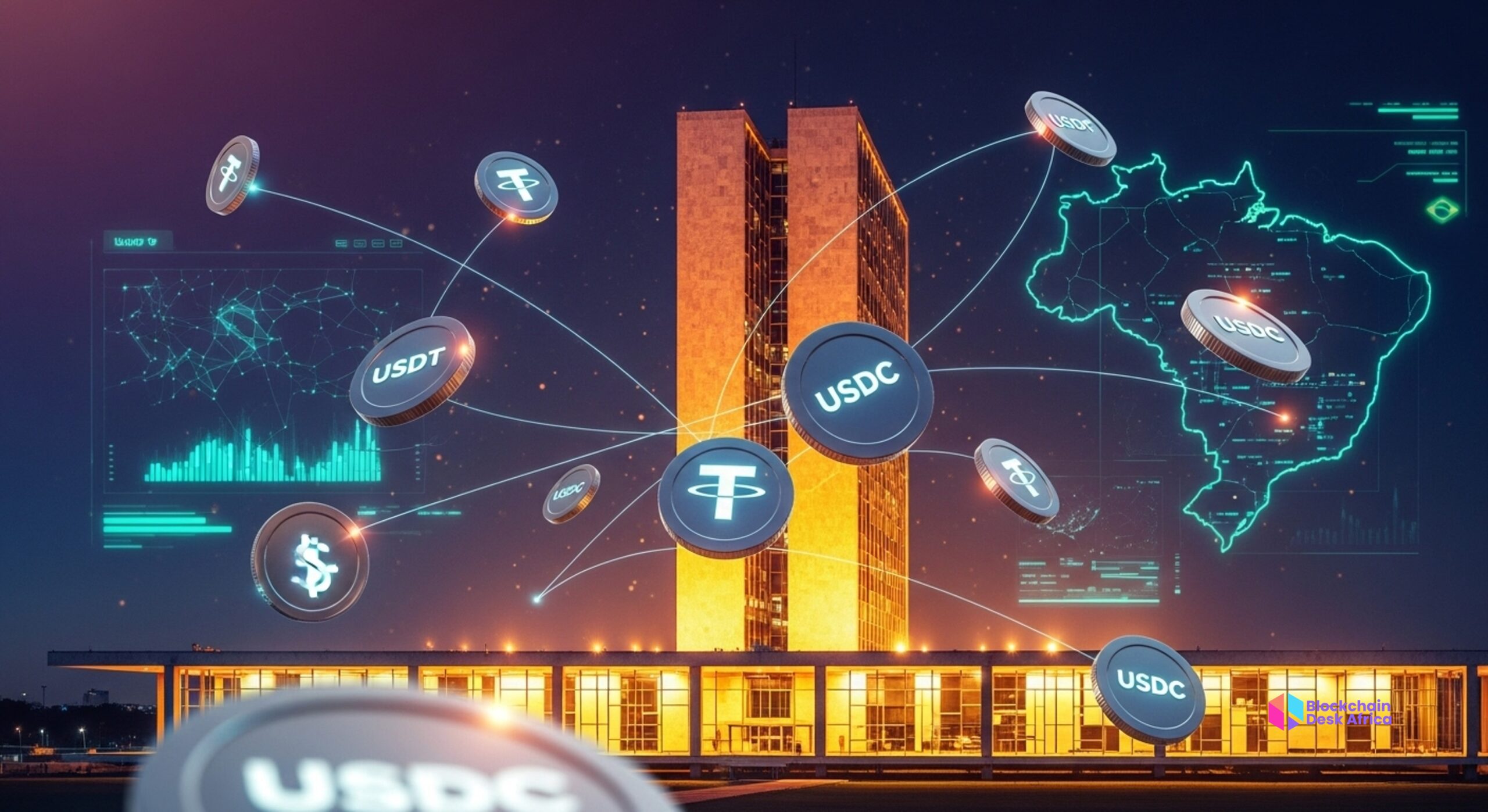
Brazil’s central bank has formally classified stablecoins as part of the country’s foreign exchange operations, a regulatory step that will bring these digital assets under the same supervision as traditional currencies. The new framework was published in Brazil’s official gazette on November 10, 2025, and will take effect on February 2, 2026.
Under the new framework, any purchase, sale, or exchange of stablecoins pegged to a fiat currency , including transfers to or from self-custody wallets when a regulated provider is involved , will now be treated as a foreign exchange operation.
The rule also sets a cap of US$100,000 per transaction for transfers to unlicensed foreign partners, aligning stablecoin activities with the same oversight and reporting obligations as conventional dollar transactions.
The central bank’s move is part of a broader effort to provide legal clarity in Brazil’s growing digital asset market. Under the new rule, platforms offering stablecoin-related services must register with the monetary authority and comply with existing financial laws that govern exchange operations. These include adhering to anti-money laundering (AML) standards, disclosing transaction data when required, and maintaining transparent operational structures.
Stablecoins have become increasingly popular among Brazilian consumers and businesses. Many use them to hedge against inflation, transfer money abroad, or conduct digital transactions more efficiently. Local reports show that stablecoins represent a large portion of crypto activity in Brazil, surpassing speculative trading in traditional cryptocurrencies such as Bitcoin or Ether.
Financial regulators believe that this classification will enhance accountability without discouraging innovation. By aligning stablecoins with the foreign exchange framework, authorities can better track capital inflows and outflows, ensuring stability in the country’s monetary system while maintaining investor confidence.
Brazil has been gradually building a comprehensive approach to crypto oversight. Earlier reforms gave the central bank and the securities commission joint authority over digital assets, while new rules have begun to define the responsibilities of exchanges and wallet providers. This latest inclusion of stablecoins under foreign exchange law reinforces Brazil’s position as one of Latin America’s most active and organized crypto markets.
For the central bank, the goal is to integrate digital finance into the existing financial system without compromising monetary policy or consumer protection. The decision reflects a growing recognition of how stablecoins are reshaping the way people move money, save value, and interact with digital assets in Brazil’s economy.
Read also: AI meets blockchain, Africa isn’t playing catch-up, it’s leap-frogging — ABF 2025
Your article helped me a lot, is there any more related content? Thanks!