
The rising demand for spot Bitcoin exchange-traded funds is reshaping how institutional capital engages with digital assets, turning what was once a fringe exposure play into a regulated, mainstream investment channel.
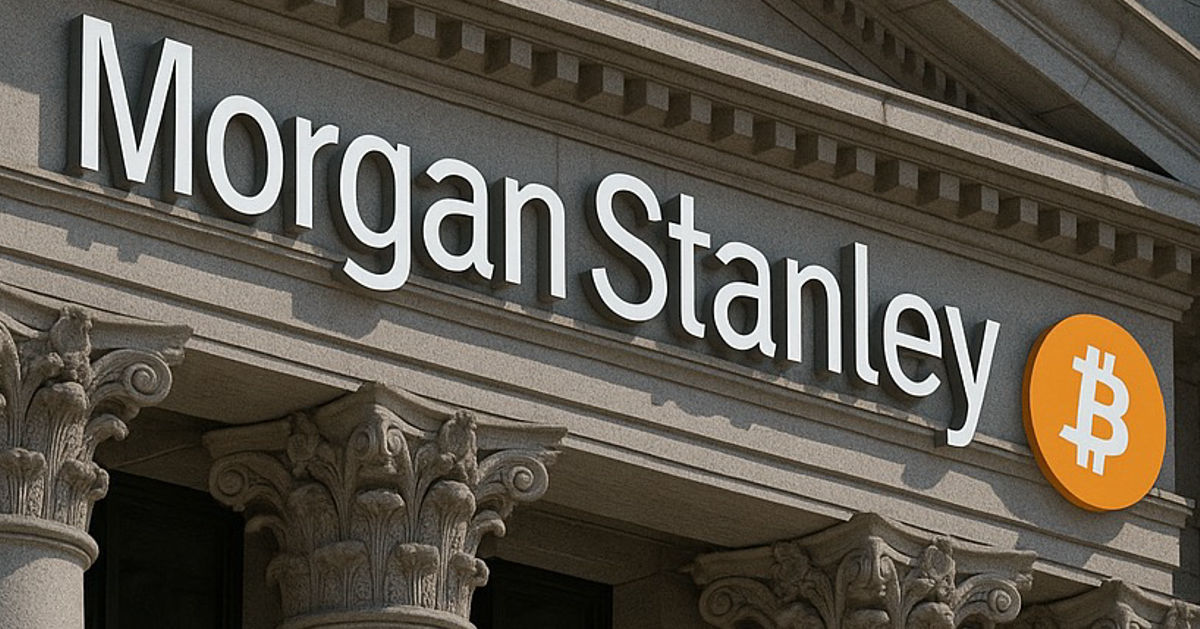
Against that backdrop, Morgan Stanley is positioning itself to take a more active role in the Bitcoin ETF market, reflecting a calculated expansion of its digital asset strategy as client demand continues to mature.
The development places the Wall Street firm alongside established players such as BlackRock and Fidelity Investments, both of which have already rolled out Bitcoin ETF products following approval from the U.S. Securities and Exchange Commission. That regulatory green light marked a turning point, giving institutional and retail investors a compliant route to gain exposure to Bitcoin without directly holding the asset.
Morgan Stanley’s approach is expected to centre on either launching a proprietary Bitcoin ETF or widening access to existing offerings across its wealth management platform. The bank has previously tested the waters by granting select clients exposure to Bitcoin-linked funds, but this step signals a more deliberate alignment with the ETF ecosystem.
Traditional financial institutions are increasingly formalising their crypto strategies, moving beyond cautious pilots into structured, revenue-generating products. Spot Bitcoin ETFs, in particular, have experienced strong inflows since their launch, driven by a combination of institutional allocations and increasing retail participation.
Market dynamics are reinforcing this direction. Bitcoin’s relative price stability in recent months, combined with clearer regulatory signals in the United States, has reduced some of the uncertainty that previously kept large financial firms at arm’s length. At the same time, competition among ETF providers is tightening, with firms differentiating through fees, liquidity depth, and distribution reach.
Morgan Stanley’s scale could prove decisive. With access to a broad base of high-net-worth and institutional clients, the bank is well-positioned to channel significant capital into Bitcoin-linked products, potentially changing market share dynamics in the ETF space.
What is unfolding points to a structural change. As legacy financial institutions progress their involvement in Bitcoin ETFs, digital assets are becoming increasingly embedded within traditional portfolio construction, marking a steady convergence between conventional finance and the crypto economy.
Read also: Kenya Proposes 4 Million Capital Requirement for Stablecoin Issuers