
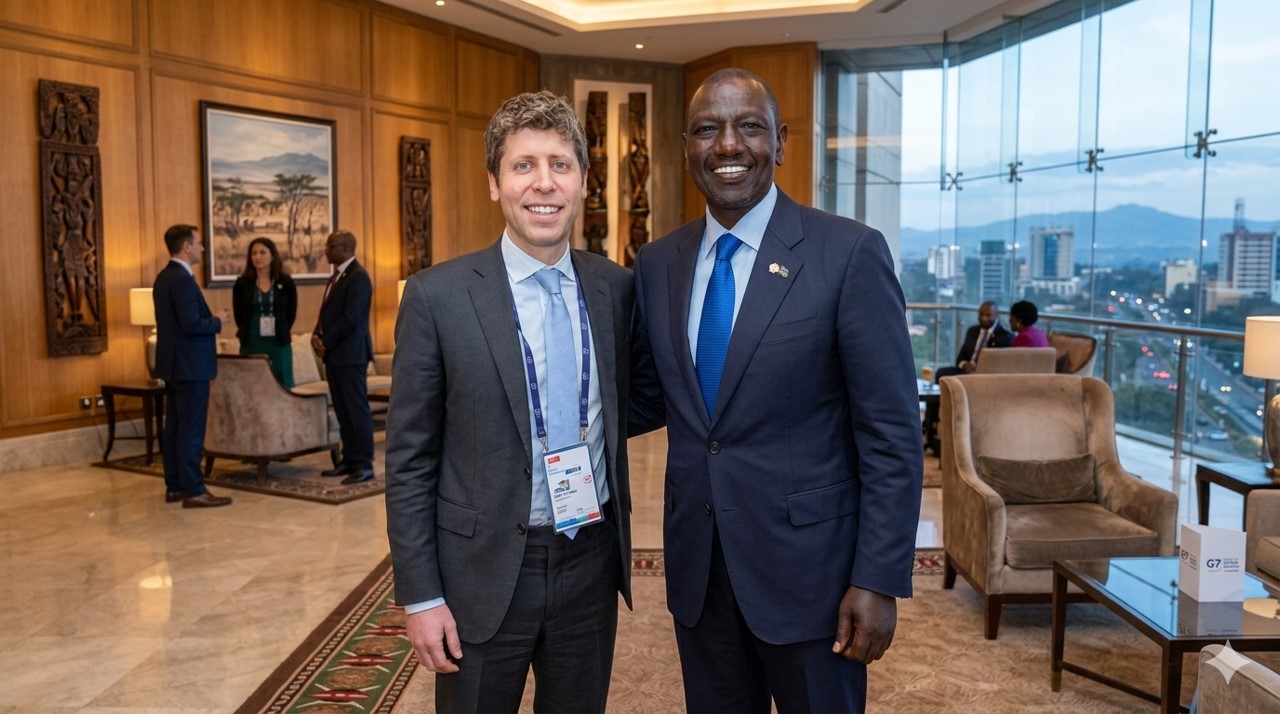
Kenyan President William Ruto met with OpenAI Chief Executive Officer Sam Altman to discuss positioning Nairobi as the hub for the first OpenAI Academy initiative in Eastern Africa, according to a statement from the presidency.
The meeting, which took place this week, centred on expanding artificial intelligence education and digital skills development across the region.
The proposed academy would form part of OpenAI’s broader effort to extend AI education beyond the United States and Europe. Altman has previously announced plans to establish OpenAI Academies in multiple countries, focusing on training developers and building local AI talent.
What is the OpenAI Academy?
The OpenAI Academy is a global initiative launched in May 2024 to provide AI training, resources, and access to OpenAI’s technology for developers and organisations in underserved regions. The programme offers funding, technical support, and credits for using OpenAI’s application programming interface.
It aims to support developers building AI solutions for local challenges, particularly in sectors such as healthcare, agriculture, and education. The academy model mirrors similar efforts by Google, Microsoft, and other technology firms to establish training centres across emerging markets.
Kenya to become an AI hub
Kenya has positioned itself as a technology and innovation leader in East Africa. Nairobi is home to a growing number of tech startups, venture capital firms, and multinational technology offices, earning the city the informal title of “Silicon Savannah.”
The government has backed several digital transformation initiatives in recent years, including investments in broadband infrastructure and digital identity systems, as well as support for local tech talent. The country launched a national AI strategy in 2023, outlining plans to integrate AI across public services and private sector operations.
However, challenges remain. Internet penetration stands at approximately 30 percent nationally, according to the Communications Authority of Kenya. Access to affordable devices and electricity remains limited in rural areas. The country also faces a shortage of AI specialists and data scientists, a gap the proposed OpenAI Academy would aim to address.
OpenAI’s interest in Kenya reflects a wider pattern of American and European technology companies expanding their presence in Africa. Microsoft opened its first African Development Centre in Nairobi in 2019. Google has invested in subsea cables and cloud infrastructure across the continent. Meta has supported internet connectivity projects in multiple African countries.
These investments come amid concerns about Africa’s limited participation in the global AI economy. A 2023 report by the International Telecommunication Union found that African countries accounted for less than 1 percent of global AI research output. The continent also faces regulatory uncertainty, with only a handful of countries having published AI policies or frameworks.
For Kenya, hosting the first OpenAI Academy in Eastern Africa could strengthen its position as a regional technology centre. It could also accelerate AI adoption among local developers and startups, potentially creating solutions tailored to African challenges.
Whether the initiative will translate into tangible economic benefits depends on execution. Past technology partnership announcements in Africa have not always resulted in sustained investment or capacity building. The success of the proposed academy will likely hinge on long-term funding, curriculum design, and alignment with Kenya’s existing education and technology infrastructure.
Neither OpenAI nor the Kenyan government has announced a timeline for the academy’s launch or details on funding and curriculum.