
Introduction
Imagine a small retailer that has just received a large order from a supermarket. The retailer knows it can make a profit from the deal, but there is a problem. It needs money to buy the goods and fulfil the order, while the supermarket may not pay for another 30 or 60 days.
For a business with limited cash reserves, that waitingeperiod can be a serious problem.This is the kind of financing gap Jia is trying to address.
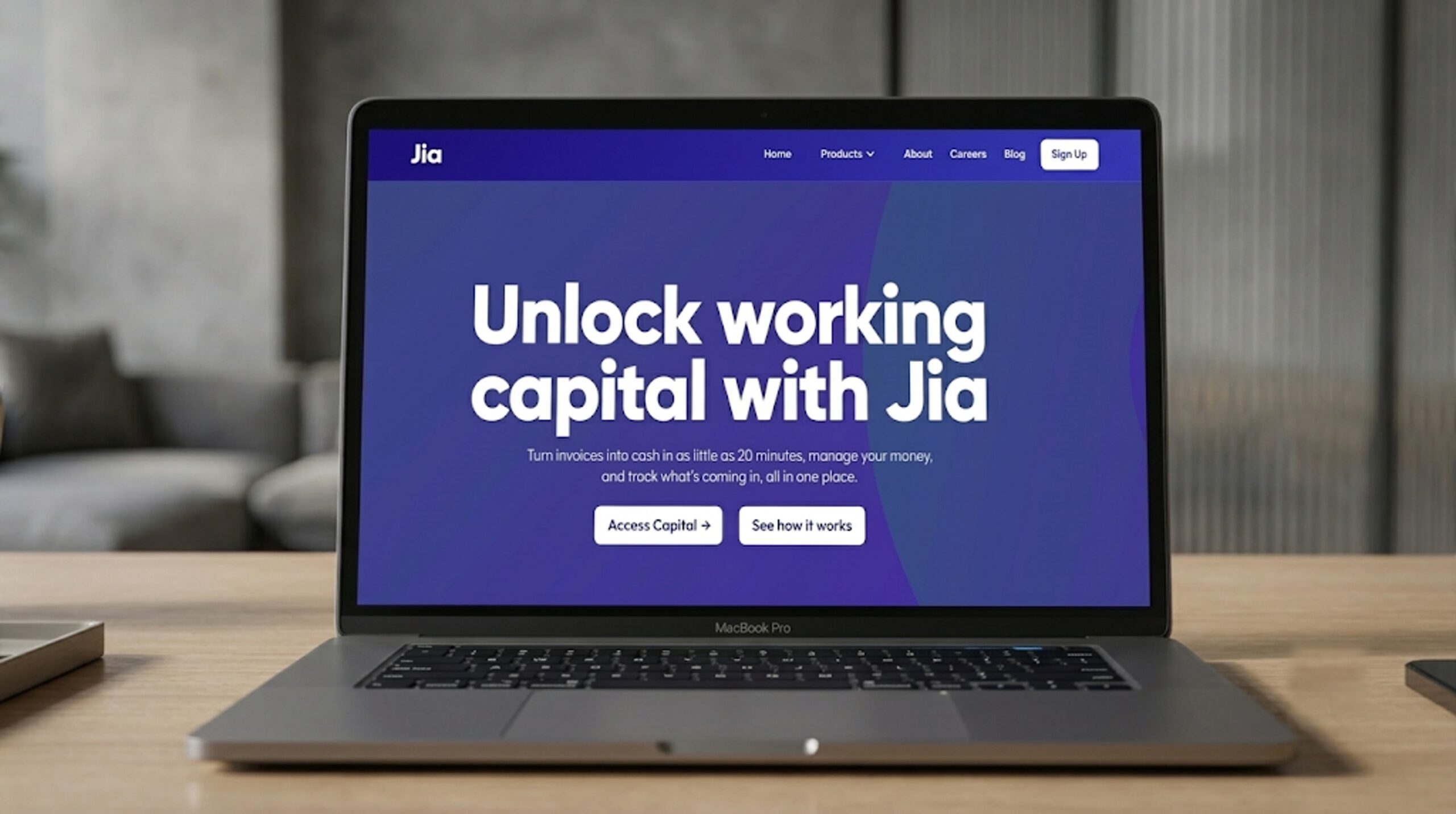
Founded in 2022 by a team with backgrounds in microfinance and fintech, Jia provides financing to small and medium-sized businesses. The company combines conventional credit assessment with blockchain infrastructure to connect businesses that need working capital with capital providers looking for exposure to real-world credit.
Rather than using cryptocurrencies as collateral, Jia focuses on economic activity that already exists. Its model includes financing invoices, receivables and supply-chain transactions, using blockchain to represent and manage these assets digitally.
The company’s approach is built around a simple idea. Small businesses need better access to capital, while investors need more efficient ways to participate in credit markets that have traditionally been difficult to access.
Jia is trying to connect those two sides. The company began in Kenya and the Philippines and has since expanded its focus from direct small-business lending into a broader financial infrastructure platform. Today, its work sits at the intersection of fintech, private credit and blockchain, with the goal of making financing more accessible to businesses that have often been underserved by traditional financial institutions.
What is Jia?
Jia is a financing platform for small and medium-sized businesses. It was founded in 2022 by Zach Marks, Cheng Cheng, Ivan Orone and Yuting Wang, a team with experience in microfinance and fintech. Before starting Jia, the founders had worked at Tala, a digital lender that provides financial services in emerging markets.
Their experience gave them a close look at the difficulties small businesses face when trying to access credit.
For many businesses, the problem is not always a lack of customers or revenue. A business may have regular sales and good prospects but still struggle to get a loan because it does not have the collateral or credit history that a traditional bank expects.
Jia’s early product focused on providing small businesses with working capital while using blockchain to connect that lending activity with investors. The company started with loans for businesses in emerging markets and later expanded its focus to include invoice and supply-chain financing.
The decision to work with small businesses was deliberate. Jia’s founders had already seen how technology could make lending more accessible to individuals, but they believed a similar opportunity existed on the business side.
A small company that cannot get enough working capital may be forced to turn down new orders, delay payments to suppliers or slow down its expansion. Giving that company access to financing can have a direct effect on its ability to operate.
The company provides businesses with access to working capital and is building infrastructure around receivables financing, invoice financing and supply-chain finance.
These forms of financing are important because businesses often have money coming to them but cannot access it immediately.
Jia uses real-world business activity as the basis for its financing model.
This is also where blockchain comes into the picture. Jia can represent certain real-world financial assets on-chain, allowing them to be managed and financed through blockchain infrastructure.
The company is therefore not simply building another crypto lending platform. Its focus is on bringing traditional business credit into a system that can use blockchain to connect borrowers, lenders and capital providers.
How Jia works
Jia assesses a company’s financial position before deciding whether it qualifies for financing. The company says its assessment can take into account information such as revenue, expenses, purchasing history and other business data.
This is important because lending to a small business requires more than looking at a wallet address or a crypto balance. The lender needs to understand how the business makes money and whether it has the ability to repay the financing.
Once a business qualifies, Jia can provide financing based on the product involved.
On the other side of the model are the capital providers.
Jia’s blockchain infrastructure is designed to connect this real-world credit with investors and other sources of capital. Instead of keeping the financing process entirely within a traditional banking system, the company uses blockchain to create a digital layer around the underlying assets.
That can make it easier to track transactions and create structures through which outside capital can participate in emerging-market credit.
Jia’s use of real-world assets
Real-world assets have become one of the more closely watched areas of the blockchain industry, and Jia is approaching the sector from the credit side.
The company is interested in assets that already have economic value outside the blockchain. Invoices and receivables are examples.
Tokenizing an invoice does not create value by itself. The value comes from the underlying transaction and the money that the business expects to receive.
The blockchain provides a way to represent that asset digitally and record activity around it.
This distinction matters because it separates Jia’s model from projects that create tokens without an underlying business or financial asset.
For Jia, the blockchain is infrastructure. The business transaction comes first.
From small-business loans to broader financing infrastructure
When the company launched, its focus was largely on providing loans to small businesses. Its early financing products included relatively small loans that businesses could use for working capital.
Over time, Jia began placing greater emphasis on receivables and supply-chain financing.That change gives the company a broader opportunity. Instead of simply lending its own capital to businesses, Jia can build infrastructure that allows other financial institutions and capital providers to participate.
The company now describes its platform as infrastructure that can support other lenders through APIs and white-label products.
This is an important part of Jia’s development because building a lending business and building financial infrastructure are two different things.
A lender needs to find borrowers, assess them and manage repayments. An infrastructure company can potentially provide the technology that allows several financial institutions to perform those activities more efficiently.
Jia’s rewards model
Jia has also experimented with giving borrowers a greater role in the value created by its platform.
Its early model included Jia points, which rewarded borrowers for activities such as taking loans and repaying them. The idea was to give businesses a stake in the ecosystem rather than treating them only as customers.
Traditional lenders generally charge interest and collect repayments. The relationship ends there. Jia’s rewards model attempted to create another layer by giving active borrowers the opportunity to benefit from participating in the platform.
The concept also fits the company’s wider interest in using blockchain to create new forms of financial participation.
However, rewards programmes in crypto can change quickly, and users should distinguish between points, platform incentives and actual ownership or guaranteed financial returns. Jia’s current products and terms should therefore be checked directly before making any investment or financing decision.
Funding and partnerships
In 2023, the company announced a $4.3 million seed round led by investors including Tala founder Shivani Siroya, with participation from other investors in the fintech and blockchain sectors. The funding was intended to support Jia’s expansion and development of its lending platform.
The company also worked with partners in the blockchain and fintech sectors as it developed its on-chain credit model.
One notable early partnership was with Huma Finance, through which Jia brought its lending activity into an on-chain credit pool.
These partnerships were important because Jia was trying to connect two industries that traditionally operated separately: emerging-market lending and decentralized finance.
Its later focus on receivables and supply-chain finance suggests that the company is continuing to look for ways to bring more forms of business credit into this model.
Challenges and limitations
Small-business lending carries real credit risk. A business can have strong sales and still fail to repay a loan because of changing market conditions, poor cash-flow management or unexpected expenses.
Jia therefore needs strong underwriting and risk-management systems as it grows.
There is also the challenge of expanding blockchain-based credit infrastructure across different countries. Financial regulations, lending rules and requirements around digital assets vary from one market to another.
The company also faces competition from traditional lenders, fintech companies and newer blockchain-based credit platforms. Being able to offer financing is not enough. Jia needs to show that its model can provide better access, better efficiency or better economics than existing alternatives.
Then there is the challenge of building trust.
Businesses need to know that they can depend on their financing provider when they have an order to fulfil or an invoice waiting to be paid. Investors, meanwhile, need confidence in the underlying assets and the systems used to assess borrowers.
Those are not problems that blockchain alone can solve.
Final thoughts
Jia is trying to solve an old financial problem with newer infrastructure.
Small businesses have always needed working capital. The challenge is that many of them do not fit neatly into the lending models used by traditional financial institutions.
Jia’s approach is to use business data, credit assessment and real-world receivables to provide financing, while using blockchain to create a connection between those assets and a wider pool of capital.
The company has evolved considerably since it first focused on small-business loans. Its growing interest in invoice financing, supply-chain finance and infrastructure for other lenders suggests that Jia wants to become more than a lender.
There are still questions around credit risk, regulation, competition and the ability to scale across emerging markets. Those challenges will determine whether the model can work beyond individual financing programmes.
The company’s bet is that blockchain can make the process of connecting those businesses with capital more efficient, transparent and accessible. Whether that bet pays off will depend less on the popularity of crypto and more on whether Jia can consistently deliver financing to businesses that need it.