
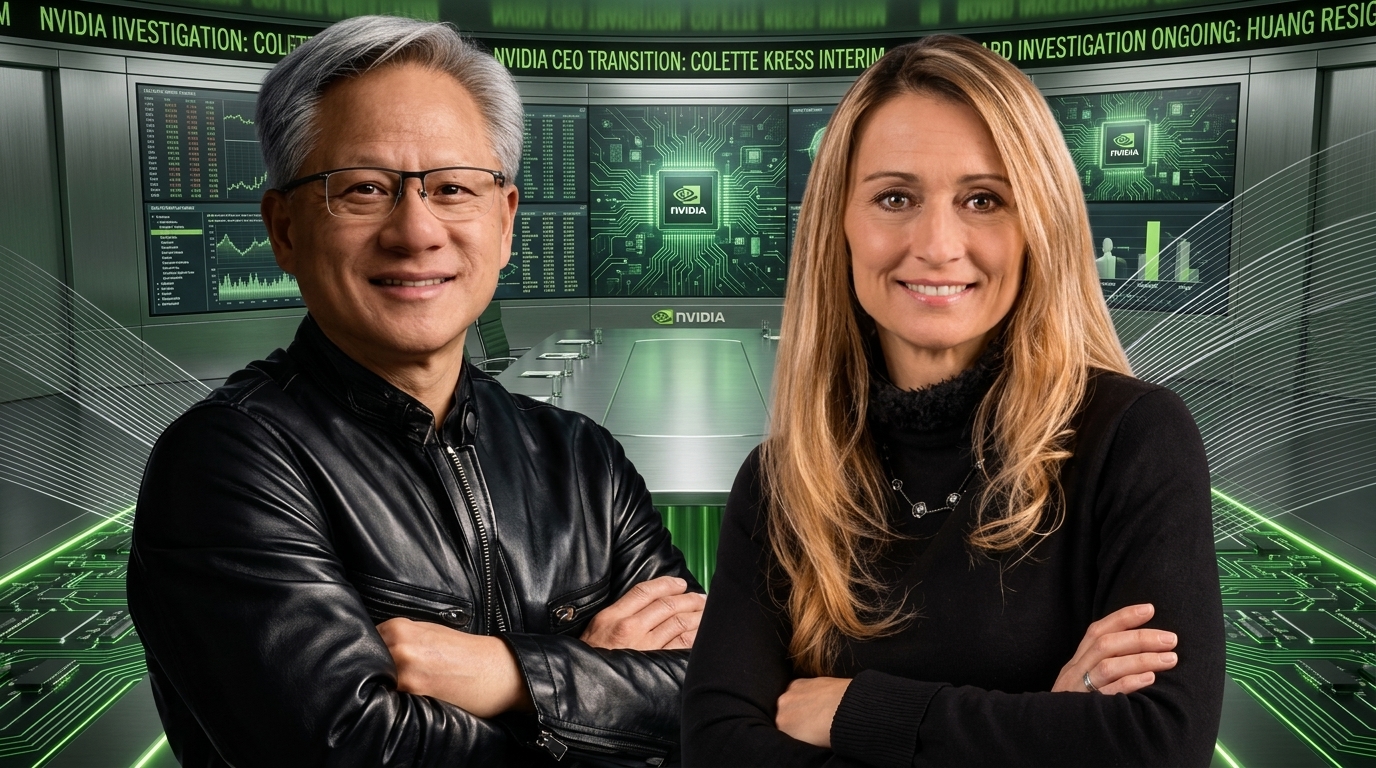
Jensen Huang has resigned as chief executive officer of Nvidia, ending more than three decades at the helm of the company he co-founded and helped transform into one of the world’s most influential artificial intelligence and semiconductor businesses.
Nvidia announced the resignation on November 12, 2026, saying Huang had stepped down as president, CEO and a member of the board, effective immediately.
The company appointed its Chief Financial Officer, Colette Kress, as interim CEO while its board begins searching for a permanent replacement. Kress will continue serving as CFO alongside her new responsibilities. Harvey Jones, a longtime Nvidia director, has also been appointed the company’s first-ever board chair.
Why Jensen Huang resigned
Nvidia did not give a specific reason for Huang’s departure in its official announcement. However, the resignation follows growing scrutiny over reports of his personal relationships and an investigation into whether he had been targeted by a foreign intelligence operation.
Reports linked Huang to Alice Huang, a Chinese businesswoman and former executive at Megaspeed International whom US authorities suspect of having connections to Chinese intelligence. The two are not related.
US authorities have not established that she was acting as a Chinese spy. Attorney General Todd Blanche said the Justice Department had not concluded the allegation. The controversy also intensified after reports emerged of another relationship involving an Nvidia employee.
Nvidia’s board had launched an independent investigation into whether Huang had been targeted by a foreign intelligence operation. The company has not publicly established that its confidential information was compromised.
Who takes over from Jensen Huang?
Colette Kress, who joined Nvidia in September 2013, will lead the company on an interim basis.
Before joining Nvidia, she held senior finance positions at technology companies including Cisco and Microsoft. She has played a central role in managing Nvidia’s finances during its expansion into the AI market.
The board said it would consider both internal and external candidates for the permanent CEO position.
Huang’s departure also means Nvidia loses a central figure in its relationships with customers, technology partners and policymakers. He played a major role in building the company’s position in the AI industry and advocating for its business interests, including access to the Chinese market.
What happens to Huang’s Nvidia stake?
Although Huang has stepped down from his executive and board positions, he remains a major Nvidia shareholder.
According to Reuters, he holds approximately 3.61% of the company. His resignation does not mean he has sold his shares or ended his financial connection to Nvidia.
The leadership change has nevertheless raised questions about the company’s direction and ability to maintain its momentum without the executive who has led it for 33 years.
Nvidia said its operations, customer commitments and product roadmap would continue without interruption under the existing leadership team.
The company is scheduled to report its third-quarter fiscal 2027 financial results on November 17.
Huang’s departure marks a significant turning point for Nvidia at a time when demand for AI chips remains central to the global technology industry. The immediate challenge for the company will be maintaining investor confidence and operational continuity while finding a permanent successor.
Read also: Thailand launches crypto payment app for foreign tourists