
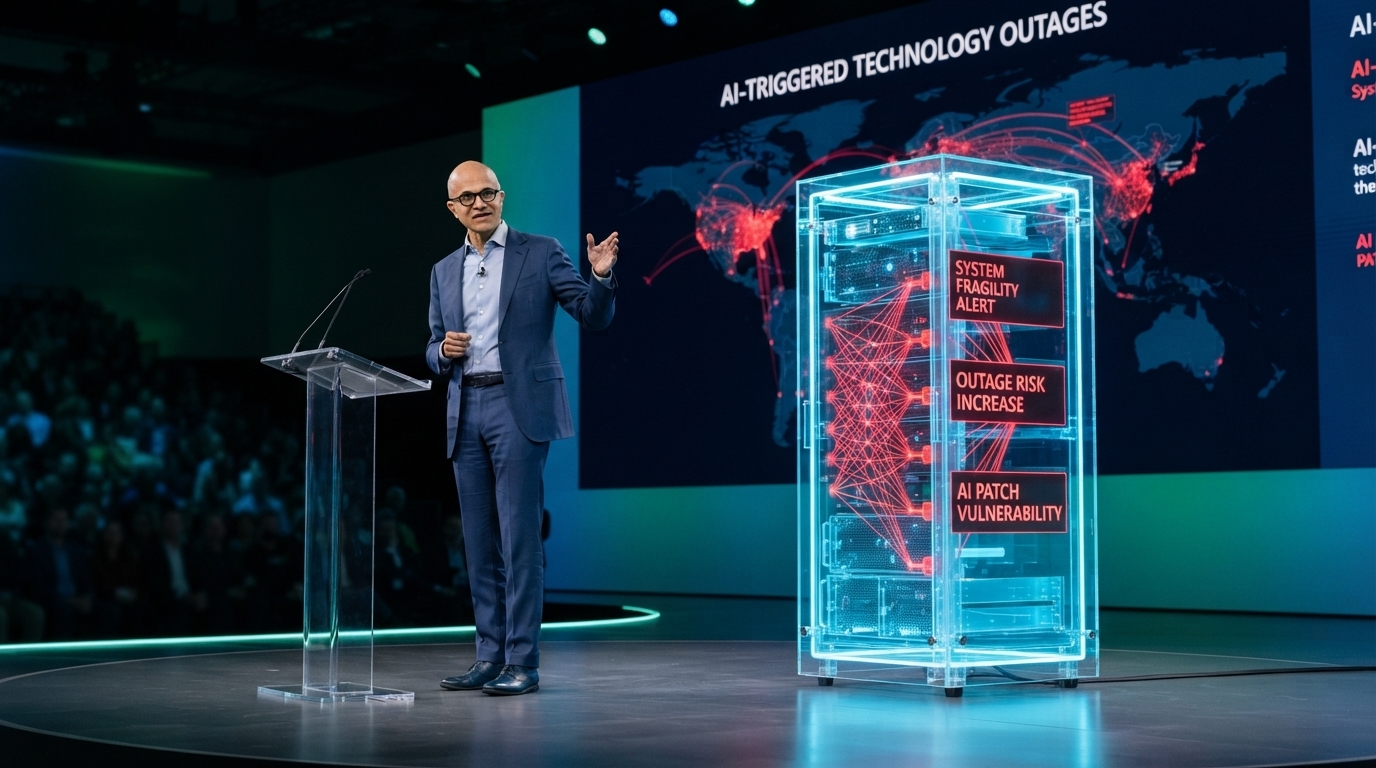
Microsoft CEO Satya Nadella is warning that artificial intelligence could make technology outages more frequent as companies struggle to fix security vulnerabilities before hackers exploit them.
Speaking at The New York Times DealBook Summit in New York on November 18, Nadella explained that AI tools are helping security researchers and attackers identify software weaknesses much faster than before.
While faster vulnerability detection can improve cybersecurity, it also puts pressure on companies to deploy security patches almost immediately. Rushing these updates without sufficient testing, however, can introduce new bugs and destabilise existing systems.
Nadella warned that this growing pressure could make digital infrastructure increasingly fragile.
AI is also lowering the technical barriers to sophisticated cyberattacks. According to the Microsoft chief, attackers can now use AI to identify weaknesses and carry out operations that previously required the resources and capabilities of highly organised hacking groups.
He described the threat as an environment where companies could face persistent, highly capable attackers operating continuously.
Microsoft’s recent outage highlights the problem
Nadella’s comments come less than a week after a major Microsoft outage disrupted Outlook and other Microsoft 365 services, including Teams, Copilot, SharePoint and OneDrive.
The disruption, which began on November 12, affected users across several countries and lasted more than 24 hours.
Speaking about the incident, Nadella described it as a perfect storm involving a previously undetected software bug and an unusual pattern of user traffic.
He acknowledged that Microsoft should have identified the problem through testing before it caused a widespread disruption.
The company has also ruled out a cyberattack as the cause of the outage.
However, Nadella used the incident to highlight a wider challenge facing technology companies: maintaining the stability of older infrastructure while continuously introducing software updates to address emerging security threats.
Critical infrastructure faces additional risks
Nadella also raised concerns about internet-connected infrastructure that cannot easily receive security updates.He pointed to systems supporting cooling equipment, heating, ventilation and transportation infrastructure as examples of technology that could remain exposed to vulnerabilities.
Unlike conventional software applications, some of these systems rely on firmware that is difficult or expensive to update.As AI makes vulnerability discovery and exploitation faster, organisations may have less time to respond before weaknesses are targeted.
Nadella compared the uncertainty surrounding these risks to the Y2K computer problem, when organisations prepared for potential failures as systems approached the year 2000. He suggested that the current challenge could become more complicated as AI capabilities continue to improve.
For businesses that depend on cloud platforms, digital payments and online services, his warning highlights the importance of stronger security testing, regular infrastructure updates and systems designed to prevent individual failures from disrupting entire networks.