Africa’s supply chains have always been a complex terrain, with long routes, fragmented documentation, inconsistent verification systems, and multiple intermediaries who rarely operate on the same standard. These weaknesses lead to duplicated paperwork, fraud risks, inventory distortions, and costly delays that hurt exporters and local businesses.
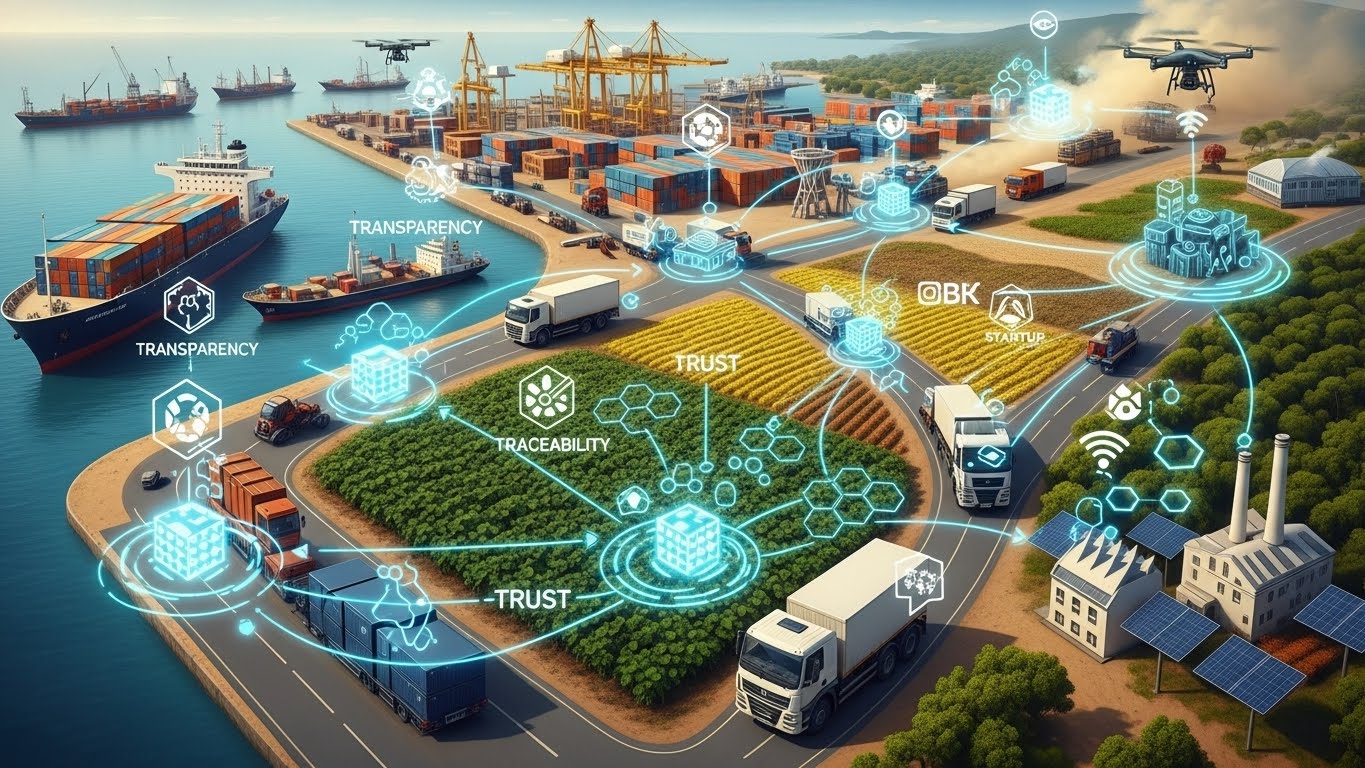
Today, startups across the continent are introducing blockchain-based systems that create consistent, tamper-proof records across various industries, including logistics, agriculture, mining, and pharmaceuticals. While global markets often discuss blockchain in abstract terms, Africa is applying it to practical, day-to-day problems that directly influence trade, revenue flows, and compliance.
The continent handles high-value exports, including cocoa, tea, minerals, and pharmaceuticals, where authenticity and traceability are crucial. Buyers in Europe, Asia, and North America increasingly demand proof of origin, ethical sourcing, and regulatory compliance. Traditional paper trails cannot meet these expectations at scale.
Blockchain provides a structured, verifiable ledger where:
- Every transaction, inspection, or movement is recorded with a permanent timestamp
- Documentation cannot be retroactively altered
- All participants, farmers, transporters, Customs, distributors, see the same version of truth
- Audits become simpler and faster
- Fraud, counterfeiting, and data inconsistencies decline
For many African exporters, this transparency is no longer optional; it’s a survival strategy in a world where regulations become tougher annually.
Across Africa, blockchain is transforming how industries ensure transparency, accountability, and trust in traditionally opaque supply chains. In Kenya’s agri-tech sector, startups are integrating blockchain to track produce from smallholder farms all the way to export hubs.
Every step, harvesting, sorting, packaging, and transportation, is recorded on an immutable ledger. Exporters can now provide buyers with detailed, verifiable traceability records, meeting the strictest global food safety and export standards. For international partners, this level of transparency is a game-changer: it reduces disputes, ensures compliance with regulations such as the EU’s food safety protocols, and enhances Kenya’s reputation as a reliable supplier of high-quality agricultural products.
In Nigeria, logistics startups are applying blockchain to record container journeys, freight documents, and delivery confirmations on-chain. This technology drastically reduces duplicate documentation, prevents data manipulation, and accelerates clearance processes at ports and checkpoints. Banks and financiers benefit as well; with verifiable proof of cargo movements, they can confidently underwrite loans or trade financing, mitigating risks that traditionally plagued cross-border logistics. The result is not just operational efficiency, but a tangible increase in trust across every link of the chain.
Meanwhile, South African mining firms are leveraging blockchain provenance tools to satisfy increasingly strict international mineral sourcing regulations. Buyers of gold, platinum, and other precious metals demand proof of ethical extraction, proper labour standards, and environmental compliance. Blockchain enables a full audit trail from mine to market, providing verifiable proof of origin that protects both miners and purchasers. This ensures that African resources are traded under fair, transparent conditions, opening doors to premium markets while reducing the risk of fraud or sanctions.
Even the pharmaceutical industry in East Africa is harnessing blockchain to fight counterfeit drugs, a persistent and deadly problem. By recording every step of the supply chain, from manufacturing to distribution, companies can authenticate medicines and track their movement to pharmacies and hospitals. Patients, regulators, and health organisations gain confidence that products are genuine and safe, while distributors protect themselves from liability and revenue losses associated with counterfeit circulation.
A new standard for accountability
When documentation becomes tamper-proof, everything else strengthens, including contracts, audits, inspections, and international partnerships. Exporters working with blockchain-backed systems now negotiate better terms because buyers trust their records.
For governments, these tools reduce revenue leakages and create reliable data for policy decisions. For banks and financiers, on-chain documentation reduces lending risk. For customers, it assures product quality.
Blockchain is not replacing supply chain systems; it’s reinforcing them. It gives African producers, distributors, and regulators the credibility required to compete in global markets where proof is more valuable than promises.
Final Thoughts
Africa is no longer an experimental technology or a buzzword. It is a practical, operational tool that strengthens trust, efficiency, and compliance across industries critical to the continent’s economic growth.
By providing verifiable transparency, blockchain empowers farmers, exporters, financiers, miners, and distributors alike, fostering stronger relationships between local producers and global markets. Africa’s embrace of this technology signals not just innovation, but a commitment to building systems that are accountable, reliable, and globally competitive.