Japan is gearing up for one of its most consequential digital-asset reforms in years, signaling a renewed commitment to positioning itself as a global hub for Web3 innovation. The country’s Financial Services Agency (FSA), working closely with policymakers and industry stakeholders, has unveiled plans to overhaul how cryptocurrencies are classified, regulated, and taxed. This marks a strategic pivot for a nation that has often taken a cautious stance on digital assets since the Mt. Gox era.
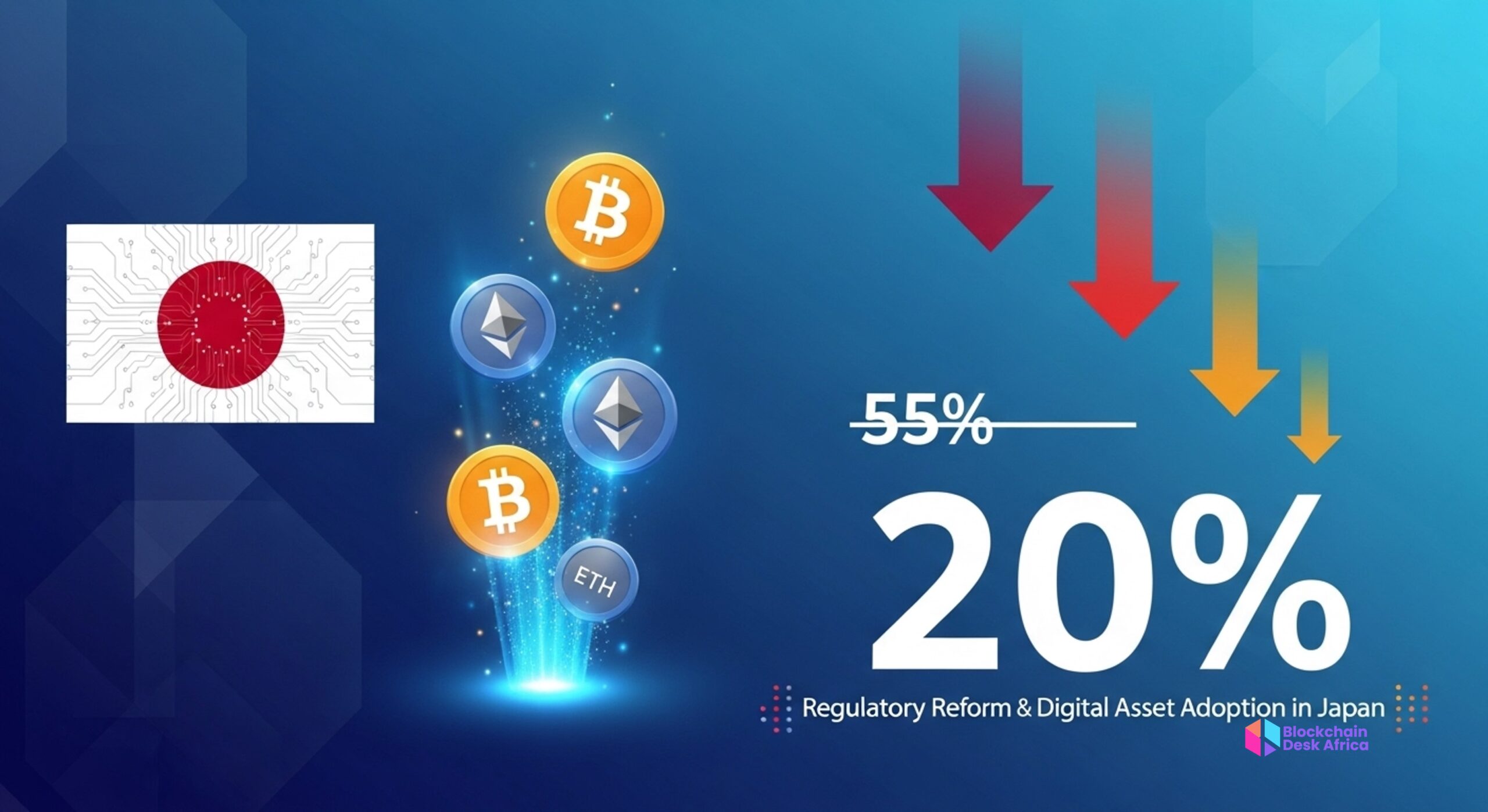
Today, Japan acknowledges that its rigid tax structure,where crypto gains are treated as miscellaneous income and taxed at rates as high as 55%,has pushed traders offshore, discouraged innovation, and unintentionally hampered growth. The new measures aim to correct that course, stimulate domestic participation, and make Japan competitive with global markets embracing friendlier crypto environments.
Regulatory overhaul: Crypto moves toward financial-product status
A central part of the reform is the FSA’s proposal to classify assets such as Bitcoin, Ethereum, and several approved tokens as financial products under the Financial Instruments and Exchange Act (FIEA).
This change is significant. It would move Japan toward a framework similar to its traditional securities market,one built on stricter transparency, enhanced investor protection, and more predictable regulatory behavior. Exchanges would be required to disclose detailed risk information for over 105 tokens, ranging from technological architecture to liquidity risks and the presence,or absence,of identifiable issuers.
By aligning crypto with conventional financial instruments, Japan is sending a clear signal: digital assets are no longer fringe experiments; they are part of the country’s long-term economic and technological roadmap.
A flat 20% tax and improved loss carry-forward
One of the most anticipated components of the reform is the introduction of a flat 20% tax rate on crypto gains,mirroring the tax structure applied to stock trading. This is a dramatic reduction from the current system, where individuals can pay up to 55% depending on their income bracket.
The new proposal also introduces a three-year loss carry-forward rule, allowing traders to offset future gains with previous losses. This alone is a game-changer for both retail and professional investors. It reduces volatility in tax liabilities, encourages long-term participation, and aligns Japan with more mature digital-asset markets like Singapore and parts of Europe.
For Japan—one of the world’s earliest adopters of crypto regulation—this marks an intentional shift toward competitive policy design, welcoming innovation without compromising oversight.
Possible timelines and structural risks
If the proposed framework clears legislative pathways, the new tax regime and asset classification system could become effective by fiscal year 2026. But while momentum is strong, the reform still faces potential friction,from political debates to technical adjustments required for financial institutions and exchanges to comply with new rules.
Some policymakers worry that labeling cryptoassets as financial instruments may impose compliance burdens that smaller exchanges may struggle to meet. Others caution that not all digital assets will benefit equally, as regulators continue to assess token-by-token risks.
Still, the general sentiment in Japan’s crypto ecosystem remains optimistic. Market participants see the reforms as overdue, necessary, and strategically sound.
Japan positions itself for a new digital-asset era
Japan’s proposed tax overhaul is more than a policy adjustment,it’s a strategic bet on the country’s future in blockchain innovation. By easing the tax burden, recognizing crypto as a legitimate financial product, and offering a regulatory environment that balances growth with protection, Japan is signaling its intent to reclaim leadership in the global digital-asset economy.
If implemented, these reforms could reignite domestic activity, attract global players, and reinforce Japan’s position as a forward-thinking, innovation-driven market,one ready to compete with the world’s fastest-growing Web3 ecosystems.
Read also: Nigerian Founder Builds One of Polkadot’s Biggest Bridges