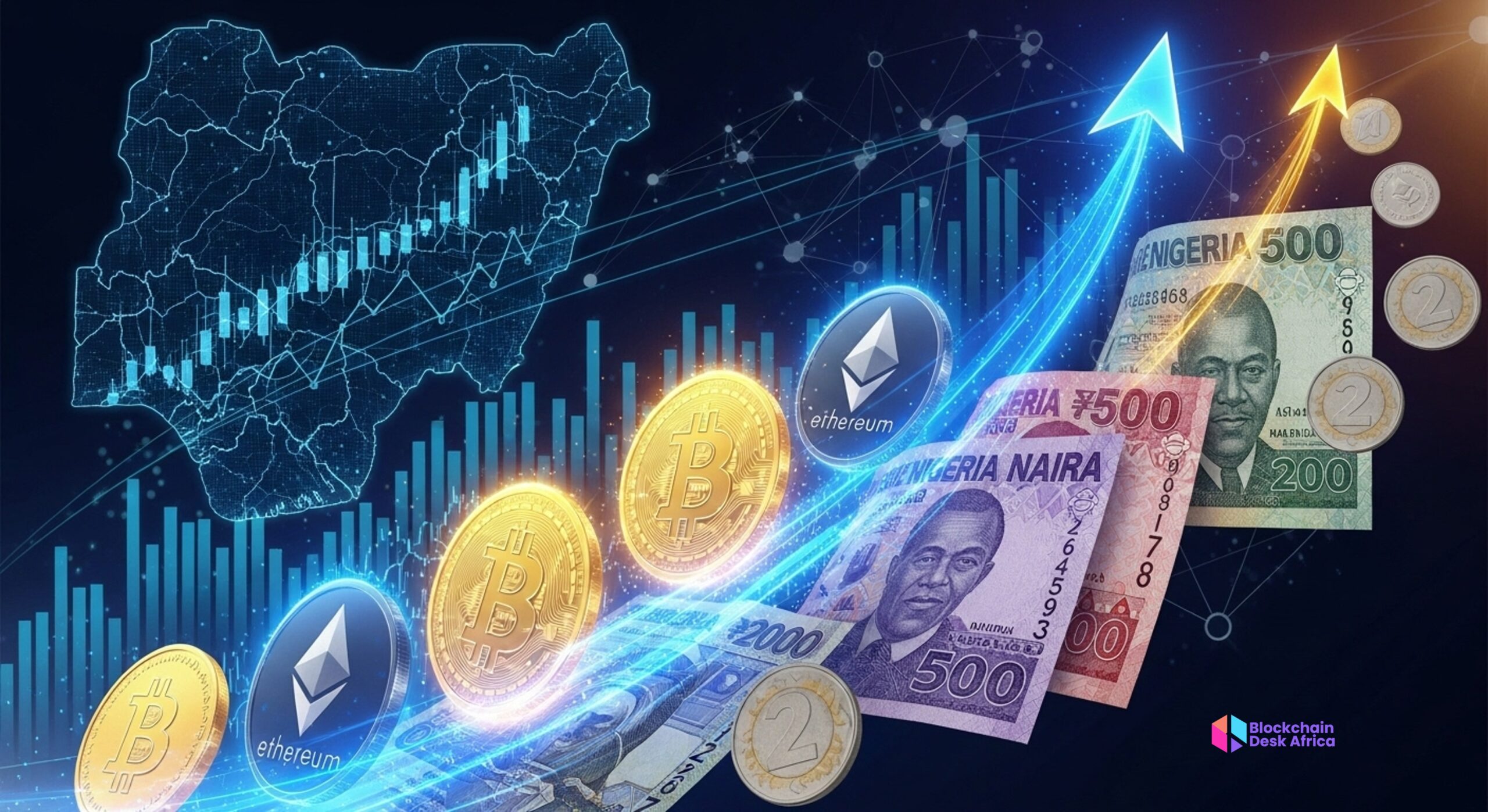
A new report by the Securities and Exchange Commission (SEC) confirms that Nigeria has processed cryptocurrency transactions worth over $50 billion between July 2023 and June 2024. The data was made public by the Director-General, Dr. Emomotimi Agama, during a press briefing in Abuja on Sunday, October 27.
Dr. Agama noted that the volume of crypto transactions reflects Nigerians’ strong appetite for high-risk digital investments. However, he pointed out a critical concern, that this enthusiasm for crypto contrasts sharply with the low participation in the traditional capital market.
While the capital market records only 4 percent participation among adults, millions of Nigerians trade crypto daily, often using informal exchanges or peer-to-peer platforms.
The SEC report described this situation as a “financial paradox.” It highlighted that while citizens actively speculate on crypto and gamble daily, few are engaged in regulated investments that can support national economic growth.
Dr. Agama mentioned that more than 60 million Nigerians gamble every day, with about $5.5 million spent daily on betting platforms. He linked this trend to a lack of financial education and the search for quick returns, which keeps many citizens away from structured, long-term investments.
Supporting this observation, a Chainalysis 2024 Geography of Cryptocurrency Report ranked Nigeria among the top ten countries in global crypto adoption, citing peer-to-peer transactions and remittance use cases as key drivers.
Nigeria’s digital currency engagement continues to rise, with blockchain research firms estimating that about 33 percent of Nigerians own or use crypto assets regularly.
Despite this, the SEC’s report drew attention to Nigeria’s low market capitalization-to-GDP ratio of 30 percent, far behind South Africa’s 320 percent, Malaysia’s 123 percent, and India’s 92 percent (BusinessDay). Dr. Agama stressed that this imbalance must be addressed by encouraging citizens to channel their investment energy toward productive ventures that can contribute to national development.
He added that Nigeria’s annual infrastructure deficit, valued at $150 billion, further emphasizes the need for deeper capital market participation. So far, only ₦1.5 trillion has been raised through Public-Private Partnership (PPP) bonds, a figure too small to drive the kind of infrastructure growth the country requires.
In his words, the SEC is undergoing a reformation process aimed at becoming more inclusive and technology-driven. He called for increased collaboration with fintechs, digital asset firms, and capital market operators to create accessible, transparent investment opportunities for everyday Nigerians.
This finding provides a clear insight into the financial behavior of Nigerian investors. It reveals that while citizens are eager to explore new forms of wealth creation through digital assets, the nation still struggles to convert that enthusiasm into structured economic productivity.
This is a reminder for policy makers that the same innovation driving crypto adoption can also power the country’s regulated financial growth if guided with vision and inclusion.