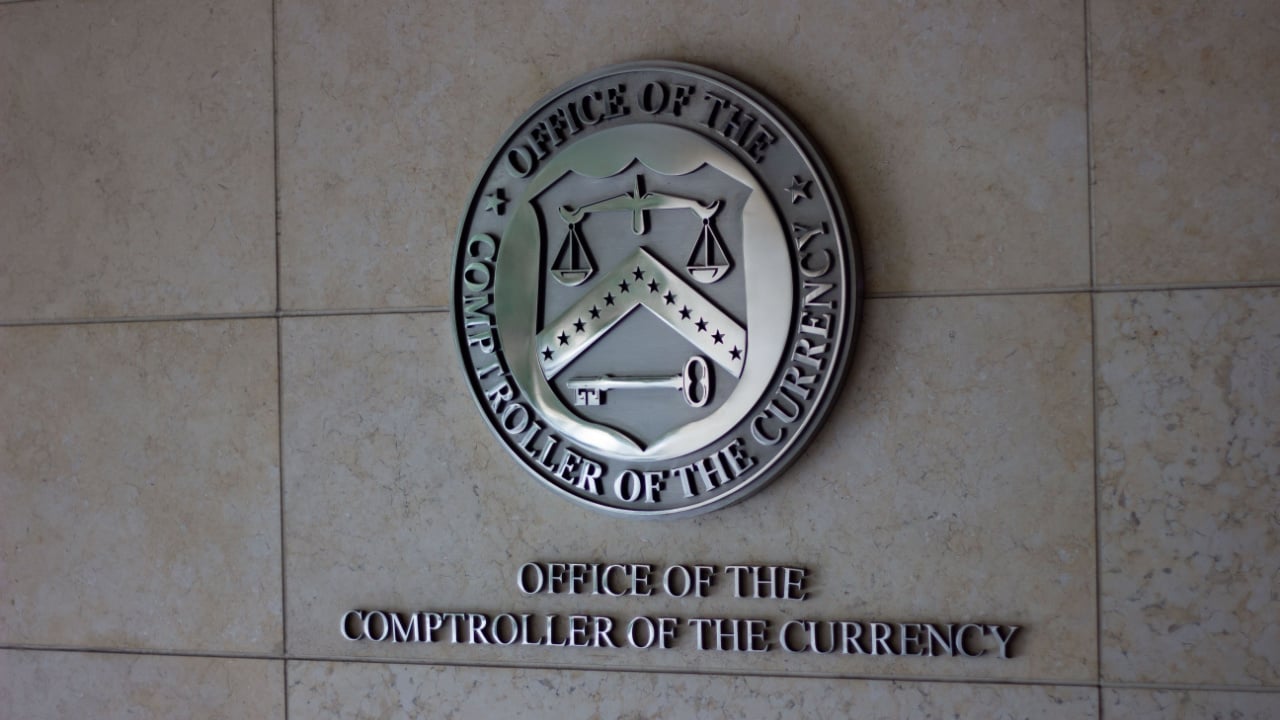
The Office of the Comptroller of the Currency (OCC) has taken a decisive step toward formalising how traditional banks participate in digital-asset markets. Through Interpretive Letter 1188, released, the regulator confirmed that U.S. national banks may now facilitate “riskless principal” crypto-asset transactions, a model where a bank matches a buyer and seller simultaneously without holding crypto on its balance sheet.
The move brings crypto execution into the same compliance perimeter that governs traditional brokerage activity. Banks can now step in as regulated intermediaries, helping clients buy and sell digital assets while avoiding direct market exposure. For a sector long defined by regulatory uncertainty, this clarity signals a maturing landscape and a firm shift toward institution-driven market structure.
Why the OCC is making this move now
This decision isn’t happening in isolation. It reflects a strategic recalibration by U.S. regulators after years of fragmented digital-asset oversight.
Earlier in the year, the OCC reaffirmed that national banks may engage in a broad suite of crypto-related activities, including custody, stablecoin operations and on-chain settlement services, so long as they remain within established risk-management and compliance frameworks. More recently, the OCC also allowed banks to hold crypto on their balance sheets for limited operational reasons, such as paying network fees or testing blockchain infrastructure.
Taken together, these actions mark a conservative but forward-moving approach: integrate crypto into banking through the lens of long-standing supervisory controls, not through experimental policy.
For the OCC, the rationale is straightforward .. , customer demand continues to rise, institutional markets continue to expand, and ignoring crypto now poses more systemic risk than building guardrails around it. The regulator is opting for structured innovation instead of letting activity migrate entirely to unregulated exchanges.
From a market strategy standpoint, banks also benefit. Crypto brokerage becomes a new revenue vertical backed by compliance, customer trust, and legacy infrastructure that fintechs and exchanges often struggle to match.
The opportunities this opens up
The OCC’s stance essentially greenlights banks to become formal players in digital-asset markets. The operational and strategic upside is significant:
- A regulated on-ramp for customers: Users can now access crypto services through institutions they already trust, reducing onboarding friction and bringing digital assets into the mainstream financial stack.
- Consolidation of liquidity under compliant rails: Banks, with their deep liquidity networks and payment infrastructure, are positioned to streamline crypto flows and reduce the fragmentation that has defined the industry for years.
- 5A pathway for more institutional products: This clarity allows banks to expand into tokenised settlements, enterprise blockchain services and potentially stablecoin-based payment solutions, all within a regulated perimeter.
- Enhanced customer protection: Banks operate under rigorous AML, KYC and operational-risk standards. If executed properly, this shift could reduce the frequency of customer losses tied to exchange failures, hacks or poor risk governance.
- The broader financial system wins when innovation is brought under disciplined, traditional oversight, a principle that has guided banking stability for decades.
Risks and challenges ahead
Still, this shift introduces consequential trade-offs that regulators, banks and crypto communities must navigate.
- Growing centralisation pressure: As banks take on a greater role in crypto transactions, market power could tilt heavily toward large financial institutions, crowding out smaller exchanges and weakening the decentralisation ethos that anchored early crypto adoption.
- New compliance and operational burdens: Running crypto brokerage services will require banks to invest heavily in cybersecurity, trade-surveillance systems, vendor-risk controls and blockchain-specific compliance. A single oversight failure could trigger significant regulatory scrutiny.
- Settlement and counterparty exposure: Even in a “riskless” model, execution mismatches or volatile market conditions could expose banks to settlement delays or counterparty defaults, risks they must mitigate through robust internal controls.
- Global regulatory misalignment: While the U.S. is crystallising its position, many jurisdictions, especially across Africa, remain in uncertain or restrictive territory. Divergent global frameworks may create arbitrage risks and complicate cross-border crypto operations.
- Potential dilution of crypto’s core values: The more traditional institutions take the lead, the more crypto’s original decentralised philosophy may be overshadowed by regulated, centralised financial infrastructure.
The OCC’s decision marks a pivotal point in how digital-asset markets integrate with traditional finance. For the banking sector, it is an invitation to innovate within the safety of long-established regulatory structures. For the crypto ecosystem, it introduces the promise of stability , and the tension of greater institutional influence.
Whether this development strengthens or reshapes the future of crypto depends on execution, governance and the market’s willingness to balance decentralisation with institutional participation.
Read also: NITDA alerts Nigerians to vulnerabilities in ChatGPT