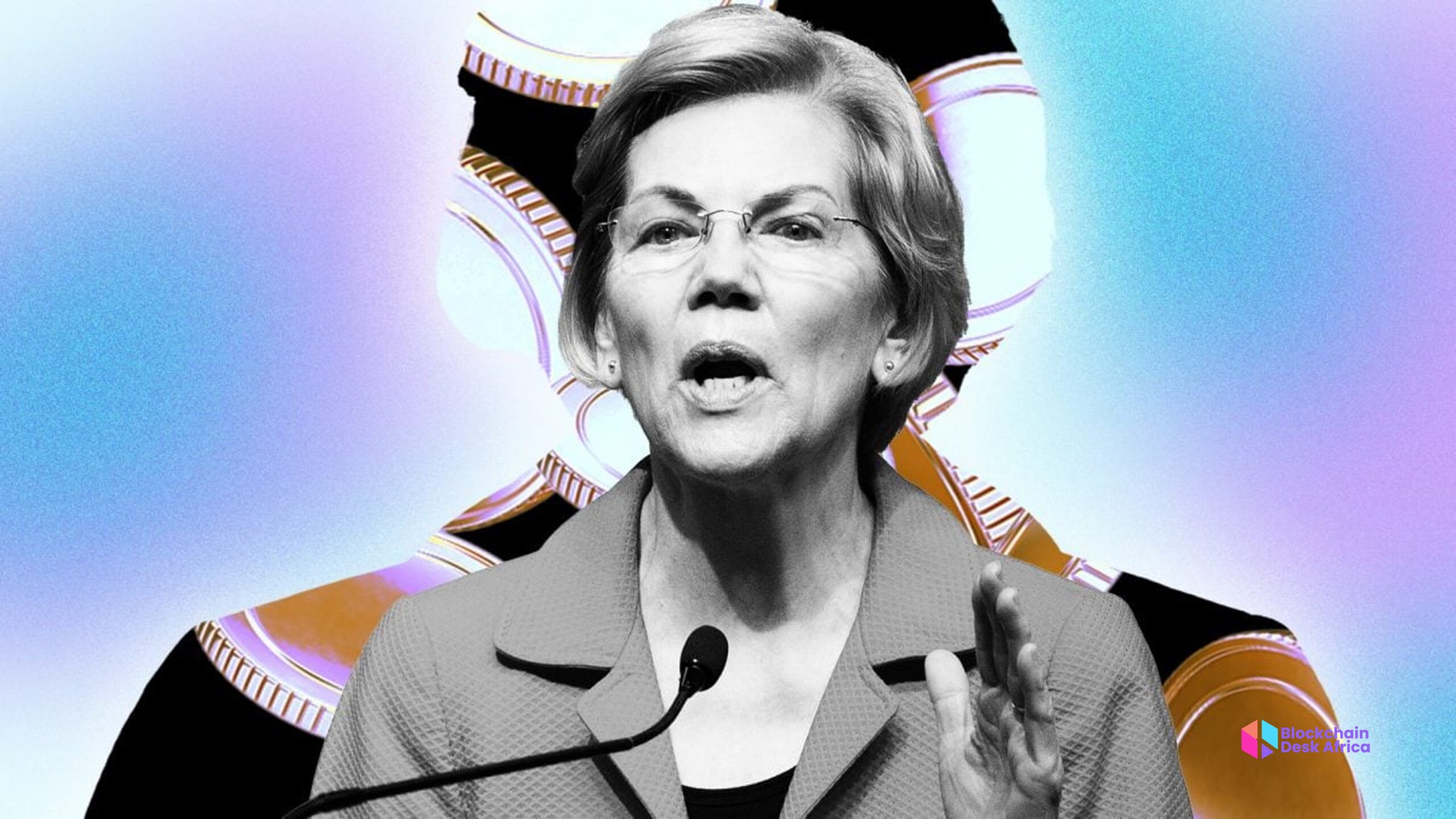
U.S. Senator Elizabeth Warren has introduced a resolution in Congress condemning President Donald Trump’s pardon of Binance founder, Changpeng Zhao, widely known as CZ. Warren described the pardon as a “dangerous precedent” that undermines accountability and trust in the justice system, saying Congress must act to prevent “politically motivated pardons.”
The resolution, co-sponsored by Representative Adam Schiff, was submitted on October 23, 2025, and has already sparked debate across political and crypto circles. It came just days after Trump decided to pardon CZ, who had served a four-month prison sentence after pleading guilty in 2023 to failing to maintain an effective anti–money laundering program at Binance.
In her official statement, Warren said:
“First, Changpeng Zhao pleaded guilty to a criminal money-laundering charge. Then he boosted one of Donald Trump’s crypto ventures and lobbied for a pardon. Today, Donald Trump took action and pardoned him. If Congress does not stop this kind of corruption in pending market-structure legislation, it owns this lawlessness.”
Her remarks, however, drew swift reactions, not because she condemned the pardon, but because her description of CZ’s plea as a “money-laundering charge” was legally inaccurate.
Several legal analysts and industry figures clarified that Zhao did not plead guilty to money laundering, but rather to compliance failures related to Binance’s anti–money laundering oversight.
Changpeng Zhao, who stepped down as Binance CEO following his plea deal, served his sentence at a low-security facility in California earlier this year. Binance itself agreed to pay $4.3 billion in fines as part of a broader settlement with U.S. authorities.
Following the renewed controversy, CZ took to X (formerly Twitter) to clarify that he had pled guilty to compliance failures, not money laundering. “Accuracy matters,” he wrote on @cz_binance.
His clarification quickly went viral, attracting thousands of comments from crypto users, analysts, and even executives who accused the senator of framing the case unfairly.
Mike Belshe, CEO of BitGo, also agreed to the fact that CZ pleaded guilty to failing to maintain an AML program, not to laundering money. Facts should matter, especially in Congress.
Political analysts say Warren’s resolution reflects a larger debate about the use of presidential pardons, especially when they involve high-profile figures with influence in business or finance.
Her critics, however, see the move as an attempt to discredit Trump’s growing ties to crypto supporters through his newly launched World Liberty Financial platform.
Despite the tension, both Warren and Zhao have stood by their respective positions. Warren insists the pardon “damages the credibility of justice,” while CZ and others argue her comments distort facts and deepen mistrust in crypto regulation.
Although the resolution is unlikely to pass the Senate, it has reignited national conversations about ethics, political power, and the intersection of justice and innovation.
In his most recent post, CZ appeared calm amid the ongoing debate, writing simply, “Let’s keep building,”
a statement many of his followers see as a message of focus and resilience.
Whether or not this political tug-of-war reshapes crypto regulation, one thing remains clear, the debate over CZ’s pardon has become a mirror reflecting how divided America remains over politics, influence, and the future of digital finance.
Read also: Japanese Startup Launches First Yen-Pegged Stablecoin