
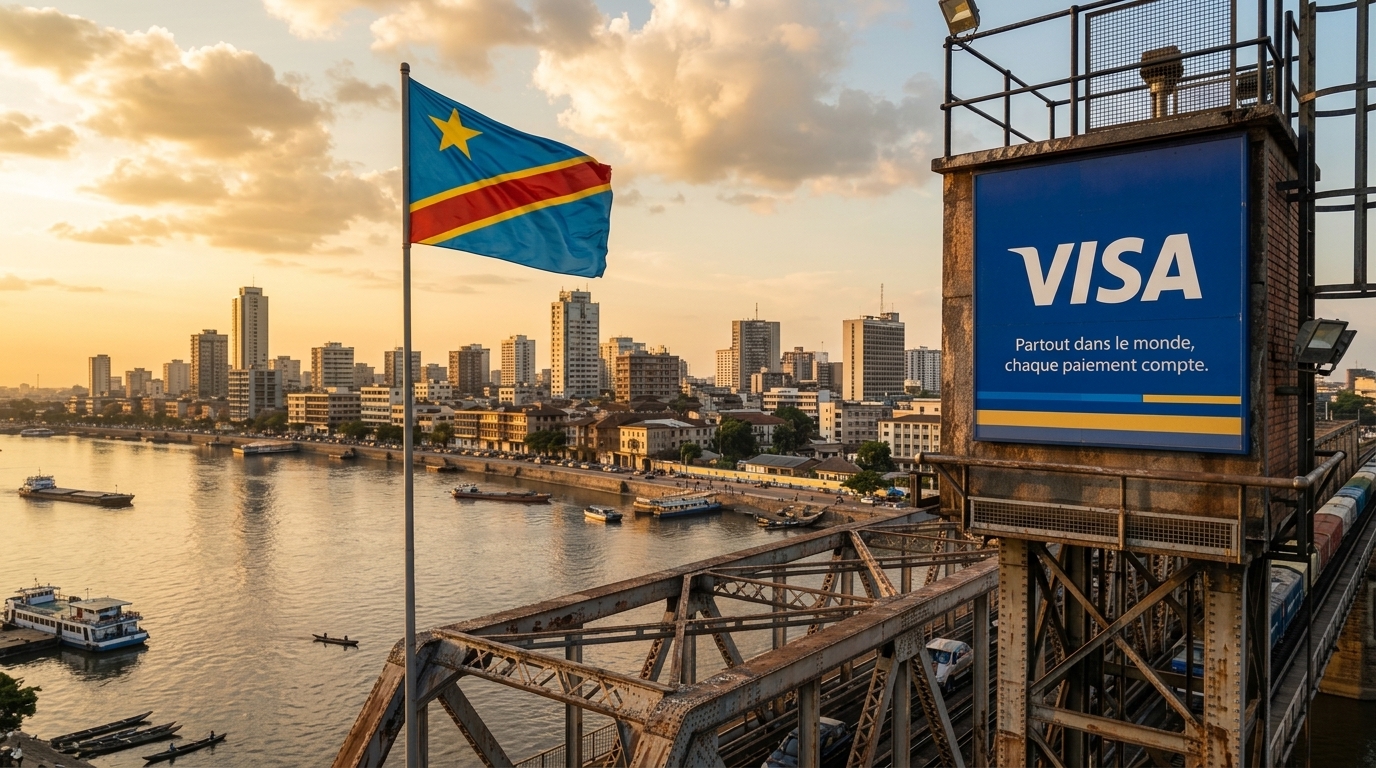
Visa has launched a stablecoin pilot programme in the Democratic Republic of Congo in partnership with M-PESA Africa and pan-African payments platform Onafriq, marking one of the first stablecoin deployments by a major payments network in sub-Saharan Africa.
The pilot will enable users to send and receive stablecoin-based payments through M-PESA’s mobile money platform, targeting cross-border remittances and merchant payments in a country where traditional banking infrastructure remains limited.
Onafriq, formerly known as MFS Africa, will provide the technical infrastructure connecting Visa’s payment rails with M-PESA’s mobile wallet system. The platform already processes over 500 million transactions monthly across 35 African countries.
Stablecoin infrastructure for remittances
The programme uses USD Coin (USDC), a stablecoin pegged to the US dollar, according to a statement from Visa. Users will be able to convert Congolese francs into USDC for cross-border transfers, with recipients able to withdraw funds in local currency through M-PESA agents.
Visa’s head of crypto, Cuy Sheffield, said the pilot addresses “real pain points” in African payments, particularly high remittance costs and limited access to US dollar liquidity. He did not specify a timeline for broader rollout beyond the initial testing phase.
The Democratic Republic of Congo received approximately $1.2 billion in remittances in 2023, according to World Bank data, with average transaction costs exceeding 7% of the transfer amount. Stablecoin advocates argue blockchain-based payments can reduce these costs by eliminating intermediary banks.
Regulatory questions remain
The pilot’s regulatory status remains unclear. The Central Bank of Congo has not issued public guidance on stablecoin usage, and cryptocurrency regulation across Africa varies widely by jurisdiction.
Kenya, where M-PESA operates as a major mobile money provider, has no specific stablecoin framework, though the Capital Markets Authority has indicated it is studying digital asset regulation. Safaricom, which operates M-PESA in Kenya, declined to comment on whether similar pilots would expand to its home market.
Onafriq CEO Dare Okoudjou said the company is “working closely with regulators” but provided no detail on which authorities have approved the Congo pilot or under what legal framework it operates.
Mobile money meets blockchain
M-PESA, owned by Vodafone and Kenya’s Safaricom, serves over 50 million users across seven African countries. The service has historically operated on centralised ledger systems rather than blockchain infrastructure.
This pilot represents M-PESA’s first public integration with stablecoin technology, though the company has previously tested blockchain-based cross-border transfers with Western Union and other remittance providers.
Visa has been expanding its stablecoin capabilities globally, settling over $2.5 billion in USDC transactions on the Solana blockchain in the first quarter of 2024, according to company disclosures. The payments giant has also partnered with Coinbase on stablecoin settlement infrastructure.
The Congo pilot’s success will likely depend on user adoption, regulatory clarity, and whether stablecoin transfers prove meaningfully cheaper or faster than existing mobile money channels.