
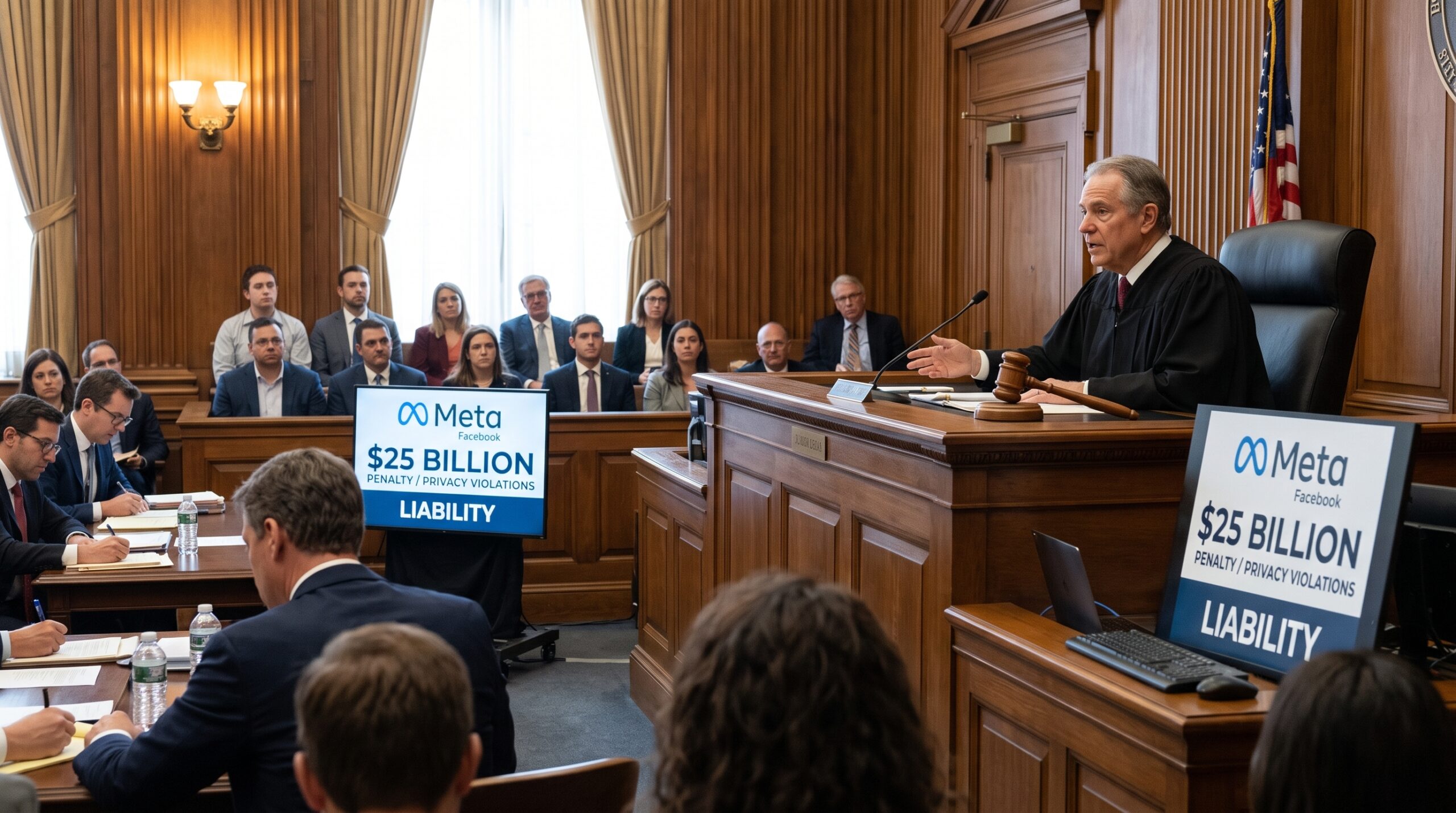
A New Mexico judge has ordered Meta to pay $25 billion in civil penalties after a jury found that the company misled consumers about user privacy and content moderation on Facebook.
Judge Francis Mathew issued the judgment on October 21, following a September jury verdict that found Meta liable for more than 43 million violations of New Mexico’s consumer protection laws. The case accused the company of misleading users about who could access their personal information and how it handled harmful content on its platform.
The judgment is one of the largest financial penalties imposed on a technology company in the United States. Meta has indicated it plans to appeal the verdict, arguing that the ruling is legally flawed and could restrict how online platforms moderate content.
How the case began
New Mexico filed the lawsuit in 2021, following revelations that Cambridge Analytica, a now-defunct British political consulting firm, had obtained personal information from millions of Facebook users without their consent.
The data was reportedly collected through a third-party personality quiz application and used to support targeted political advertising. The scandal raised questions about Facebook’s data protection practices and the extent to which users understood how their information could be accessed and used.
However, the state’s case went beyond the Cambridge Analytica scandal. Prosecutors also challenged Meta’s public statements about privacy protections, third-party access to user data and the company’s handling of misinformation and hate speech.
Jurors found that the company had committed more than 43 million violations of state consumer protection law.
New Mexico’s consumer protection law allows penalties of up to $5,000 per violation. Based on the number of violations identified in the case, the judge calculated that a penalty of approximately $219.5 billion could be justified under the law.
Mathew ultimately reduced the amount to $25 billion.The state had sought a penalty of between $35 billion and $40 billion, while Meta’s lawyers argued that the amount should be substantially lower. Meta also disputed the state’s interpretation of the alleged violations and challenged the legal basis for calculating penalties across such a large number of cases.
New Mexico Attorney General Raúl Torrez described the judgment as a warning to major technology companies that they could face significant financial consequences for misleading consumers.
Meta plans to challenge the ruling
Meta has argued that the judgment is excessive and intends to challenge the verdict on appeal. The company’s legal position is that the state’s approach could make it difficult for online platforms to operate in New Mexico.
The appeal could affect the final amount Meta is required to pay, meaning the $25 billion judgment may not represent the company’s ultimate financial liability.
The case adds to Meta’s legal challenges in New Mexico, where the company has also faced penalties in litigation concerning the safety of younger users on its platforms.
For now, the judgment marks a significant development in the debate over how technology companies handle personal data, communicate their privacy practices and answer for alleged violations of consumer protection laws.
Read also: OCC finalises first GENIUS Act rule, rethinks approach to stablecoin rewards