
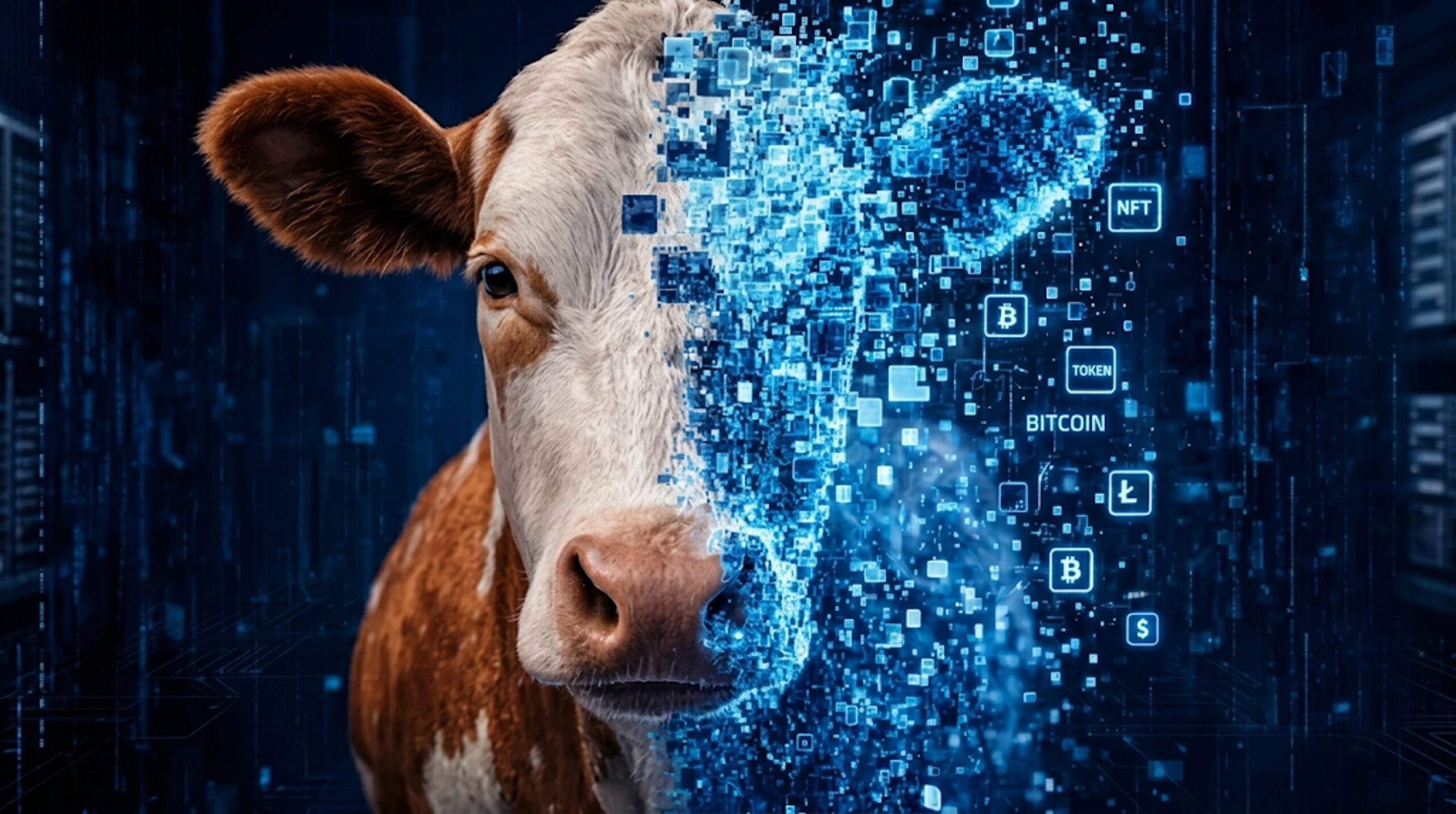
Brazil has completed what many see as a major step in bringing blockchain technology into traditional agriculture.
For the first time, a Brazilian farmer has secured a loan using tokenised cattle as collateral, opening a new financing model that combines blockchain, artificial intelligence and livestock management. The transaction was completed in the southern state of Paraná, where a dairy farmer borrowed 100,000 Brazilian reais (about $19,600) by pledging 10 dairy cows valued at 120,000 reais (about $23,500).
Unlike traditional livestock-backed loans, the cattle were represented as digital assets on a blockchain. Each cow was assigned a unique digital identity linked to an AI-powered smart collar that continuously monitors its location, health and movement. This allows lenders to verify that the animals remain healthy and in the borrower’s possession throughout the life of the loan.
The initiative is the result of a partnership between Brazilian agritech and financial technology companies seeking to modernise agricultural lending. By tokenising livestock, lenders gain greater visibility into the condition of the assets backing a loan. At the same time, farmers can access financing without selling productive animals or relying solely on conventional collateral such as land or machinery.
Agricultural lending has traditionally depended on physical inspections and paperwork, making the process slow and expensive. Tokenisation replaces much of that manual verification with real-time digital records stored on a blockchain, while AI-powered monitoring provides continuous updates on the condition of the livestock.
Supporters say the model could reduce fraud and lower lending risks. Because every cow has a verifiable digital identity and can be tracked throughout the loan period, lenders have greater confidence that the collateral remains intact. If an animal becomes ill, dies or is moved without authorisation, the monitoring system can quickly alert both the borrower and the lender.
The transaction also highlights how tokenisation is expanding beyond financial assets into real-world assets. Tokenisation involves creating a digital representation of a physical asset on a blockchain, allowing ownership or rights associated with that asset to be recorded, tracked and, in some cases, traded more efficiently.
While tokenised real estate, government bonds and private credit have attracted growing attention over the past two years, agriculture has remained a relatively untapped area. Brazil’s latest transaction demonstrates how the technology could be used to unlock financing for farmers by turning productive assets into digitally verifiable collateral.
Brazil is one of the world’s largest agricultural producers, with cattle farming playing a significant role in its economy. Expanding access to credit has long been a challenge for many farmers, particularly smaller producers that may not own sufficient land or other traditional assets to secure loans. Using tokenised livestock could provide an alternative path to financing while improving transparency for financial institutions.
Although this is an early-stage implementation, industry observers believe similar models could eventually be extended to other agricultural assets, including crops, farm equipment and agricultural commodities. The combination of blockchain-based tokenisation with AI-powered monitoring may also encourage wider adoption of digital asset technology across the agricultural sector.
If the approach proves successful, Brazil’s experiment could become a blueprint for modernising agricultural finance, demonstrating how blockchain and artificial intelligence can work together to connect physical assets with digital financial services.
Read also:Kraken Parent Company to Expand Blockchain Stock Offerings to Four Global Markets