
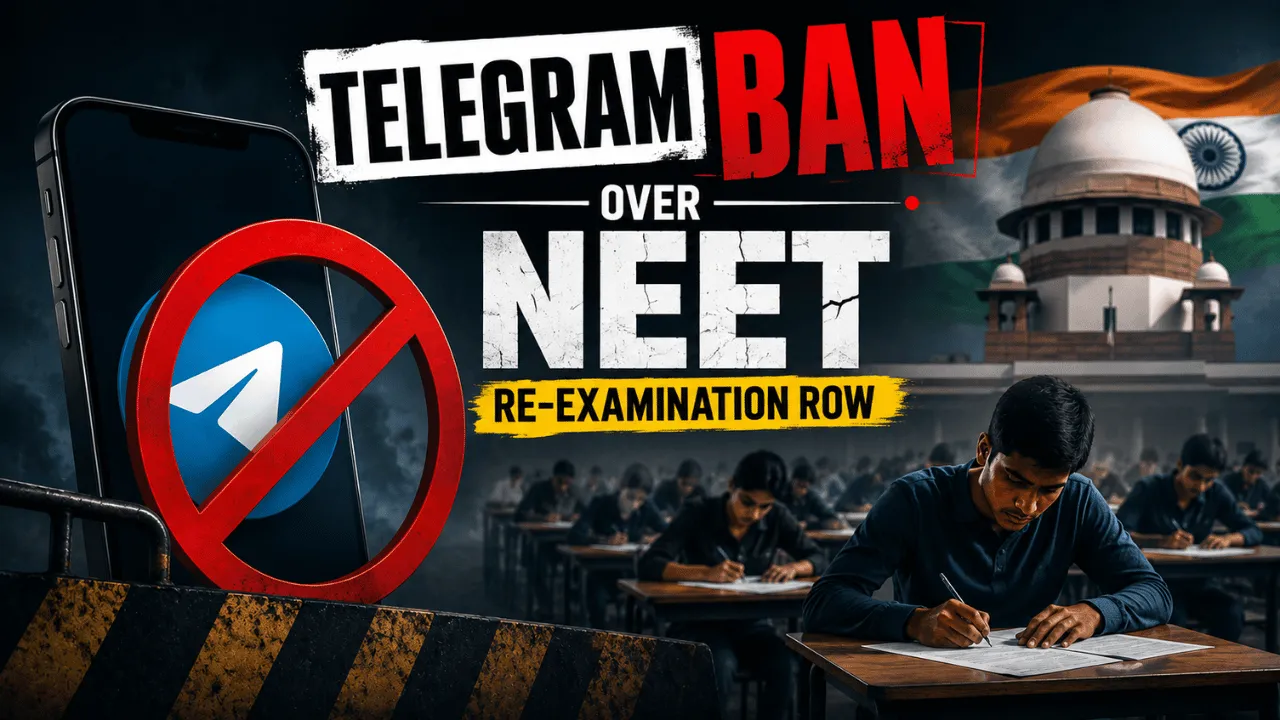
India’s Delhi High Court has upheld the government’s temporary ban on Telegram, backing authorities who argued that the restriction was necessary to protect the integrity of a nationwide medical entrance examination.
The ruling comes after Telegram challenged a government order that blocked access to the messaging platform across India ahead of the NEET-UG 2026 re-examination, one of the country’s largest and most competitive academic tests. The ban remains in effect until June 22, a day after the exam is scheduled to take place.
Indian authorities restricted Telegram, alleging that fraud networks were using Telegram to circulate fake exam papers, spread misinformation, and facilitate cheating ahead of the retest. The re-examination was ordered after an earlier round of the exam was marred by paper leak allegations that led to widespread controversy and the cancellation of results for millions of students.
In its challenge, Telegram argued that the temporary suspension unfairly affected more than 150 million users in India and raised concerns about free speech and access to information. The company maintained that the alleged misconduct involved a small number of users and should not justify blocking an entire platform.
The court disagreed, ruling that the government acted within its powers under India’s Information Technology Act. Justice Tejas Karia said the temporary nature of the restriction and the circumstances surrounding the examination justified the decision, according to court proceedings reported by Reuters and Indian media.
The case has sparked debate across India’s technology and digital rights communities. Critics argue that banning an entire platform because of the actions of a minority sets a troubling precedent for internet governance. Supporters of the government’s decision contend that extraordinary measures were necessary given the scale of the examination and the allegations of organised cheating.
Telegram has faced increasing scrutiny in several countries over concerns that some of its features, including anonymous channels and large group capabilities, can make enforcement more difficult. Indian authorities have previously raised concerns about the platform’s role in the spread of piracy, scams, and illicit content.
The ruling represents one of the most significant legal victories for the Indian government in its efforts to regulate major digital platforms. It also highlights the growing tension between platform accountability and digital rights as governments seek greater control over online spaces.
For now, Telegram remains inaccessible across India, while the broader debate over how governments should respond to misuse of online platforms is likely to continue long after the temporary ban expires.
Read also: Fastlane unveils AI tool turning websites into social media videos