
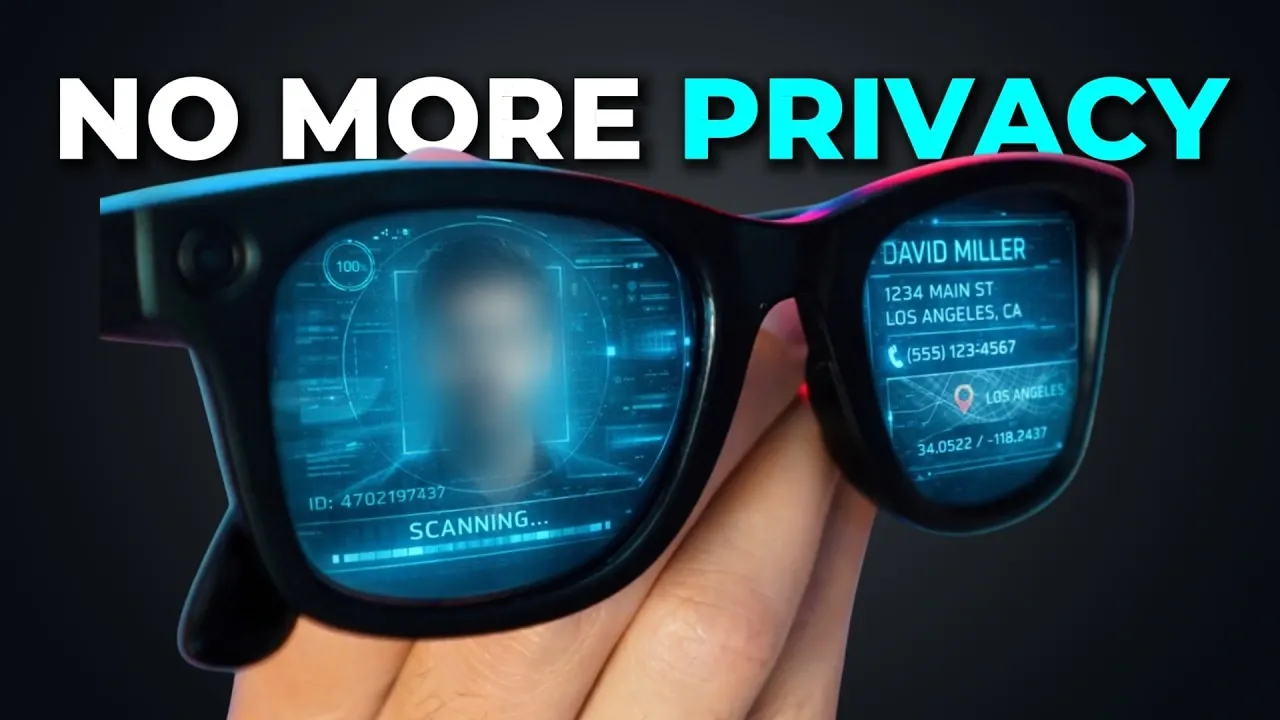
Meta is quietly testing facial recognition technology for its smart glasses, according to reports that highlight how far the company may be pushing AI-powered wearables into surveillance-like capabilities.
The feature, reportedly developed in partnership with Rank One Computing, is designed to identify people seen through Meta’s Ray-Ban and Oakley smart glasses and match them against stored biometric data, allowing the system to recognise individuals in real time.
Rank One Computing is a US-based facial recognition software company whose technology is widely used by government agencies, including law enforcement and security services. Its systems are built for identity verification, surveillance, and long-range facial matching, making its involvement in a consumer device ecosystem particularly sensitive.
According to report, elements of this facial recognition system were found embedded in Meta’s smart glasses companion app, which is installed on tens of millions of devices. The internal system reportedly included tools capable of generating “faceprints,” or biometric profiles derived from a person’s facial features.
While the feature was not publicly activated, code linked to the system appeared in production software before being removed following media scrutiny. Meta has not confirmed a rollout timeline or publicly detailed how the technology would be used.
The development points to a broader shift in Meta’s wearable strategy, where smart glasses are evolving from simple camera-based devices into always-on AI systems capable of interpreting and potentially identifying the physical world in real time.
Meta has previously positioned its smart glasses as tools for photography, messaging, and AI assistance. The addition of facial recognition capabilities, even in testing form, introduces a new layer of functionality that moves closer to identity-level tracking.
Privacy advocates have long warned that embedding facial recognition into consumer wearables could normalise real-time surveillance in everyday environments. The concern is not just about intentional misuse, but also about how large-scale biometric databases could be built and accessed over time.
Facial recognition technology remains one of the most controversial areas in artificial intelligence regulation. Several jurisdictions have introduced restrictions on its use, particularly in public spaces, due to concerns around consent, bias, and mass surveillance.
Meta itself has previously faced regulatory action over biometric data practices, including settlements related to its earlier face-tagging systems on Facebook.
The renewed interest in facial recognition through wearable devices suggests that the regulatory debate is far from settled. Instead, it is moving into a new phase shaped by AI glasses, always-on cameras, and real-world data capture at scale.
Tech companies are no longer just building AI that lives on screens. They are building systems that interpret and interact with the physical world continuously.
Smart glasses are emerging as a key frontier in that transition, but they also raise the most difficult questions yet about privacy, consent, and the boundaries of personal space in an AI-driven environment.