
For years, laptop makers competed on battery life, design, processing power, and portability. Today, the conversation is tilting toward AI performance, local model processing, and on-device computing as tech companies race to build what many are calling the next generation of AI-native computers.
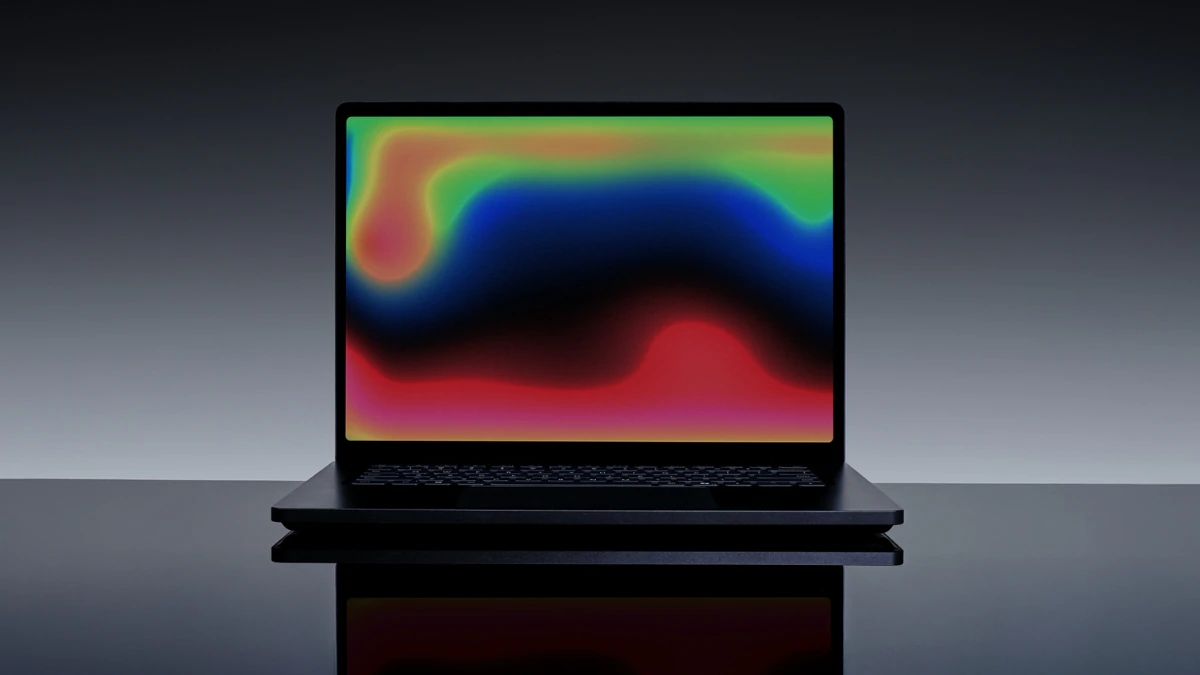
That reality was on full display after Microsoft introduced the new Surface Laptop Ultra, a high-performance laptop designed specifically for developers, AI researchers, creators, and professionals working with increasingly demanding workloads. The company describes it as the most powerful Surface device it has ever built.
Built for local AI and heavy creative workloads
Unlike traditional premium laptops focused mainly on productivity and media consumption, the Surface Laptop Ultra is being positioned as a machine for users building AI applications, training models, rendering complex graphics, and running advanced creative workflows directly on-device.
Microsoft says the laptop was developed in partnership with NVIDIA and is powered by the company’s new RTX Spark platform, an Arm-based chip architecture that combines CPU and GPU resources into a unified system.
One of the biggest highlights is support for up to 128GB of unified memory, allowing resources to be dynamically shared between the CPU and GPU depending on workload requirements. Microsoft says the system is capable of handling local AI models, 3D rendering projects, software development tasks, and multi-model workflows simultaneously.
The company claims the device delivers up to one petaflop of AI compute performance and can run large language models locally without relying entirely on cloud infrastructure.
As generative AI applications become more common, developers and enterprises are increasingly looking for ways to run models directly on devices instead of constantly sending requests to cloud servers. Local AI processing can reduce latency, improve privacy, lower infrastructure costs, and provide faster experimentation for developers.
Microsoft is chasing the AI-native computer era
The Surface Laptop Ultra also reveals how Microsoft is repositioning Surface as more than just a premium Windows hardware brand.The company is increasingly aligning its hardware strategy with its broader AI ambitions across Windows, Copilot, Azure, and developer ecosystems.
The laptop features a 15-inch mini-LED PixelSense Ultra touchscreen with up to 2,000 nits of peak HDR brightness, making it the brightest display Microsoft has ever shipped on a Surface device. It also includes the company’s largest haptic touchpad to date, alongside ports such as HDMI, USB-C, USB-A, a full-size SD card slot, and a headphone jack.
Microsoft says the device was engineered with an entirely new thermal system capable of sustaining heavy workloads while maintaining portability. The company claims the thermal architecture offers up to 2.5 times the cooling capacity of previous Surface Laptop models.
While Microsoft has not yet revealed pricing, industry observers expect the Surface Laptop Ultra to sit firmly within the premium workstation category. Several early community discussions have already compared the device directly to Apple’s MacBook Pro lineup.
AI is becoming the new computing layer
AI is slowly becoming a built-in layer across operating systems, software platforms, and personal devices. Just as internet connectivity eventually became a standard feature rather than a selling point, artificial intelligence is increasingly being woven directly into the foundation of computing.
Users are no longer being told to visit separate AI platforms alone. AI is now appearing inside operating systems, browsers, productivity software, developer tools, creative applications, and workplace workflows.
That raises a larger question for the industry: is AI becoming just another feature, or is it evolving into the next operating system layer every major technology company is racing to own?
Apple is integrating AI directly into iOS and macOS. Google is embedding Gemini across Android and Workspace. Meta is turning AI into a subscription-driven layer across Facebook, Instagram, and WhatsApp. Microsoft, meanwhile, appears determined to position Windows at the center of AI-powered computing.
For developers, AI researchers, and creators, the device represents a growing shift toward local-first AI workflows.
Instead of depending entirely on cloud computing resources, professionals may increasingly run AI agents, coding assistants, image-generation models, and machine learning tools directly on their laptops.
That could be particularly relevant in emerging markets where cloud infrastructure costs remain expensive and internet reliability varies.
Microsoft says the Surface Laptop Ultra will launch later this year, although pricing and regional availability have not yet been announced.
The next generation of computers may no longer be defined primarily by speed, storage, or battery life alone. Increasingly, they will be judged by how well they can run intelligence itself.
Read also: What is Prompt Engineering and Why Does It Matter?