
Investors are pouring more money into the intersection of artificial intelligence and robotics, betting that the next major leap in AI will happen in the physical world.
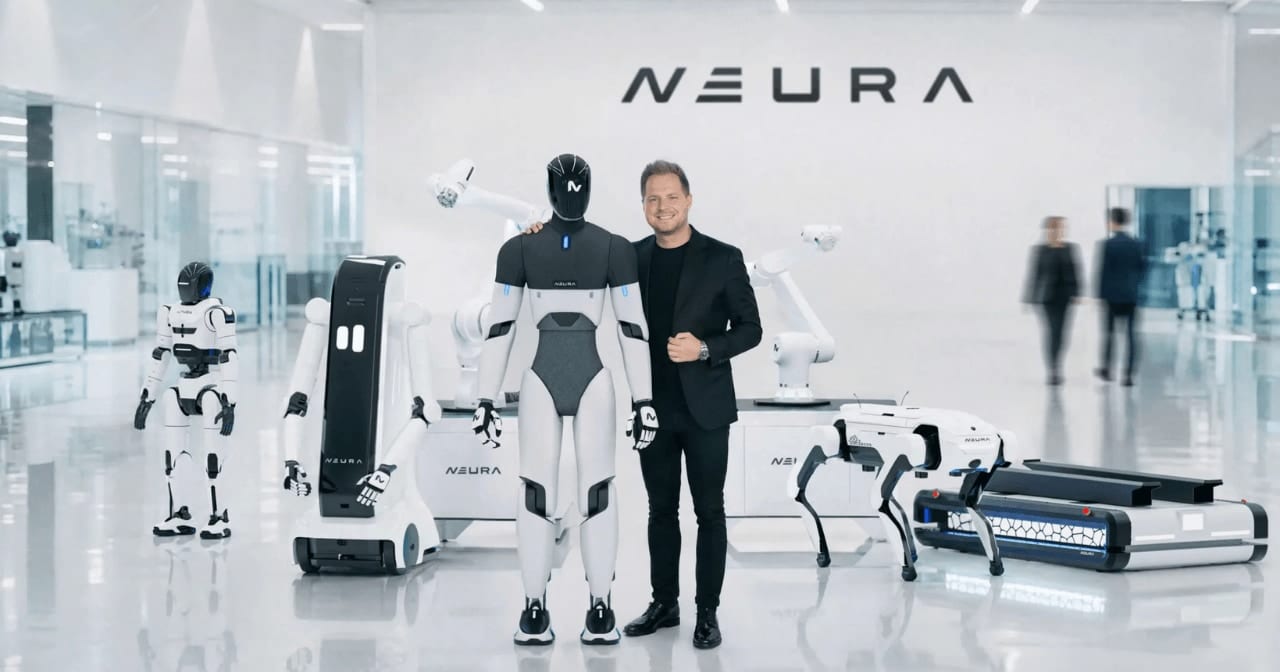
German robotics company Neura Robotics has raised $1.4 billion in a funding round backed by a group of major technology and digital asset players, including Tether, Nvidia and Amazon. The investment values the company at around $9 billion and ranks among the largest funding rounds in the robotics sector this year.
Founded in 2019, Neura Robotics develops cognitive robots designed to work alongside humans in industrial, commercial and domestic environments. Unlike traditional industrial robots that perform repetitive tasks in controlled settings, the company’s machines are built to perceive their surroundings, learn from interactions and respond to changing environments.
The funding comes at a time when competition in AI-powered robotics is intensifying. Advances in large language models and machine learning have made it easier for robots to interpret instructions, process information and carry out increasingly complex tasks.
Neura says the new capital will be used to accelerate product development, expand manufacturing capacity and strengthen its position in the growing market for intelligent robots.
The participation of Tether is particularly notable. Best known as the issuer of the world’s largest stablecoin, the company has recently expanded beyond digital assets into sectors such as artificial intelligence, energy and communications infrastructure.
The investment reflects a broader trend among crypto firms looking to diversify into emerging technologies with long-term growth potential. As stablecoin businesses generate substantial cash flows, some companies are beginning to deploy capital into industries they believe could shape the next generation of digital infrastructure.
Nvidia’s involvement is also significant. The chipmaker has become one of the biggest beneficiaries of the AI boom, supplying the hardware that powers many of today’s leading AI models. Backing robotics companies allows Nvidia to extend its reach beyond data centres and into real-world applications of artificial intelligence.
Amazon, meanwhile, has steadily increased its focus on automation and robotics across its logistics network, making the sector strategically important to the company’s long-term operations.
The funding round highlights growing confidence that robotics could become one of the next major frontiers for AI. While much of the recent AI boom has centred on chatbots and software tools, investors are increasingly turning their attention to machines that can apply artificial intelligence in factories, warehouses, hospitals and homes.
As AI systems become more capable, the race is no longer just about building smarter software. It is increasingly about bringing that intelligence into the physical world.