
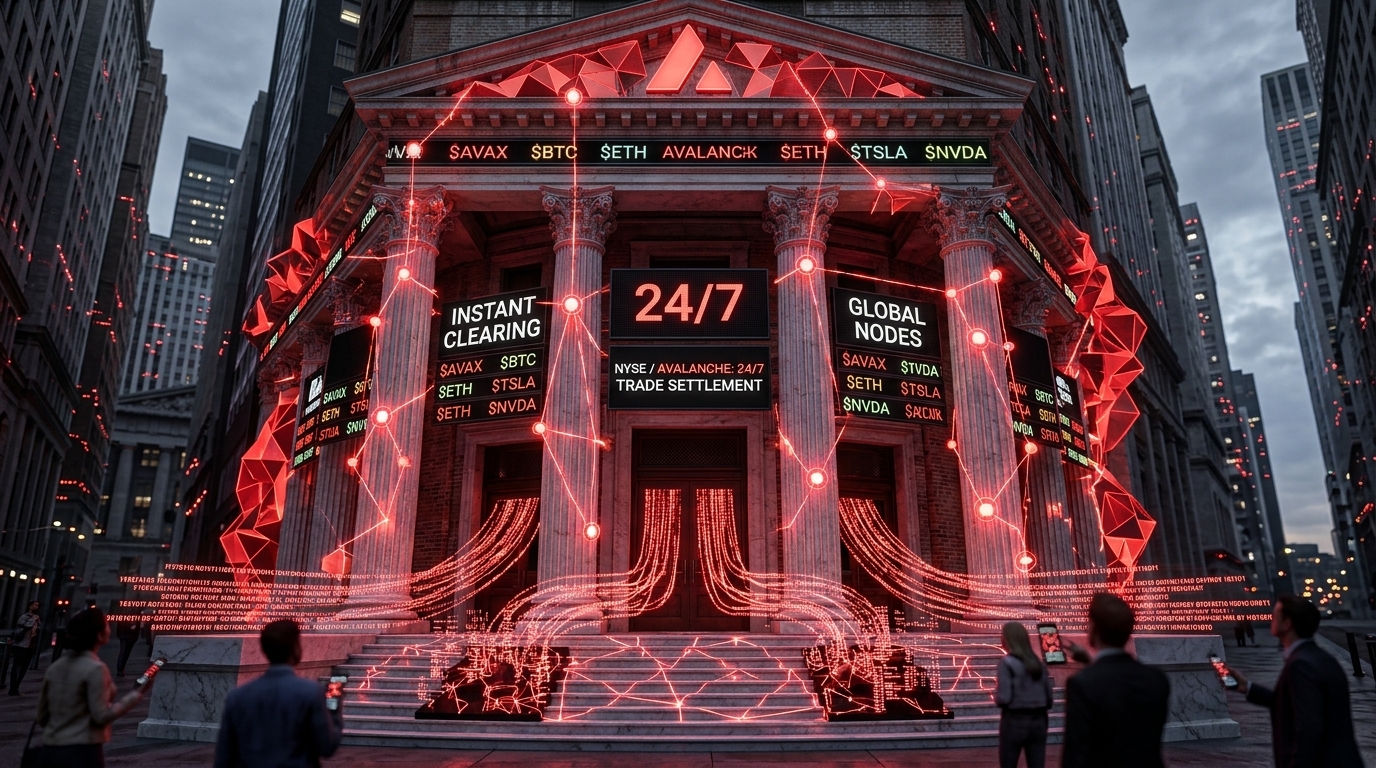
The New York Stock Exchange has selected Avalanche as the blockchain infrastructure for settling tokenized stock trades on a planned trading platform that aims to operate 24 hours a day, seven days a week.
The announcement, made on November 9, gives Avalanche a role in the NYSE’s efforts to bring traditional stock trading and blockchain technology closer together. The platform is being developed to support round-the-clock trading, fractional share purchases and near-instant settlement, subject to regulatory approval.
Under the plan, the NYSE will use its existing Pillar technology to match buy and sell orders, while Avalanche will provide the core ledger technology used by the platform’s clearing firm to record and settle trades.
The platform is targeting a launch in the fourth quarter of 2026, although it must receive the necessary regulatory approvals before it can begin operating.
Why the NYSE selected Avalanche
The NYSE evaluated different technology providers before selecting Avalanche for the settlement infrastructure, according to reporting by The Wall Street Journal and statements from the companies.
The exchange said it needed technology that could process transactions quickly, maintain reliable performance, keep costs predictable and restrict network participation to meet regulatory and operational requirements.
Avalanche is designed to let organisations build their own blockchain networks with customised rules and access controls. This allows financial institutions to develop infrastructure suited to their needs rather than relying entirely on a public network with the same operating rules for every participant.
Ava Labs, the company behind Avalanche, said the network would provide the core ledger technology for the clearing firm supporting the NYSE-affiliated trading venue.
Importantly, the plan does not mean every stock traded on the platform must be issued on Avalanche. The venue is designed to support tokenized equities issued across multiple blockchains, while Avalanche will provide the ledger used to record and settle trades.
How the NYSE’s 24/7 trading platform will work
The proposed platform is intended to combine the NYSE’s established trading infrastructure with blockchain-based post-trade processes.
Its Pillar matching engine will handle the process of matching buyers with sellers. Blockchain technology will support the clearing and settlement process that follows a trade.
The platform is also designed to support stablecoin-based funding, allowing eligible participants to fund transactions using digital tokens designed to maintain a stable value, typically pegged to the US dollar.
One of the main features is the possibility of settling trades almost immediately after execution. In traditional markets, a trade can be matched on one day but the transfer of cash and securities may take additional time to complete.
Blockchain-based settlement could shorten that process by coordinating the transfer of assets and payment through a shared digital ledger.
The platform is also expected to support fractional trading, allowing investors to buy portions of purchasing whole shares.
However, these are planned capabilities. The actual service will depend on regulatory approval, the final platform design and the rules governing participating investors and brokers.
What tokenized stocks mean for investors
Tokenized stocks are digital representations of shares or securities recorded on a blockchain. Depending on how they are structured, they can represent traditionally issued shares or securities issued directly in token form.
Tokenization can make it easier to record ownership, transfer assets and connect securities to blockchain-based financial services.
For investors, a platform offering tokenized stocks around the clock could provide more flexibility than traditional stock exchanges, which generally operate during set trading hours.
It could also make fractional ownership and digital funding more accessible through supported brokers and financial servicBut tokenized stocks are not automatically the same as holding shares through every existing brokerage account. Investors’ ownership rights, voting rights, dividend entitlements and legal protections depend on the structure of the securities and the platform offering them.
The NYSE previously said its planned platform would support tokenized shares that are interchangeable with traditionally issued securities, as well as securities issued natively in digital form. It also said tokenized shareholders would participate in traditional shareholder dividends and governance rights under the proposed model.
Avalanche enters Wall Street’s blockchain race
The selection adds to the growing competition among blockchain networks and traditional financial institutions to build infrastructure for tokenized securities.
The NYSE’s parent company, Intercontinental Exchange, announced the development of a tokenized securities platform in January 2026. The plan forms part of its broader effort to modernise market infrastructure and support trading and settlement outside conventional market hours.
Other major financial market operators are also developing blockchain-based services.
Nasdaq has been working on tokenized stock infrastructure, while the Depository Trust and Clearing Corporation, a central part of the US securities settlement system, has been developing tokenization services for financial assets.
These initiatives show that the competition is no longer limited to crypto companies creating digital versions of traditional assets. Established financial institutions are also exploring how blockchain technology could change the systems used to issue, trade, transfer and settle securities.
For Avalanche, the NYSE-related project could provide a significant institutional use case if the platform launches successfully and attracts trading activity.
What happens next?
The planned NYSE-affiliated platform still needs regulatory approval before it can begin operating. Its target launch is the fourth quarter of 2026.
The immediate test will be whether the exchange can integrate blockchain settlement into its existing market structure while meeting the regulatory, security and operational standards expected of a major US securities venue.
If successful, the project could help demonstrate how blockchain networks can support the infrastructure behind traditional financial markets, rather than serving only crypto-native trading platforms.
For Avalanche, the selection is a step towards that institutional market. For investors, the more important question is whether the proposed platform can deliver reliable round-the-clock trading, faster settlement and clear shareholder protections once it becomes operational.