
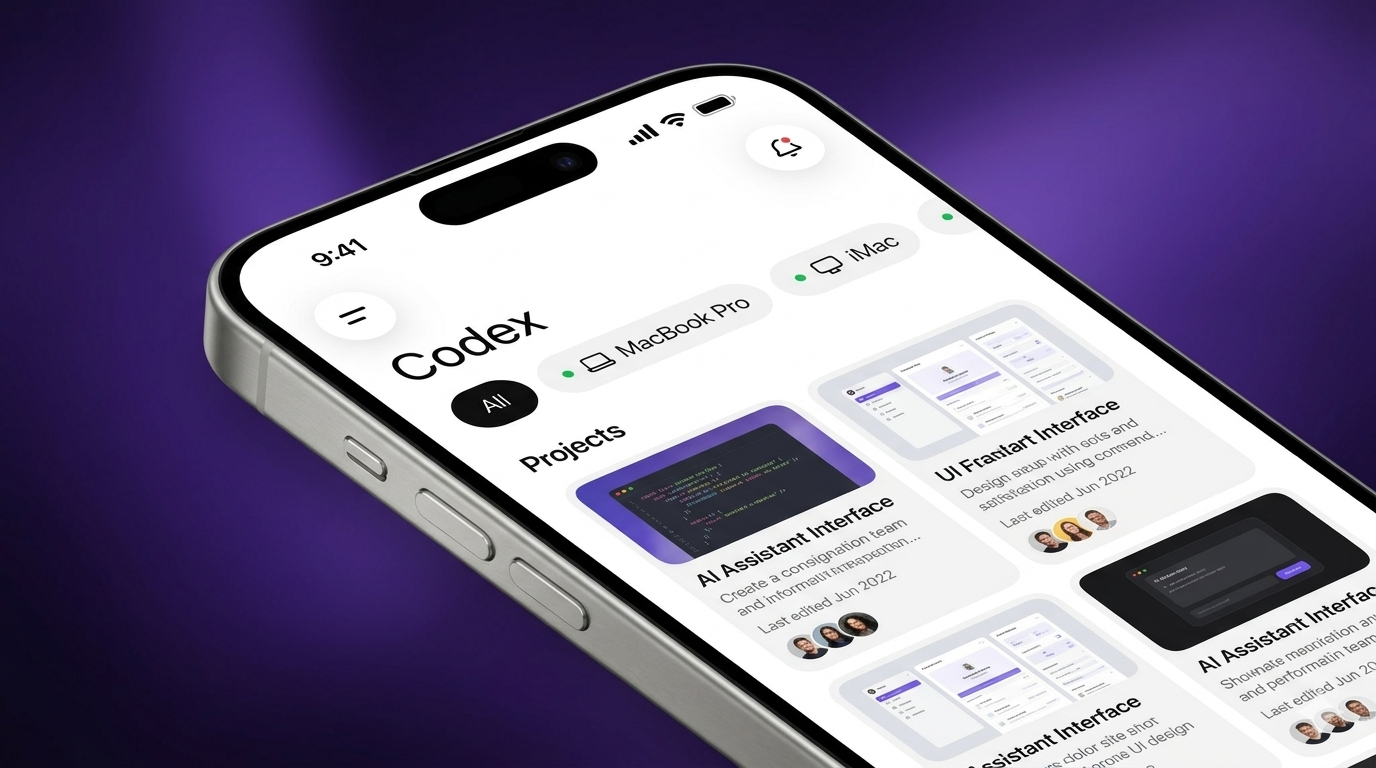
Software development is increasingly running beyond the desktop, with coding tasks now executed continuously by AI systems while developers step in only to supervise, approve, and redirect workflows.
OpenAI is extending its AI coding system, Codex, to mobile devices through the ChatGPT app, giving developers direct access to live coding sessions from their phones.
The feature is rolling out in preview on iOS and Android and will be available across all ChatGPT plans. It allows users to connect to active Codex environments running on desktops or cloud servers and manage them remotely in real time.
Instead of writing code on a mobile device, developers can now review outputs, approve or reject changes, switch models, track execution progress, and issue new instructions while the coding process continues running in the background.
The update also means Codex sessions are no longer tied to a single workspace. Developers can initiate tasks on a desktop, leave them running for extended periods, and still maintain oversight through mobile alerts and live session monitoring. This is particularly relevant for long-running builds, debugging cycles, and multi-step agent workflows that require periodic human approval rather than constant input.
OpenAI is positioning the feature as a way to reduce friction in AI-assisted development, where coding agents often work in extended loops that span minutes or hours. In these scenarios, developers are no longer actively writing every line of code but instead managing checkpoints, reviewing outputs, and guiding the direction of execution as needed.
The update is also aligned with a broader industry trend where AI coding systems are evolving into persistent agents rather than single-response tools. Instead of generating isolated snippets, these systems are increasingly expected to execute full development tasks, interact with environments, and maintain continuity across sessions.
As a result, the role of the developer is shifting further toward system oversight and decision-making, while AI handles more of the repetitive and procedural execution work in the background. The mobile integration strengthens this model by ensuring that oversight is no longer restricted to a fixed workstation, allowing developers to stay connected to active processes wherever they are.
Read also: xAI unveils Grok Build as Elon Musk expands into AI coding tools