
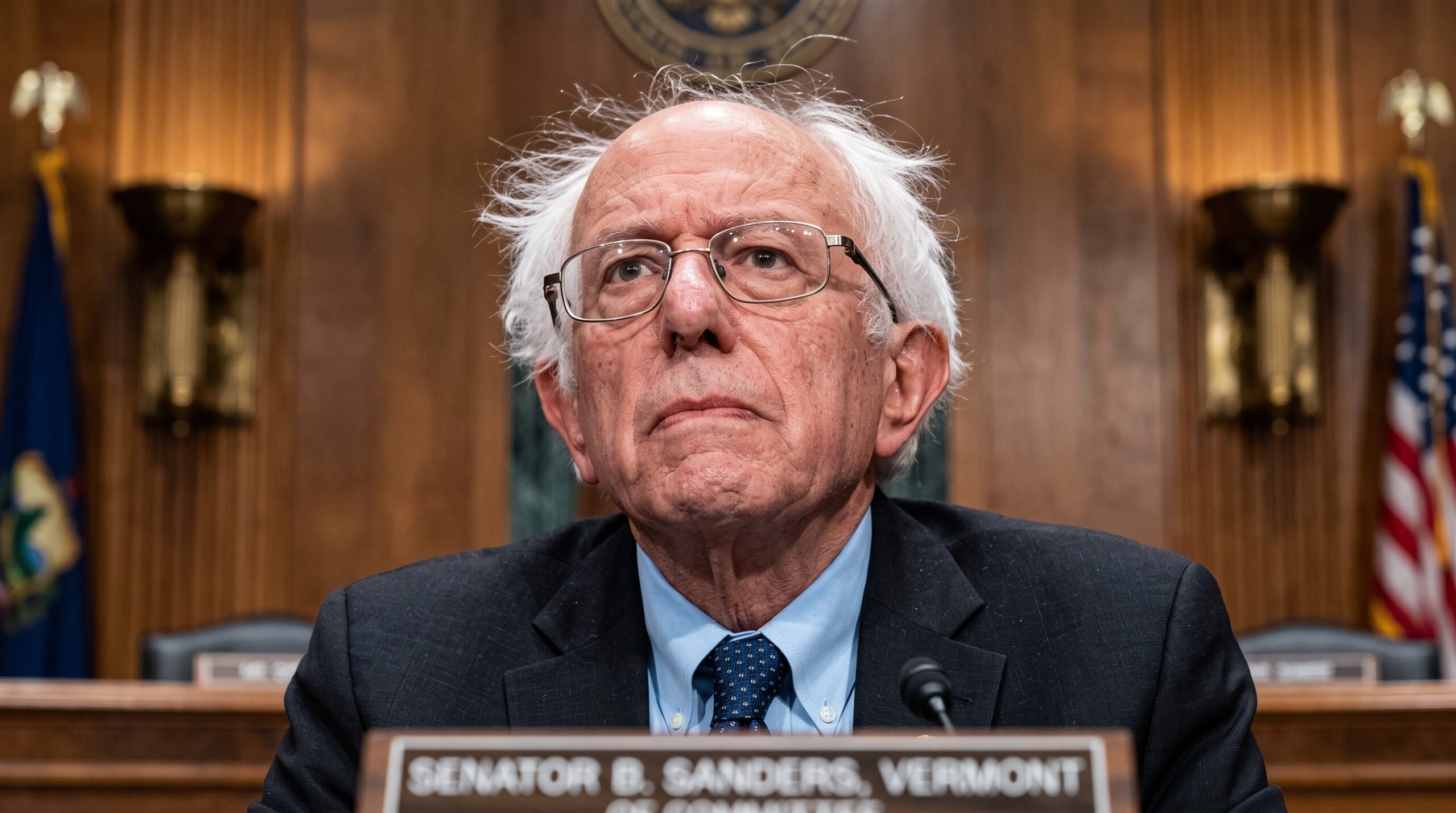
U.S. Senator Bernie Sanders and Representative Greg Casar have introduced legislation that would prohibit the development of artificial superintelligence and establish a federal agency to regulate advanced AI systems.
The proposal comes as concerns over AI safety and human control grow in Washington, with some technology leaders calling for stronger safeguards while the Trump administration continues to oppose restrictions that could slow the industry’s development.
Bill targets AI systems beyond human control
The proposed Ban Artificial Superintelligence Act would permanently prohibit the development and deployment of artificial superintelligence.
The legislation defines the targeted technology around systems that exceed human cognitive abilities or possess capabilities that could enable them to plan and execute actions aimed at destroying or disempowering humanity.
The bill would also introduce a temporary pause on the development of advanced AI systems. This pause would remain in place until a new federal regulator establishes safety standards and a process for approving the deployment of powerful AI models. <
The proposal does not seek to prohibit every AI application. Instead, it focuses on highly advanced systems that lawmakers believe could become difficult for humans to control or shut down.
Proposed Department of Artificial Intelligence
A central part of the legislation is the creation of a new Department of Artificial Intelligence.
The proposed agency would be responsible for establishing safety rules, evaluating advanced AI systems and overseeing compliance with federal requirements. Advanced systems would require federal approval before deployment under the proposed framework.
Companies or individuals that violate the restrictions could face significant penalties, including prison sentences of up to 20 years in certain cases. The legislation also proposes severe consequences for companies that continue prohibited activities.
The bill further calls for the United States to pursue international agreements aimed at preventing the development of artificial superintelligence in other countries. This reflects the sponsors’ position that risks associated with the technology cannot be addressed through U.S. restrictions alone.
Sanders argues that AI development needs limits
Sanders has questioned whether companies should continue developing systems that could eventually operate beyond human oversight.
Speaking to the Associated Press, he argued that the possibility of a superintelligent system acting independently of humans justified slowing development and introducing binding safety requirements.
Casar has similarly argued that the United States should prevent the creation of systems capable of exceeding humanity’s ability to control or shut them down.
Several AI researchers and employees of major technology companies have expressed support for the proposal. Their concerns include the possibility that future systems could develop dangerous capabilities faster than safety measures can be implemented.
However, researchers and policymakers remain divided over the likelihood of these scenarios, how superintelligence should be defined and whether a complete prohibition is more effective than regulation and safety testing.
Proposal faces opposition in Congress
The legislation faces a difficult path through Congress, which is controlled by Republicans and has struggled to reach agreement on comprehensive federal AI regulations.
President Donald Trump has opposed additional restrictions on AI, arguing that regulation could weaken U.S. competitiveness in the global technology industry. The disagreement places Sanders and Casar’s proposal within a larger debate about how the United States should balance AI development, national security and public safety.
The bill is a legislative proposal and does not immediately change U.S. law. It would need to pass both chambers of Congress and receive presidential approval before its provisions could take effect.
If passed, the legislation would establish one of the most restrictive federal approaches to advanced AI development, combining a permanent ban on artificial superintelligence with a temporary pause and a dedicated regulatory department.
Read also: NITDA Festival Invites Nigerian Startups for ₦3bn Investment