
A digital wallet is only useful if people can access it, understand how to use it and move their money when they need to. But many crypto wallets are designed for smartphone users with reliable internet access, enough storage space and some familiarity with blockchain technology.
Sorted is approaching the problem from a different direction. The company has built a crypto wallet that works on both smartphones and basic feature phones, with tools that let users hold digital dollars, send and receive money, pay bills and convert stablecoins into local currency in supported markets.
Founded in 2022, Sorted is a financial technology company headquartered in Hong Kong. Its wallet launched in 2023, initially targeting feature phones running KaiOS, an operating system used on affordable mobile devices. The project was built around a simple idea: accessing digital assets should not require owning an expensive smartphone.
What is Sorted?
Sorted is a non-custodial cryptocurrency wallet designed for everyday financial transactions. It supports Bitcoin and stablecoins, including Tether’s USDt (USDT), and provides additional services for users who want to move between digital assets and local payment systems.
Unlike a custodial exchange account, where a platform holds assets on behalf of its customers, a non-custodial wallet is designed to give users control over their funds. Sorted provides the software users use to manage and transact with their assets, rather than acting as a bank that holds customer deposits.
The product is available on KaiOS feature phones and Android smartphones, including lower-powered devices. Its Android app is about 10 MB, a deliberate choice for users with limited storage and slower internet connections. Sorted also supports multiple languages, including Hausa and Yoruba, making the interface more accessible to users who may prefer not to navigate financial services in English.
Stephen Browne, Sorted’s founder and chief executive, developed the idea after exploring the app ecosystem on a feature phone and finding that crypto wallet options were largely absent. That observation became the starting point for a product focused on users and devices often overlooked by crypto developers.
How Sorted Wallet works
Getting started does not require users to begin by learning about private keys, blockchain explorers or transaction fees.
Users can register with a phone number and create a wallet through the app. They can then receive supported crypto assets from another wallet or exchange by selecting the asset and network, copying their wallet address or sharing a QR code.
Sorted separates its interface into two modes. Lite mode focuses on everyday use, giving users access to their balance, sending and receiving funds, withdrawals and top-ups. Pro mode adds a multi-asset wallet, token swaps, an in-app market for services such as airtime and bill payments, and Bitcoin Lightning functionality.
The two modes serve different needs. Someone who primarily wants to receive digital dollars and cash out locally may prefer Lite, while a more experienced crypto user can access additional tools in Pro.
One important detail is that users must select the correct network when receiving funds. A transfer sent through an incompatible network or to an incorrect address can result in a permanent loss of assets. The wallet simplifies the interface, but users still need to take care when handling blockchain transactions.
Connecting digital dollars to local money
Stablecoins are central to Sorted’s approach. USDT is designed to maintain a value linked to the US dollar, giving users an alternative to holding a volatile cryptocurrency such as Bitcoin when they want to transact or keep funds denominated in dollars.
For users in markets where local currencies experience significant fluctuations, digital dollars can offer a way to hold dollar-linked value without relying entirely on traditional banking services. They can also help people receive payments from family members, clients or businesses in other countries.
However, holding USDT is only part of the process. A recipient may still need local currency to buy groceries, pay rent or cover other expenses.
Sorted addresses this through its cash-out feature, which lets eligible users convert USDT into local currency and receive the payout through a supported bank account or mobile money service. The company lists cash-out availability in Nigeria, Kenya and Tanzania. Depending on the market and payout provider, users may need to complete identity verification before withdrawing.
In Nigeria, for example, eligible Android users can withdraw USDT directly to a bank account and receive naira. In Kenya, users can cash out to M-Pesa. The process brings the conversion and payout into the wallet experience rather than requiring users to manage every step through separate applications.
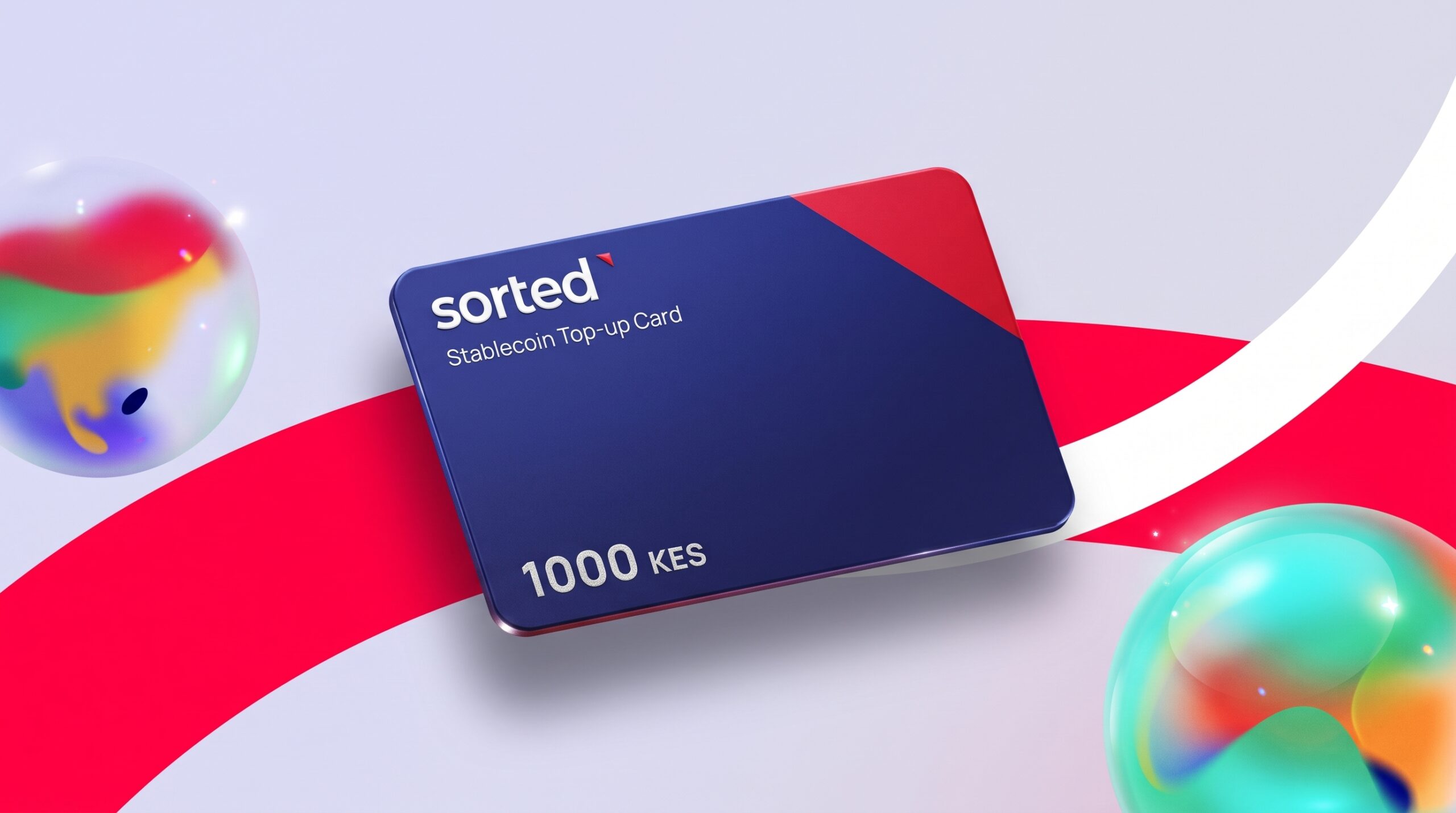
The company also supports top-up cards in selected markets, including Nigeria and Kenya. Users can purchase a card and redeem its code in the app to add stablecoins to their balance. Another option is to create a remittance request link that someone else can use to send funds. Direct purchases of stablecoins using local bank accounts or mobile money have been listed as a future feature, rather than a universally available service.
Everyday payments beyond transfers
Sorted’s features extend beyond storing and transferring crypto. Its Pro interface includes a market for services such as airtime and utility bill payments, giving users more ways to use their digital assets.
The goal is to make a wallet useful after money arrives. Instead of treating a stablecoin balance as something that must be transferred to an exchange before it can be spent, Sorted is building payment and cash-out options around that balance.
These features are particularly relevant to remittances. Someone working abroad could send digital dollars to a relative who receives them in Sorted and, where supported, withdraws the funds to a local account or mobile money wallet. This creates a potential alternative to traditional remittance routes, although the total cost and speed still depend on the blockchain network, payout provider, exchange rate and applicable fees.
Sorted also displays transaction costs before users confirm transfers. That helps users understand the cost of a transaction before committing to it, rather than discovering an unexpected network charge afterwards.
The blockchain infrastructure behind the wallet
Sorted’s connection to Web3 goes beyond offering a user interface for cryptocurrency. Its services depend on public blockchain networks and Bitcoin infrastructure to move assets between wallets.
The wallet supports Ethereum, BNB Chain, Celo, Polygon and Tron, as well as Bitcoin and the Bitcoin Lightning Network. USDT is available across several supported networks, while the assets and networks available for a particular transaction depend on the wallet’s supported options.
Supporting multiple networks gives users different ways to receive and transfer stablecoins. It also means users must understand that the same token can exist on different blockchains and that a sender and recipient need to use a compatible network.
Sorted added Bitcoin Lightning support through an integration with Breez’s software development kit (SDK). Lightning is a payment layer built on Bitcoin that enables transactions without requiring every payment to be processed directly on the Bitcoin blockchain. Integrating this technology gives Sorted a way to support faster Bitcoin payments within a mobile wallet designed for limited hardware.
In 2026, Sorted also introduced gasless USDT transfers across Ethereum, Polygon, BNB Chain and Celo. On many blockchains, users normally need to hold a separate network token to pay transaction fees. Gasless transfers are designed to remove that extra step for supported transactions, reducing one of the barriers that can confuse people who are new to crypto.
These features demonstrate how blockchain infrastructure can be built into a product without requiring users to interact directly with every technical component.
Partnerships and funding
Sorted’s focus on accessible digital asset services has attracted support from established companies in the crypto industry.
In September 2024, Tether invested $1.5 million in Sorted through a strategic pre-seed round. The investment supported the company’s work on making cryptocurrency accessible to users in emerging markets, including people using feature phones and lower-powered smartphones.
In May 2026, Tether and Gnosis co-led a $4.4 million seed round for Sorted. Other participants included Movement, Angel Invest Group and individual investors. The round included $3.4 million in equity funding from Tether and Gnosis, alongside additional strategic support connected to the company’s expansion plans.
Sorted said the funding would help it expand across sub-Saharan Africa and South Asia, strengthen its payment capabilities and reach more users through mobile distribution.
The company has also received a grant from PolygonDAO and integrated Breez technology for Bitcoin Lightning. These relationships connect Sorted to several parts of the Web3 ecosystem, from stablecoin infrastructure and blockchain networks to payment software built for developers.
Growth and expansion
Sorted’s distribution strategy combines app stores with community-based outreach in the markets it serves. Its product is available through platforms including Google Play and the KaiStore, as well as selected alternative Android app stores.
The company reported more than 500,000 downloads across 160 countries in its earlier growth updates. Its current website reports more than one million downloads across over 180 countries. These figures indicate the reach of the application, although downloads should not be confused with active users or completed financial transactions.
The company’s focus on Nigeria and Kenya is also reflected in its local cash-out options, top-up card programme and ambassador network. These services help connect a wallet built around blockchain assets to payment methods people already use.
That local connection matters because access to a crypto wallet alone does not guarantee that someone can use digital assets for everyday needs. Cash-out providers, identity checks, local regulations and payment infrastructure all influence whether a user can turn a digital balance into spendable money.
The role Sorted could play in digital payments
Sorted is building for a part of the market that crypto products can easily overlook: people who need simple financial tools but do not necessarily own high-end devices or want to navigate a complicated crypto interface.
Its combination of a lightweight application, non-custodial wallet, stablecoin transfers, Bitcoin Lightning and local cash-out services gives users several ways to manage digital money. The approach also illustrates how Web3 products can focus on practical services such as remittances and payments instead of making token trading their primary purpose.
There are still limitations. Availability varies by country, some services require identity verification, and users remain responsible for protecting access to their wallets and confirming transaction details. Stablecoins also carry risks, including issuer, operational and regulatory risks, while the ability to cash out depends on local providers.
Sorted’s long-term value will depend on how reliably it connects digital assets to the payment systems people use in daily life. If it can keep that experience accessible across basic phones and smartphones, it could become a useful bridge between blockchain-based money and everyday financial activity.