
Introduction
In many parts of Africa, saving money has always been a community effort. Long before mobile banking and fintech apps became common, people relied on cooperative societies and informal savings groups to pool funds, support one another, and achieve financial goals. These systems have served millions for generations, but they also come with challenges, from limited transparency to restricted access and low returns on savings.
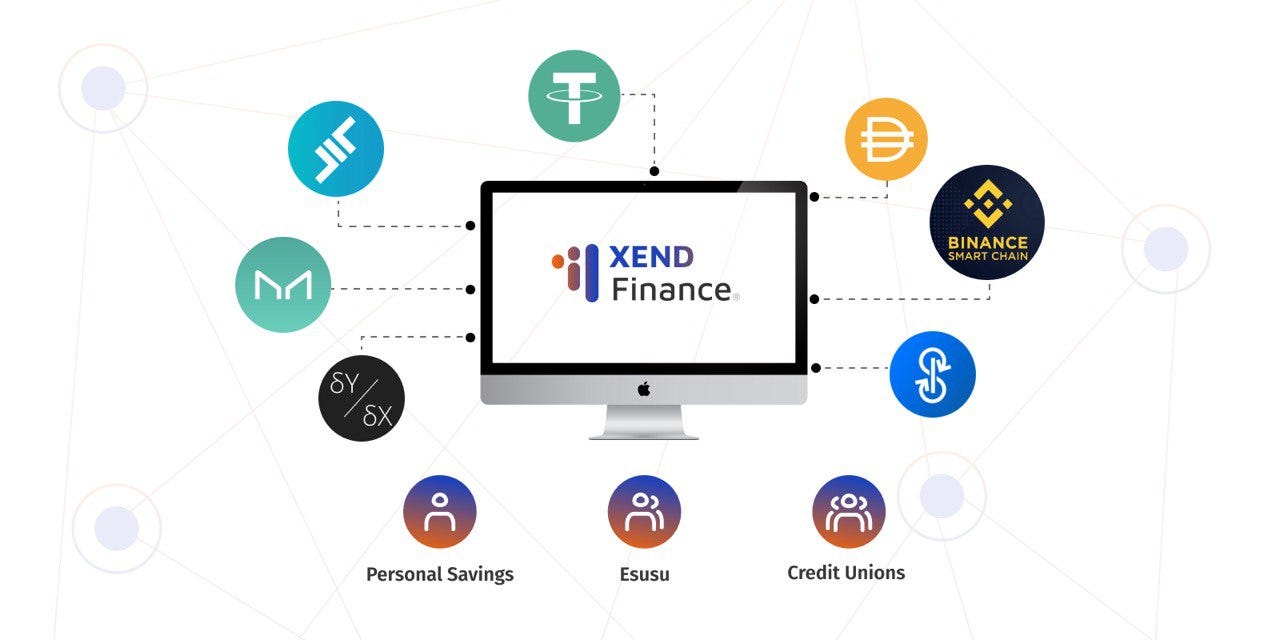
When Xend Finance launched in 2020, its founders saw an opportunity to modernise that model using blockchain technology. Instead of building another platform for cryptocurrency trading, they wanted to create a decentralized savings platform that could make cooperative finance more transparent, accessible, and rewarding.
That idea quickly attracted attention within the global blockchain ecosystem. Xend Finance became one of Africa’s earliest decentralized finance (DeFi) projects and secured backing from Binance while also participating in Google’s startup programmes.
As the blockchain industry evolved, so did the company.
The team gradually expanded beyond decentralized savings into crypto banking, cross-chain infrastructure, staking, wallets, and developer tools. More recently, Xend Finance introduced Asset Chain, an EVM-compatible Layer 1 blockchain focused on bringing real-world assets on-chain. The company says this marks the next phase of its mission to connect traditional finance with blockchain technology.
Today, Xend Finance is no longer just a DeFi application. It is building an ecosystem that supports developers, businesses, and institutions exploring blockchain infrastructure and tokenized assets.
Its journey reflects how quickly Africa’s Web3 ecosystem is changing. Rather than standing still, Xend Finance has continued to adapt its products as the market has matured, making it one of the continent’s more interesting blockchain companies to watch.
The story behind Xend Finance
Xend Finance was founded in 2020 by Ugochukwu Aronu and Emmanuel Okoro, who saw an opportunity to combine blockchain technology with Africa’s long-standing cooperative savings culture. Instead of asking people to abandon familiar financial practices, they wanted to improve them using decentralized finance.
Millions of people already participated in savings groups, cooperatives, and rotating savings schemes such as Esusu. These systems worked because they relied on community trust, but they also had limitations. Records could be difficult to maintain, participation was often limited by geography, and contributors earned little or no return on pooled funds.
The founders believed blockchain could address some of these shortcomings; using smart contracts, they envisioned a platform where savings rules could be enforced automatically, transactions would be transparent, and pooled funds could generate additional yield through established DeFi protocols. Rather than replacing cooperative finance, the goal was to strengthen it with programmable infrastructure.
The concept quickly attracted attention within the global blockchain ecosystem. Xend Finance became the first African DeFi project backed by Binance and also received support through Google’s startup ecosystem. Those endorsements introduced the company to a wider international audience and showed that African founders could build blockchain products with global relevance.
As the broader crypto industry evolved, so did Xend Finance.
The downturn that affected much of the blockchain sector between 2022 and 2023 prompted many projects to reassess their priorities. Xend responded by broadening its focus beyond decentralized savings.
The company expanded into crypto banking services, developer infrastructure, cross-chain tools, and later unveiled a new long-term vision centred on real-world asset tokenization through Asset Chain. Rather than treating this as a complete departure, Xend describes it as the next stage of its mission to connect traditional finance with blockchain technology.
Today, Ugochukwu Aronu serves as Chief Executive Officer, while Emmanuel Okoro remains a co-founder and Operations Lead. The leadership team also includes Chima Abafor as Chief Technology Officer, alongside specialists across engineering, product, analytics, and marketing who are driving the company’s transition from a DeFi application into a broader blockchain infrastructure company.
What is Xend Finance?
Xend Finance has changed significantly since it first launched as a decentralized savings platform.
Today, it describes itself as a blockchain infrastructure company building products that make it easier for individuals, businesses, developers, and institutions to use blockchain technology in practical ways. While decentralized finance remains part of its story, the company’s focus has expanded to include crypto banking, wallets, staking, cross-chain infrastructure, and real-world asset tokenization.
At the centre of this ecosystem is Asset Chain, Xend Finance’s EVM-compatible Layer 1 blockchain. The network is designed to support the tokenization of real-world assets, making it possible to represent assets such as real estate, commodities, invoices, or other tangible and financial assets as digital tokens on a blockchain. The company believes this can improve liquidity, increase transparency, and make these assets easier to trade and manage. According to Xend Finance, Asset Chain is built to support developers and businesses looking to build applications around tokenized assets while remaining compatible with the Ethereum ecosystem. (Source: Xend Finance Whitepaper)
Its crypto banking platform allows users to buy, sell, send, receive, and manage digital assets from a single application. The platform also includes staking services, digital wallets, and payment tools that are designed to make blockchain technology more accessible without requiring users to interact directly with complex blockchain infrastructure.
Xend provides infrastructure for developers that supports the creation of decentralized applications and blockchain-based financial services. By offering APIs, blockchain tools, and a Layer 1 network, the company is positioning itself as more than a consumer-facing fintech product. It wants to become part of the infrastructure that other blockchain companies build on.
This broader approach reflects how the company has evolved over the past few years. Rather than focusing on a single use case, Xend Finance is building an ecosystem where users can access financial services, businesses can explore blockchain solutions, and developers can create new applications on the same network.
How Xend Finance works
Although Xend Finance now offers several products, the underlying idea is relatively simple: use blockchain infrastructure to make financial services more accessible and efficient.
Depending on the product a user chooses, the experience is slightly different.
Someone using the crypto banking application can create an account, complete identity verification where required, manage supported digital assets, and access services such as transfers, staking, and wallet management through a single interface.
Developers building on Asset Chain interact with the platform differently. They can deploy smart contracts using Ethereum-compatible tools, build decentralized applications, and create products that take advantage of the network’s infrastructure without learning an entirely new development environment. Because Asset Chain is EVM-compatible, developers familiar with Ethereum can migrate or build applications with fewer technical barriers.
Businesses exploring tokenization can use the platform’s infrastructure to represent real-world assets on-chain. While the exact implementation depends on the use case and regulatory requirements, the goal is to provide infrastructure that supports asset issuance, ownership tracking, and transactions through blockchain technology.
Across these different products, one design principle remains consistent. Xend Finance aims to reduce the complexity often associated with blockchain technology by providing products that feel familiar while allowing the underlying infrastructure to handle much of the technical work behind the scenes.
Products and features
Over the years, Xend Finance has grown from a single DeFi savings platform into a broader blockchain ecosystem. Today, its products are designed to serve different groups of users, from individuals managing digital assets to developers building blockchain applications and businesses exploring real-world asset tokenization.
- Asset Chain
It is an Ethereum Virtual Machine (EVM)-compatible Layer 1 blockchain built to support the tokenization of real-world assets (RWAs). In simple terms, the network is designed to help bring assets that exist in the physical world onto the blockchain as digital tokens.
These assets could include real estate, commodities, invoices, government securities, or other financial instruments, depending on the use case and applicable regulations. By tokenizing these assets, ownership can be represented digitally, making them easier to manage, transfer, and potentially trade.
For developers, Asset Chain offers another advantage. Because it is EVM-compatible, developers who already build on Ethereum can deploy applications using familiar tools and programming languages instead of learning a completely new blockchain environment. This lowers the barrier to entry and makes it easier for existing Web3 projects to build on the network.
According to Xend Finance, Asset Chain is intended to provide the infrastructure for financial applications that connect traditional assets with blockchain technology, positioning the company beyond consumer finance and into the broader blockchain infrastructure space.
- Xend Wallet
Managing digital assets often means juggling multiple wallets, networks, and applications. Xend Wallet aims to simplify that experience.
The wallet allows users to store, send, receive, and manage supported digital assets from a single interface. Rather than focusing only on experienced crypto users, the product is designed to make blockchain interactions more accessible to people who may be using digital assets for everyday financial activities.
The wallet also serves as an entry point into the wider Xend ecosystem, giving users access to other services such as staking and blockchain applications built on the platform.
- Crypto banking services
One of Xend Finance’s biggest shifts has been its move into crypto banking.
Instead of limiting users to decentralized savings, the company now offers services that allow users to buy, sell, send, receive, and manage supported cryptocurrencies within one platform.
The idea is to make blockchain-based financial services feel more familiar. Rather than interacting directly with complex decentralized protocols, users access these services through an interface designed to resemble modern financial applications.
For individuals already using digital assets for payments, savings, or investments, bringing these services together in one platform reduces the need to switch between multiple applications.
- Staking
Staking allows users to earn rewards by helping support blockchain networks.
Within the Xend ecosystem, eligible users can stake supported digital assets according to the platform’s available staking programmes. While rewards vary depending on the network and staking option, the feature provides users with another way to participate in blockchain ecosystems without actively trading their assets.
For long-term holders, staking can offer an opportunity to generate additional returns while contributing to network security.
- Cross-chain bridge
Blockchain networks often operate independently, making it difficult for users to move assets between different ecosystems.
Xend’s cross-chain bridge is designed to reduce this friction by enabling supported assets to move between compatible blockchain networks. This improves interoperability and gives users greater flexibility when interacting with decentralized applications across different ecosystems.
As blockchain adoption continues to grow, tools that simplify communication between networks are becoming increasingly important for both users and developers.
- Developer infrastructure
While many users interact with Xend through its consumer products, developers are another important audience.
The company provides infrastructure that enables developers to build decentralized applications on Asset Chain using Ethereum-compatible tools. This includes support for smart contract deployment and blockchain development within an environment that is already familiar to many Web3 developers.
By focusing on infrastructure as well as end-user applications, Xend Finance is expanding beyond being a financial platform. It is working to become part of the foundation on which other blockchain products can be built.
- The XEND token
The XEND token plays a governance and utility role within the ecosystem.
According to the project’s documentation, token holders can participate in governance decisions related to the platform while also using the token within supported ecosystem activities. As with many blockchain projects, the token helps align community participation with the long-term development of the network.
Over time, the role of the token has evolved alongside the platform itself, reflecting Xend Finance’s transition from a DeFi savings protocol to a broader blockchain infrastructure ecosystem.
Growth, partnerships and milestones
Xend Finance has achieved several milestones since launching in 2020, many of which helped establish its reputation as one of Africa’s earliest decentralized finance projects.
One of its biggest early achievements came when it became the first African DeFi project to receive backing from Binance Labs through the Binance Smart Chain ecosystem. That support brought international attention to the project and gave it access to technical resources and mentorship at a time when very few African blockchain startups had reached that level of global recognition.
The company also participated in Google for Startups’ Black Founders Fund, receiving funding and business support aimed at helping promising early-stage technology companies scale their products.
Beyond funding, Xend Finance has continued to expand through strategic partnerships with blockchain networks and ecosystem players. Over the years, it has worked with organisations across the Web3 space to improve interoperability, strengthen developer tools, and support the growth of decentralized applications within its ecosystem.
Perhaps the biggest milestone in the company’s recent history is the launch of Asset Chain. While Xend Finance first became known for decentralized savings, Asset Chain represents a much broader ambition. Instead of offering a single financial product, the company is now building blockchain infrastructure that developers, businesses, and institutions can build on.
That shift also reflects a wider trend across the blockchain industry. As interest in tokenized real-world assets continues to grow, many projects are moving beyond cryptocurrencies into infrastructure that supports traditional financial assets. Xend Finance is positioning itself within that emerging market.
What stands out about Xend Finance
Many blockchain projects remain tied to the product they originally launched, even when market conditions change. Xend has taken a different approach. Since 2020, it has repeatedly adapted its strategy to reflect how blockchain technology and user needs have evolved.
Another strength is that the company continues to focus on practical use cases.
Rather than building products around speculation, Xend increasingly focuses on financial infrastructure. Asset tokenization, blockchain development, crypto banking, and digital asset management all address areas where blockchain can provide measurable value beyond cryptocurrency trading.
The company also benefits from its African roots.
Its earliest products were inspired by financial systems already familiar across many African communities. Although the company has expanded beyond decentralized savings, that original understanding of local financial challenges continues to influence its product development.
Finally, Xend’s decision to build an Ethereum-compatible blockchain could encourage adoption among developers who already work within the Ethereum ecosystem. Compatibility reduces technical barriers and makes it easier to migrate applications without rebuilding them from scratch.
Challenges and limitations
Xend Finance’s journey has also come with challenges.
The blockchain industry has changed significantly since the company launched in 2020. DeFi activity has slowed compared with its peak years, investor priorities have shifted, and competition among Layer 1 blockchains has become increasingly intense.
That means Asset Chain enters a market where numerous established blockchain networks are already competing for developers, applications, and liquidity. Building a technically capable blockchain is only one part of the challenge. Attracting active builders and creating a vibrant ecosystem around it is equally important.
Real-world asset tokenization is attracting growing interest globally, but regulatory frameworks are still developing in many jurisdictions. As the company expands in this area, maintaining compliance while working across different markets will remain an ongoing consideration.
Finally, many of Xend Finance’s newest products are still relatively early in their development. Their long-term success will depend on continued adoption, reliable execution, and the company’s ability to deliver consistent value for users and developers alike.
How Xend Finance fits into Africa’s Web3 ecosystem
Xend Finance occupies a unique position within Africa’s Web3 ecosystem.
Projects such as Kotani Pay focus on stablecoin-powered payment infrastructure, while companies like Accrue concentrate on cross-border financial services for individuals and businesses. Other blockchain startups specialise in digital identity, developer tools, or decentralized finance.
Xend spans several of these categories.
Its early work centred on DeFi savings, but the company has since expanded into crypto banking, developer infrastructure, wallets, staking, cross-chain interoperability, and real-world asset tokenization. That broad product portfolio gives it a different positioning from many African blockchain startups, although it also means the company must execute successfully across multiple areas at once.
Whether this broader strategy proves successful will depend on adoption. Building several products creates more opportunities, but it also increases the complexity of maintaining and growing the ecosystem around them.
Final thoughts
It began with a simple idea: use blockchain technology to improve cooperative savings models that have served African communities for generations. That vision helped establish the company as one of the continent’s earliest decentralized finance projects.
Over time, however, the market changed.Instead of remaining focused on a single DeFi application, Xend Finance expanded into crypto banking, blockchain infrastructure, and real-world asset tokenization. Today, Asset Chain sits at the centre of that strategy, reflecting the company’s ambition to build technology that other businesses and developers can use.
That transition has not been without challenges. Competition is stronger than ever, the regulatory landscape continues to evolve, and building a successful blockchain ecosystem requires more than good technology. It requires developers, partnerships, active users, and long-term trust.
Even so, Xend Finance has demonstrated a willingness to adapt rather than remain tied to yesterday’s opportunities. That flexibility has become one of its defining characteristics.