
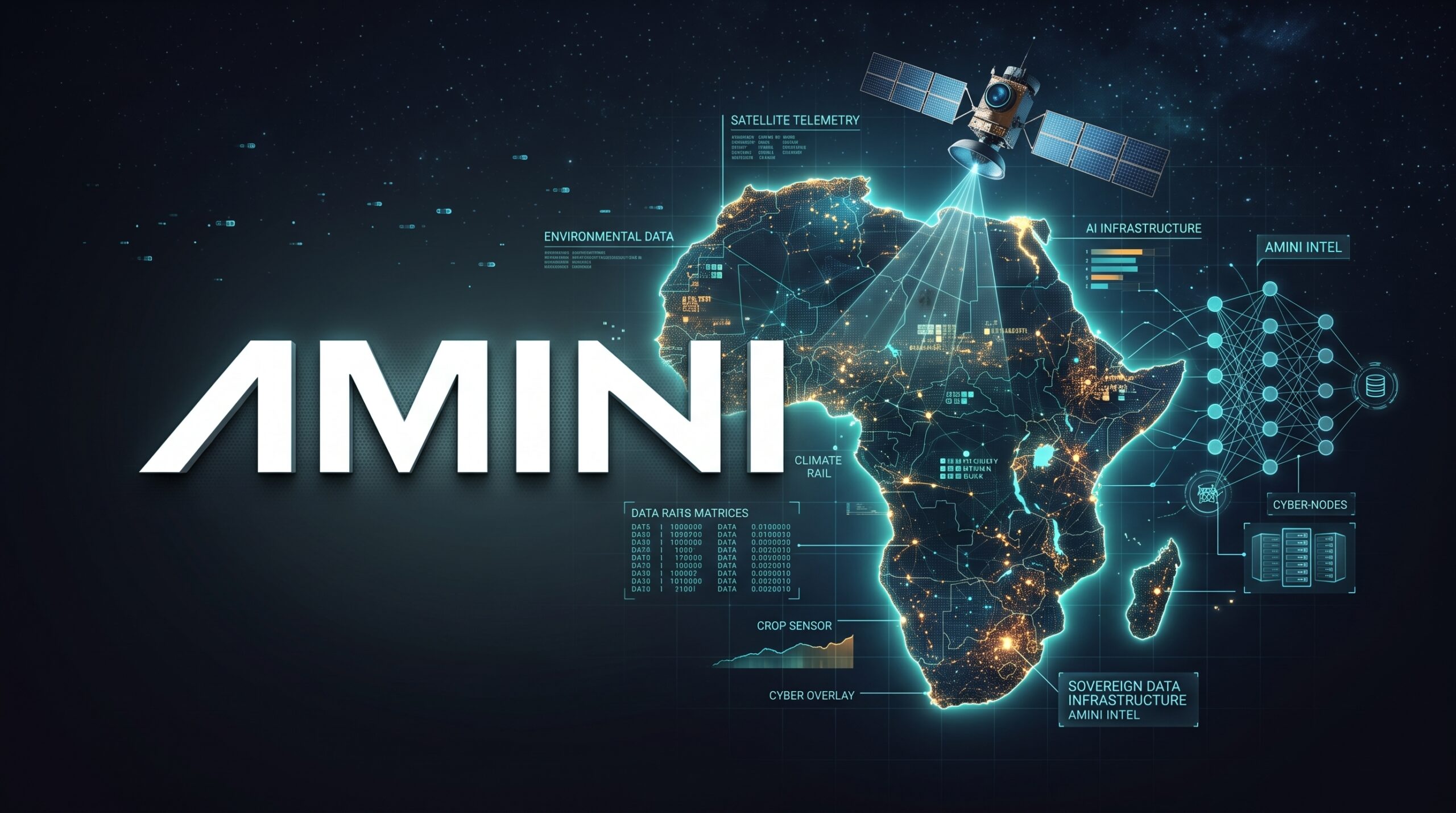
Artificial intelligence can help businesses improve operations, governments make better decisions, and farmers respond to changing environmental conditions. But these applications depend on reliable data. When information is scattered across different systems, stored in paper documents, or difficult to access, building useful AI solutions becomes more challenging.
This is the problem Amini AI is working to solve. Founded in 2022, the company builds data and AI infrastructure for Africa and the wider Global South, helping governments and enterprises turn fragmented information into usable data while maintaining greater control over how it is stored and processed.
Rather than focusing only on AI applications, Amini is building the underlying systems that allow organisations to collect, process, analyse, and use data within their own operations.
How Amini AI Works
Amini’s platform brings together data processing, AI models, computing infrastructure, and system integration. It is designed to help organisations transform information from different sources into structured datasets that can support analysis and decision-making.
For example, a government department may hold important information across paper records, spreadsheets, and separate digital systems. Bringing that information together can help officials analyse public services, identify gaps, and plan more effectively.
Amini provides tools to digitise documents, organise data, and connect different systems through APIs. Its platform can then apply AI models to the processed information, allowing organisations to build workflows around their own data.
Document Processing and Data Integration
Amini Soma uses AI-powered optical character recognition (OCR) and document intelligence to extract information from documents. This can help organisations process records that would otherwise require substantial manual work.
Amini Origin provides an API-first data integration layer that connects different data sources and systems. It is designed to make information easier to access and exchange across an organisation.
These capabilities address a practical problem: collecting data is not enough if the information remains disorganised or cannot work with existing systems. By helping organisations structure and connect their data, Amini aims to make it more useful for AI applications and everyday operations.
Local Computing Infrastructure
Data processing also requires computing resources. Organisations that depend entirely on external infrastructure may face challenges involving connectivity, data governance, operating costs, and control over sensitive information.
Amini addresses this through Amini Pods, its modular micro data centre offering. These systems are designed to provide computing capacity closer to the organisations and environments using it.
The approach forms part of Amini’s broader focus on sovereign AI infrastructure, where governments and enterprises can retain greater control over their data, systems, and technology roadmap instead of relying exclusively on infrastructure located elsewhere.
In May 2026, Amini announced a partnership with Foxconn and Bull to expand access to locally operated AI computing infrastructure across Africa and other Global South markets. The partnership aims to make industrial-grade computing systems available to institutions seeking to develop their own AI capabilities.
Applications Across Africa
Amini’s infrastructure can support several industries where reliable, locally relevant data is important.
In agriculture, satellite imagery and environmental data can help organisations assess crop conditions, monitor land, and evaluate climate-related risks. In insurance, better data can support agricultural risk assessments and help providers make more informed decisions about coverage.
Governments can also use connected datasets to improve public service delivery, support policy planning, and analyse information across departments.
The company reports that it has digitised more than 1.5 million documents, operates in more than 25 countries, and has processed over 15 terabytes of government data. These figures are published by Amini and have not been independently verified here.
The Role Amini Could Play in Africa’s AI Development
Much of the discussion around artificial intelligence focuses on the models people use and the applications they can build. However, the quality of those applications also depends on the data and computing infrastructure behind them.
Amini is focusing on this underlying layer. By helping organisations organise their data, connect existing systems, and access local computing resources, the company aims to make AI more practical for governments and businesses across Africa and the wider Global South.
There are still challenges to address, including infrastructure costs, electricity supply, technical expertise, data quality, and the long-term maintenance of computing systems. Amini’s success will depend on how well its solutions perform in real-world deployments and whether organisations can sustain their use over time.
If it can address these challenges, Amini could help more African organisations build AI solutions around their own data and priorities, strengthening local capacity to develop and operate the technology rather than relying entirely on systems built elsewhere.
Here is the completed version with a stronger product-focused structure and more concrete detail from Amini’s official materials and the World Trade Organization’s case study.
Amini AI: Building the Data Infrastructure Africa Needs
Artificial intelligence can help businesses improve operations, governments make better decisions, and farmers respond to changing environmental conditions. But these applications depend on reliable data and the infrastructure needed to process it.
In many African countries, important information remains scattered across paper records, disconnected databases, and systems that do not communicate with one another. Limited computing capacity and unreliable connectivity can make it even harder to turn that information into useful insights.
Amini AI is building the data and computing infrastructure designed to address these challenges. Founded in 2022, the company works with governments and enterprises across Africa and the wider Global South, helping them collect, organise, process, and manage data while retaining greater control over their digital infrastructure.
How Amini AI Works
Amini combines document processing, data integration, computing infrastructure, and connectivity into a system designed to support AI adoption.
Its platform helps organisations turn unstructured information into usable data, connect information from different sources, and run AI applications on infrastructure suited to their needs.
For example, a government department may hold important records in paper archives and separate digital databases. Making those records searchable and connecting them to other systems can help officials analyse information more efficiently and improve planning.
Amini’s approach focuses on the infrastructure behind these applications, rather than simply offering another AI chatbot or standalone software tool.
Document Processing and Data Integration
Amini Soma uses AI-powered document intelligence to extract information from documents, including records that may be difficult to process manually. The system is designed to convert these documents into structured, machine-readable data.
Amini Origin provides a data integration layer that connects different information sources and makes them easier to access through existing systems and APIs. This allows organisations to work with information across departments instead of managing disconnected databases separately.
Together, these tools can reduce the manual work involved in digitising records and help organisations prepare their data for analytics and AI applications.
Local Computing and Connectivity
Processing data requires more than software. Organisations also need computing power, reliable connectivity, and infrastructure capable of operating under local conditions.
Amini addresses this through Amini Pods, modular micro data centres designed to provide computing capacity closer to the organisations using it. Its wider infrastructure approach also includes connectivity solutions intended to support locally operated digital systems.
In May 2026, Amini announced a partnership with Foxconn and Bull to expand access to industrial-grade AI computing infrastructure across Africa and other Global South markets. The partnership is intended to help governments, telecommunications operators, financial institutions, and energy companies acquire and operate infrastructure locally.
Local infrastructure can give organisations greater control over where data is stored and processed. However, its effectiveness still depends on reliable power, skilled technical teams, maintenance, and the cost of deployment.
Applications Across African Industries
In agriculture, satellite imagery and environmental information can help organisations monitor crop conditions and assess climate-related risks. In government, connected datasets can support public service planning and make records easier to analyse. Financial institutions and energy companies can also use locally managed data and computing systems to develop AI applications suited to their operations.
The company reports that it has digitised more than 1.5 million documents, operates across more than 25 countries, and has processed over 15 terabytes of government data. These are company-reported figures.
What Sets Amini Apart?
Amini’s main focus is sovereign AI infrastructure: enabling countries and organisations to control more of the data, computing resources, and systems on which their AI capabilities depend.
This matters because access to AI tools does not automatically give a country the infrastructure or expertise to build and operate its own systems. By connecting data processing, local computing, and connectivity, Amini aims to help institutions develop that capacity.
The challenge is making this infrastructure affordable and sustainable. Data centres require significant investment, while power constraints, limited technical expertise, and fragmented data systems can complicate deployment. Organisations must also establish appropriate safeguards for sensitive information.
The Role Amini Could Play in Africa’s AI Development
Amini is addressing a part of the AI industry that often receives less attention than the models themselves: the infrastructure needed to make AI useful in real-world settings.
Its combination of document intelligence, data integration, and locally operated computing systems could help African governments and businesses turn existing information into practical applications while retaining greater control over their digital assets.
The company’s long-term impact will depend on whether its systems deliver measurable benefits, remain affordable to operate, and gain sustained adoption from governments and enterprises.
If Amini can meet these requirements, it could help strengthen Africa’s ability to develop and operate AI solutions around local data, priorities, and needs, rather than depending entirely on infrastructure built elsewhere.