
Introduction
As blockchain adoption grows, the industry is becoming increasingly multi-chain. Ethereum remains the dominant platform for decentralised finance, while ecosystems such as Base, Arbitrum, Optimism, BNB Chain, Solana, and Polkadot continue to attract developers with different strengths.
Over the past few years, bridge exploits have resulted in billions of dollars in losses, exposing the risks of relying on validator committees, multisignature wallets, or centralised operators to secure cross-chain transactions. While new interoperability protocols have sprung up to address these issues, many still require developers to place some level of trust in an intermediary.
Hyperbridge believes interoperability shouldn’t depend on trust at all.
Behind the project is Polytope Labs, a blockchain infrastructure company founded by Nigerian engineers Seun Lanlege and David Salami. Having worked extensively with blockchain systems, the founders saw interoperability as one of the industry’s biggest unresolved challenges. Existing solutions made cross-chain communication possible, but they often introduced additional trust assumptions that conflicted with blockchain’s core principle of verification over trust.
That observation became the foundation for Hyperbridge. Instead of asking developers to trust another network of validators, the team set out to build infrastructure that allows blockchains to verify one another through mathematics and cryptography. In doing so, they hope to make interoperability as secure and decentralized as the blockchains it connects.
Instead of positioning itself as just another blockchain bridge, Hyperbridge is building a protocol that uses cryptographic proofs to verify communication between blockchains. Its goal is straightforward but ambitious: make cross-chain interactions as secure and verifiable as the blockchains themselves.
Today, Hyperbridge is positioning itself as more than a token bridge. It is building a communication layer for Web3, one that could underpin everything from decentralised finance and gaming to identity systems and enterprise applications as the industry continues moving toward a multi-chain future.
What is Hyperbridge?
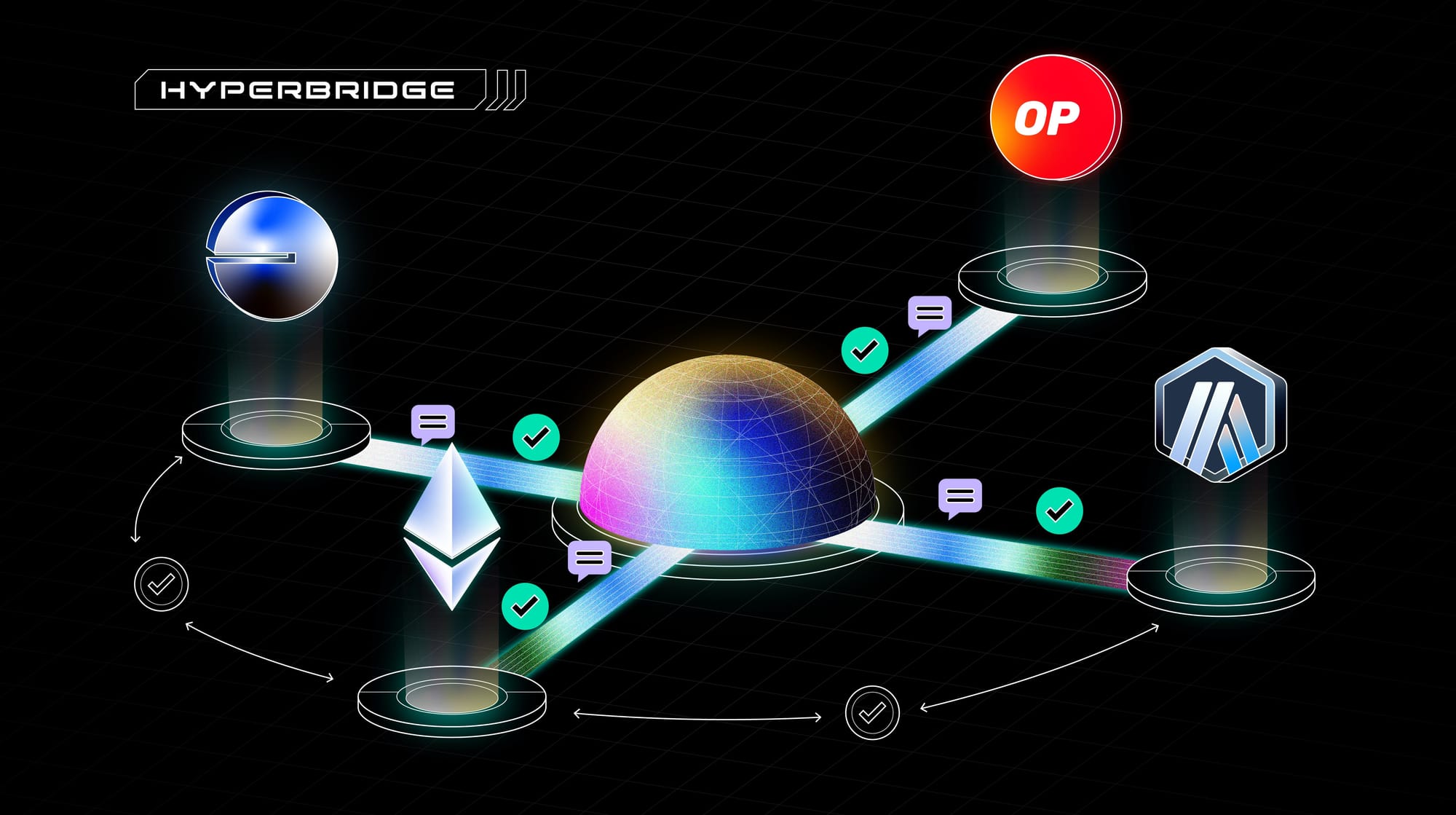
Hyperbridge is a blockchain interoperability protocol designed to enable secure communication between different blockchain networks. Instead of functioning solely as a token bridge, it provides infrastructure that allows applications to exchange messages, verify blockchain state, and transfer assets across chains with minimal trust assumptions.
Built around the Interoperable State Machine Protocol (ISMP), Hyperbridge replaces traditional bridge operators with cryptographic consensus and state proofs. In practice, this means applications can verify that information originated from another blockchain without depending on centralised validators or external committees.
ISMP provides a standardised way for independent blockchains to exchange information. Instead of trusting a third party to confirm whether an event occurred on another blockchain, Hyperbridge allows destination chains to verify that information using cryptographic consensus proofs and state proofs. This significantly reduces the trust assumptions that have historically made cross-chain infrastructure a target for attackers.
Hyperbridge is primarily designed for developers and infrastructure providers. Its users include teams building decentralised exchanges, lending platforms, blockchain games, DAOs, wallets, and other applications that require secure communication across multiple blockchain ecosystems. Rather than replacing existing blockchains, Hyperbridge aims to connect them, making it easier for developers to build applications that are no longer confined to a single network.
How Hyperbridge works
Understanding Hyperbridge starts with understanding the problem it is trying to solve.
Most blockchain networks are designed to operate independently. An Ethereum node cannot automatically verify what happened on Polkadot, just as a Solana validator cannot natively confirm activity on BNB Chain. Traditionally, this gap has been filled by bridges that rely on validators, multisignature wallets, or trusted relayers to attest that a transaction has taken place on another chain.
Hyperbridge takes a different approach by allowing blockchains to verify one another using cryptographic proofs rather than trusted intermediaries.
At the centre of this architecture is the Interoperable State Machine Protocol (ISMP). Instead of acting as another blockchain bridge, ISMP serves as a communication standard that allows different blockchain state machines to exchange authenticated messages. Think of it as a common language that enables otherwise incompatible networks to communicate securely.
The verification process happens in two stages.
First, Hyperbridge uses consensus proofs to confirm that a source blockchain has finalised a block. Once that has been established, state proofs are used to verify that a specific transaction, message, or piece of data exists within that finalised block. Because both stages rely on cryptographic evidence rather than human operators, applications can independently verify that the information they receive is authentic.
One of Hyperbridge’s most distinctive innovations is what it calls a crypto-economic coprocessor.
Verifying blockchain consensus across multiple networks can be computationally expensive. Rather than requiring every connected blockchain to repeat the same verification work, Hyperbridge aggregates these computations before generating proofs that other chains can verify more efficiently. According to the project, this reduces duplicated work while making the protocol more scalable as additional blockchain networks join the ecosystem.
Although these concepts are highly technical, the objective is relatively simple: allow developers to build cross-chain applications without introducing unnecessary trust assumptions.
Products and features
Hyperbridge is not a single application but an ecosystem of tools designed for developers building multi-chain applications.
Token Gateway
One of the protocol’s flagship products is Token Gateway, a trust-minimised token bridge.
Unlike many existing bridges that rely on custodial liquidity pools, Token Gateway uses a proof-based mint-and-burn mechanism to move supported assets between blockchains. This architecture is designed to reduce custodial risks while maintaining one-to-one asset representation across supported networks.
For developers building decentralised finance applications, this provides a more transparent approach to cross-chain asset transfers.
Developer SDKs
Hyperbridge provides software development kits (SDKs) and APIs for developers building on Ethereum Virtual Machine (EVM) chains and Polkadot SDK-based networks.
Instead of writing complex interoperability logic from scratch, developers can integrate Hyperbridge’s libraries into their applications to send cross-chain messages, verify blockchain state, and transfer assets securely.
The project also provides detailed technical documentation, implementation guides, and reference materials to help developers understand its architecture and begin building applications.
Cross-chain messaging
While token transfers often receive the most attention, Hyperbridge is fundamentally a messaging protocol.
Applications can use the protocol to exchange authenticated messages across different blockchain ecosystems, opening the door to a wide range of use cases beyond payments.
For example, decentralised autonomous organisations (DAOs) could coordinate governance across multiple blockchains. Blockchain games could synchronise player assets regardless of where they are stored. Identity platforms could verify credentials issued on another chain without relying on centralised databases.
This flexibility positions Hyperbridge as infrastructure rather than simply another crypto bridge.
Permissionless relayers
Hyperbridge also adopts a permissionless approach to relayers.
Rather than relying on a closed network of approved operators, the protocol allows independent relayers to deliver authenticated messages between supported chains. Their role is to transport verified information—not to decide whether that information is valid. Verification remains the responsibility of cryptographic proofs.
This separation helps reduce the amount of trust placed in any single participant within the network.
Funding, partnerships and ecosystem growth
Hyperbridge has steadily attracted attention from both investors and the broader blockchain ecosystem.
In 2025, Polytope Labs announced that it had raised more than $5 million through a combination of a seed funding round and a public token sale. The funding was backed by the Polkadot Ecosystem Fund, with participation from investors including Scytale Digital, alongside support from the Web3 Foundation. The capital is intended to accelerate protocol development, ecosystem expansion, and broader adoption.
The protocol has also established partnerships and technical integrations across multiple blockchain ecosystems. Publicly announced collaborators include Bifrost, Astar, Gnosis, ZKVerify, and Soneium, reflecting Hyperbridge’s goal of becoming chain-agnostic rather than tied to a single ecosystem.
While the protocol is still growing, these partnerships suggest growing interest from projects seeking secure interoperability infrastructure rather than building proprietary cross-chain solutions from scratch.
Why Hyperbridge stands out
Hyperbridge enters a competitive market that already includes interoperability protocols such as LayerZero, Wormhole, Axelar, and Chainlink CCIP. Where it differentiates itself is in its underlying trust model.
Most interoperability solutions rely, to varying degrees, on validator networks, guardians, or oracle systems to verify cross-chain activity. Hyperbridge instead emphasises cryptographic verification through consensus and state proofs.
That philosophy reduces trust assumptions and aligns closely with one of blockchain’s core principles: “don’t trust, verify.”
Another strength is the protocol’s modular design.
Support for additional consensus mechanisms can be introduced without redesigning the protocol from scratch, allowing Hyperbridge to expand alongside the broader blockchain ecosystem.
The project is also clearly developer-focused.
Its documentation is extensive, covering protocol architecture, implementation guides, SDKs, APIs, and reference materials. While technical, the documentation reflects careful planning and provides enough detail for experienced developers to begin experimenting with the protocol.
Finally, Hyperbridge positions itself as infrastructure rather than a standalone application.
Users may never interact directly with Hyperbridge. Instead, they’ll interact with wallets, DeFi platforms, games, marketplaces, or enterprise solutions that quietly use Hyperbridge behind the scenes to communicate across blockchains.
Challenges and limitations
Hyperbridge’s architecture is ambitious, but it also presents challenges.
The first is complexity.
Unlike consumer-facing crypto applications, Hyperbridge requires developers to understand concepts such as blockchain consensus, state proofs, interoperability protocols, and cryptographic verification. Although the documentation is comprehensive, the learning curve remains relatively steep for newcomers.
The second challenge is adoption.
Interoperability protocols derive much of their value from network effects. The more developers, applications, and blockchain ecosystems that integrate a protocol, the more useful it becomes. Even technically strong infrastructure can struggle if adoption remains limited.
Competition also remains intense.
Protocols such as LayerZero, Axelar, Wormhole, and Chainlink CCIP already have established developer communities, production deployments, and ecosystem partnerships. Hyperbridge will need continued integrations and community growth to compete effectively in this rapidly evolving market.
Finally, many of Hyperbridge’s long-term advantages remain tied to future ecosystem expansion. Its architecture provides the technical foundation for scalable interoperability, but its broader success will depend on sustained implementation across multiple blockchain ecosystems.
Final thoughts
Hyperbridge is tackling one of blockchain’s most persistent technical challenges: enabling secure communication between independent networks without introducing unnecessary trust assumptions.
Rather than presenting itself as another token bridge, the project approaches interoperability as foundational infrastructure. Its use of the Interoperable State Machine Protocol, consensus proofs, state proofs, and a crypto-economic coprocessor reflects a deliberate effort to rethink how blockchains exchange information.
That doesn’t make Hyperbridge the definitive answer to interoperability. Like every infrastructure protocol, its long-term success will depend on developer adoption, ecosystem support, and real-world deployment. Technical design alone is rarely enough to determine which standards become industry norms.
Still, Hyperbridge offers a compelling vision of what cross-chain communication could look like if verification replaces trust wherever possible. For developers building applications that span multiple blockchain ecosystems, it provides an architecture worth watching, not because it promises to eliminate every interoperability challenge overnight, but because it addresses those challenges from a fundamentally different perspective.
Web3 continues moving toward a multi-chain future; protocols like Hyperbridge may prove just as important as the blockchains they connect. Whether it ultimately becomes a foundational interoperability layer will depend on execution, adoption, and continued technical development, but its focus on trust-minimised infrastructure gives it a distinctive place in an increasingly crowded interoperability landscape.
Every major blockchain has its strengths. Ethereum dominates decentralised finance, Solana is known for speed, Base is attracting developers, and the Polkadot ecosystem continues to push interoperability. The challenge is that these networks still operate in silos. Moving assets or data between them often requires blockchain bridges, one of the industry’s most vulnerable pieces of infrastructure.