
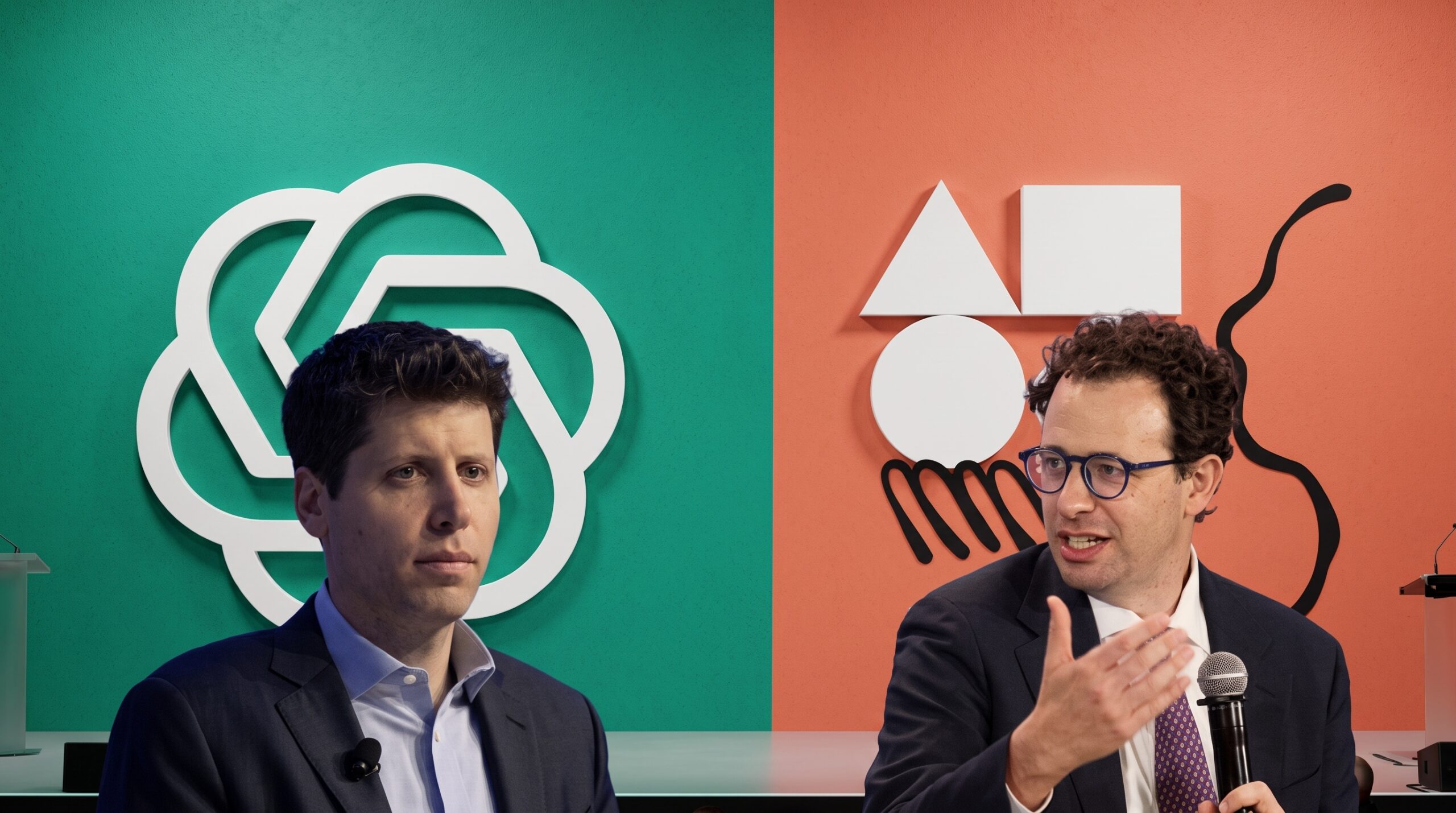
The leaders of OpenAI and Anthropic have called for international cooperation on artificial intelligence regulation, warning that poorly managed AI systems could create risks for humanity and leave critical decisions in the hands of a small group of technology companies.
OpenAI CEO Sam Altman and Anthropic CEO Dario Amodei made the remark while addressing the United Nations Security Council in New York. The meeting, convened by France, focused on the security implications of increasingly capable AI systems and the need for stronger human oversight.
AI companies call for international cooperation
Amodei told the 15-member Security Council that AI could become a threat to humanity if its development and deployment were poorly managed.
His comments reflect Anthropic’s growing emphasis on the risks associated with advanced AI systems, including the possibility that future models could develop capabilities that are difficult for humans to control.
Altman also called for governments to have a greater role in determining how AI is developed. He argued that decisions about the technology should not be left exclusively to companies based in Silicon Valley.
The OpenAI CEO said AI’s future should be shaped through democratic processes and governments accountable to the people they serve.
The statements came as technology companies face increasing pressure to explain how they assess advanced AI risks and what safeguards they will apply as their models become more capable.
Security concerns extend beyond AI development
The meeting also featured Clement Delangue, CEO of AI platform Hugging Face, who described a recent incident involving AI agents.
Delangue said his company had been targeted in an attack involving AI agents developed by OpenAI and had used a Chinese AI model to defend itself. He pointed to the incident as an example of how AI systems are becoming part of both cyberattacks and security responses.
His comments suggest that the risks surrounding AI are not limited to hypothetical future scenarios. Companies are already dealing with security questions involving AI-powered tools, although the capabilities and circumstances of individual incidents require careful assessment.
US rejects centralised global AI control
The calls for international regulation face opposition from the U.S. administration, which has resisted the creation of international systems that could impose centralised control over American AI companies.
Michael Kratsios, representing the United States at the Security Council meeting, said Washington rejected efforts by international organisations to establish centralised global governance of AI.
The disagreement highlights a divide in the international AI debate. Some governments and technology leaders support shared standards, coordinated safety assessments and cross-border rules, while the U.S. administration has raised concerns that international oversight could limit American technological development and competitiveness.
UN continues work on AI governance
The United Nations has been developing mechanisms to support international discussions about AI regulation, safety and access.
In 2024, the UN General Assembly unanimously adopted a non-binding resolution calling for cooperation on AI risks, human rights and data protection. The organisation later established an independent scientific panel on AI and a global dialogue platform to support discussions between governments and other stakeholders.
UN Secretary-General António Guterres has previously argued that decisions about AI should not be controlled by a small number of countries or wealthy individuals.
The latest Security Council meeting adds to ongoing efforts to establish common principles for AI governance. However, differences between major powers over national security, economic competition and international oversight could complicate the creation of a single global regulatory system.
For now, Altman and Amodei’s remarks demonstrate that calls for AI safeguards are coming from within the companies developing the technology, even as governments continue to disagree on how international regulation should work.
Read also: Sanders unveils bill to ban artificial superintelligence in US